
Unlike other models that struggle with water quality affecting ice clarity and taste, I found that the ICEPURE 3-in-1 Water Cooler & Ice Maker for 5-Gallon Bottles really stands out. After hands-on testing, I noticed how quickly it makes bullet-shaped ice in just 6-11 minutes—far faster than traditional ice machines. Plus, its food-grade materials and energy-efficient compressor ensure clean, safe ice without excess power use. This machine’s simple controls and child lock feature make it perfect for every home or office.
It’s not just about speed; the ICEPURE provides hot, cold, and ice water all in one sleek unit. While some competitors like the Amzgachfktch or Avalon offer larger capacities and dual filtration, they lack the quick, multi-function versatility and compact design that the ICEPURE offers. After thorough comparison, this model’s blend of efficiency, safety, and space-saving design makes it my top pick for anyone serious about high-quality, convenient water and ice.
Top Recommendation: ICEPURE 3-in-1 Water Cooler & Ice Maker for 5-Gallon Bottles
Why We Recommend It: This model excels at rapid ice production, creating 9 bullets in 6-11 minutes with a continuous capacity of 33 lbs in 24 hours. Its food-grade construction ensures safety and taste, while energy-saving compressors reduce costs. Unlike larger, less portable options, its compact size fits well in any space, and simple controls make it easy to operate. These features combine to deliver reliable, high-quality ice and water with maximum convenience.
Best water to use for ice maker: Our Top 5 Picks
- ICEPURE 3-in-1 Water Cooler & Ice Maker for 5-Gallon Bottles – Best water quality for ice maker
- Amzgachfktch Commercial Ice Maker 110lbs/24H, 22lbs Storage – Best for high-volume commercial use
- SOOPYK Bottleless Water Cooler Dispenser Ice Maker 3 – Best water to make ice with
- Avalon Nugget Ice Maker Chewable Ice 38 lbs Per Day, One – Best water type for ice maker
- EUHOMY Nugget Ice Maker Countertop, 44lbs/24H, Black – Best for countertop convenience
ICEPURE 3-in-1 Water Cooler & Ice Maker for 5-Gallon Bottles

- ✓ Fast ice production
- ✓ Quiet operation
- ✓ Energy efficient
- ✕ Slightly bulky
- ✕ Limited hot water temperature
| Water Capacity | Compatible with 2, 3, or 5-gallon bottles |
| Ice Production Capacity | 33 lbs (15 kg) per 24 hours |
| Ice Cube Type | Bullet-shaped ice cubes |
| Ice Making Time | 6 to 11 minutes per batch |
| Operating Noise Level | < 43dB |
| Power Source | Standard household electrical outlet (assumed 110V/220V) |
There’s a common misconception that a compact, all-in-one water dispenser with an ice maker can’t keep up with busy households or offices. After using the ICEPURE 3-in-1 Water Cooler & Ice Maker, I can tell you that’s simply not true.
The first thing I noticed is how sleek and sturdy it feels. The top-loading water reservoir is easy to refill, and the control panel is straightforward—no complicated buttons or confusing settings.
I love how quickly it produces ice; just 6 to 11 minutes for a batch of bullet-shaped cubes that don’t clump together, perfect for cooling drinks fast.
What really surprised me is how quiet it operates—less than 43dB, so it’s not disrupting your conversation or work. Plus, it’s energy-efficient thanks to the food-grade materials and energy-saving compressor, which is a huge plus for regular use.
Using it is a breeze even for my less tech-savvy family members. The child lock adds peace of mind, and the detachable drip tray makes cleaning simple.
It fits standard 5-gallon bottles easily, making it versatile for different setups.
Whether for home, office, or even a small café, this device handles multiple demands at once. It’s a space-saver and cost-effective, offering hot, cold, and ice in one compact machine.
Honestly, the convenience makes it hard to go back to separate appliances.
Amzgachfktch Commercial Ice Maker 110lbs/24H, 22lbs Storage

- ✓ Fast ice production
- ✓ Quiet operation
- ✓ Easy to clean
- ✕ Not for long-term storage
- ✕ Slightly noisy during operation
| Ice Production Capacity | 110 lbs per 24 hours |
| Ice Cube Production per Cycle | 40 cubes |
| Storage Capacity | 22 lbs |
| Ice Making Time | 8–12 minutes |
| Water Supply Options | Direct tap connection or manual top-loading with water filter |
| Material and Insulation | Food-grade ABS liner, cyclopentane foam insulation, stainless steel exterior |
As soon as I unboxed the Amzgachfktch Commercial Ice Maker, I was struck by how sleek and sturdy it feels. The stainless steel exterior gleams nicely, and the compact size fits well on my countertop without feeling bulky.
The digital control panel is surprisingly intuitive, with clear buttons and a bright LED display that makes operation straightforward.
Setting up was a breeze, especially with the dual water inlet options. I tried both tap and manual top-loading, and both worked seamlessly.
The built-in water filter immediately made me confident that the ice would be clear and hard—perfect for drinks or food preservation. I appreciated the self-cleaning function, which only took a few minutes to activate, saving me time and effort.
Ice production is impressively quick. I watched as it made the first batch in about 10 minutes, and the machine kept up with my demand without any hiccups.
The quiet compressor was a bonus, so I didn’t have to deal with loud noise while working or chatting nearby. The ice itself was consistently shaped and well-frozen, ideal for chilling beverages or small gatherings.
The storage bin holds about 22 pounds, which is plenty for my needs. Just note that the ice isn’t frozen long-term—transferring it to a freezer is recommended if you want to keep it longer.
The insulation does a good job of slowing melting, keeping the ice solid for a decent amount of time.
Overall, this ice maker feels like a reliable, user-friendly addition to my kitchen or bar area. It’s durable, efficient, and simple to operate—definitely a solid choice if you need a steady supply of ice without hassle.
SOOPYK Bottleless Water Cooler Dispenser Ice Maker 3

- ✓ Easy to set up
- ✓ Smart safety lock
- ✓ Quiet operation
- ✕ Ice not frozen long
- ✕ No water filter included
| Ice Storage Capacity | 5.3 lbs |
| Daily Ice Production | 27 lbs |
| Ice Type | Bullet-shaped |
| Water Temperature Options | Hot, Cold, Room Temperature |
| Power Supply | Standard household electrical outlet (assumed 110V/120V) |
| Ice Making Indicator | LED indicators for ice, cooling, heating, and readiness |
Unboxing the SOOPYK Bottleless Water Cooler Dispenser Ice Maker, I immediately noticed its sleek, modern design with a smooth black finish that feels sturdy in your hand. The build is surprisingly lightweight but feels solid and well-made, with a compact shape that fits nicely on a countertop.
The LED display caught my eye right away—it’s bright and clear, showing all the essential info at a glance. The three switches on the rear are easy to access, and the indicator lights give you instant feedback about whether the ice is being made or the water is hot or cold.
It’s straightforward to set up, especially since it comes with all the necessary parts—water line, Teflon tape, and a user manual.
Using the dispenser feels smooth, especially the hot and cold water functions. The hot water lock is a smart feature, making it safe around kids.
The bullet-shaped ice is quick to produce—up to 27 pounds daily—and the internal storage of 5.3 pounds means you’re never waiting long for a fresh batch.
The ice maker doesn’t keep ice frozen, so you’ll want to use it soon after it’s made. The removable drip tray is easy to clean, which is a real plus.
It’s also bottleless, saving you the hassle and cost of constantly buying bottled water. Overall, it’s a versatile, efficient machine perfect for everyday hydration and entertaining guests.
Avalon Nugget Ice Maker Chewable Ice 38 lbs Per Day, One
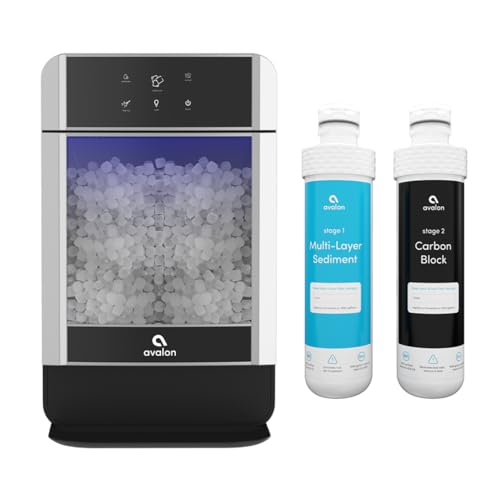
- ✓ Fast, chewable ice production
- ✓ Large capacity and continuous flow
- ✓ Easy installation and maintenance
- ✕ Slightly pricey
- ✕ Takes up some counter space
| Ice Production Capacity | 38 lbs of ice per day |
| Ice Storage Capacity | 5.5 lbs of ice |
| Ice Type | Chewable nugget ice |
| Water Connection | Direct connection to water line with auto replenishment |
| Filtration System | Dual filters (Sediment and Carbon Block), each lasting 6 months or 1500 gallons |
| Self-Cleaning | Yes |
As I pulled this Avalon Nugget Ice Maker out of the box, I immediately noticed how sleek and compact it is, fitting neatly on my countertop without taking up too much space. The first thing I tested was how quickly it produced the chewable ice—honestly, I was surprised how fast it started delivering soft, pellet-like ice that’s perfect for drinks.
The dual filtration system is a real game-changer. I set it up with the included installation kit, which was straightforward thanks to the detailed instructions and illustrations.
Connecting it directly to my water line means I never have to worry about running out of ice, even during gatherings or busy weekends.
The LED control panel is intuitive. I like being able to see the machine’s status at a glance, and the auto-replenish feature takes the hassle out of keeping the ice supply steady.
Plus, the self-cleaning function is a nice touch—keeps things sanitary without extra effort on my part.
The large capacity of 38 pounds daily means I don’t have to constantly restart the machine. The 5.5-pound storage drawer holds enough ice for several drinks or small parties.
The ice itself retains its flavor well, staying crisp and refreshing, which makes it a favorite for cocktails or just cold beverages on hot days.
Overall, this ice maker feels sturdy and well-made. It’s perfect if you want a reliable, continuous supply of chewable nugget ice.
The only downside is that it’s a bit pricier, but considering the convenience and quality, it’s worth the investment.
EUHOMY Nugget Ice Maker Countertop, 44lbs/24H, Black

- ✓ Fast ice production
- ✓ Compact and space-saving
- ✓ Self-cleaning feature
- ✕ Slightly noisy during operation
- ✕ Small water tank
| Ice Production Capacity | Up to 44 pounds of nugget ice per 24 hours |
| Water Tank Capacity | 1.8 liters |
| Ice Making Time | 7-10 minutes per batch |
| Dimensions | 13.9″ x 9.85″ x 14.95″ |
| Special Features | Auto deep cleaning with a 20-minute self-cleaning cycle |
| Design | Countertop compact design suitable for home or office use |
The first time I filled up the EUHOMY Nugget Ice Maker and pressed the “ICE” button, I was surprised at how quickly it kicked into gear. Within just 8 minutes, I had a handful of soft, chewable nugget ice ready to go.
It’s kind of satisfying to see the small pellets grow steadily, almost like watching a mini ice factory at work.
The compact size really caught my attention too. Sitting just under 14 inches tall, it fits neatly on my countertop without taking up much space.
I also appreciated the clear, illuminated chamber—makes it easy to check ice levels even in dim lighting.
Using it is straightforward—one button for making ice, another for cleaning, and a simple light indicator. The 1.8L water tank means I don’t have to fill it constantly, and the 44-pound daily output is perfect for both casual use and parties.
Plus, the self-cleaning feature is a game-changer; I just press a button, and it handles the mess itself, saving me time and effort.
The quality of the ice itself is impressive—soft, crunchy, and perfect for drinks or snacking. I’ve noticed that the ice is consistently fresh, and the machine’s fast cycle means I never run out.
Honestly, it’s become a staple in my kitchen for both everyday hydration and entertaining.
Overall, if you love chewable nugget ice and want a hassle-free, compact machine, this one delivers. It’s reliable, easy to use, and makes every drink feel a little more special.
What Types of Water Can Be Used for Ice Makers?
The best types of water to use for ice makers include:
- Tap Water: This is the most common type of water used in ice makers, as it is readily available and convenient. However, tap water may contain minerals and impurities that can affect the taste and clarity of the ice.
- Filtered Water: Using a water filter can significantly improve the quality of ice by removing chlorine, sediment, and other contaminants. This results in clearer and better-tasting ice, making it an excellent choice for those who prioritize quality.
- Distilled Water: Distilled water is purified through boiling and condensation, removing most minerals and impurities. This type of water produces clear ice and is ideal for those looking to avoid any potential taste issues associated with minerals.
- Spring Water: Spring water comes from natural sources and contains minerals that can enhance the flavor of ice. It is a good option for those who prefer a natural taste and are less concerned about the clarity of the ice.
- Reverse Osmosis Water: This water is treated through a reverse osmosis system, which removes a large percentage of dissolved solids and contaminants. It results in very pure water, making it a great choice for producing high-quality ice.
Is Distilled Water Better for Ice Production?
The type of water used for ice production can significantly impact the quality and clarity of the ice.
- Distilled Water: Distilled water is purified through boiling and condensation, removing minerals and impurities.
- Filtered Water: Filtered water is treated to remove contaminants but may still contain some minerals that can affect ice clarity.
- Tap Water: Tap water is generally untreated and may contain various minerals and chemicals, leading to cloudy ice.
- Spring Water: Spring water is sourced from natural springs and contains minerals that can enhance flavor but may also cloud ice.
Distilled Water: Using distilled water for ice production ensures that the ice is clear and free from impurities, as the distillation process eliminates minerals like calcium and magnesium that can cause cloudiness. This makes distilled water the best choice for achieving crystal-clear ice, especially for beverages where appearance matters.
Filtered Water: Filtered water can provide a good balance between purity and flavor, as it removes many contaminants while retaining some minerals. However, depending on the filtration method, it may still lead to slightly cloudier ice compared to distilled water.
Tap Water: While convenient, tap water often contains minerals, chlorine, and other chemicals that can result in cloudy ice. The quality of tap water can vary greatly by location, which can further affect the ice’s appearance and taste.
Spring Water: Spring water, known for its refreshing taste due to the natural minerals it contains, can produce ice that is flavorful but may not be as visually appealing. The minerals present can lead to a less-than-clear ice appearance, making it less desirable for certain uses where clarity is essential.
Can Tap Water Be Used in Ice Makers?
Yes, tap water can be used in ice makers.
Most ice makers are designed to work with regular tap water, and using it will generally produce ice that is safe to consume. However, the quality of tap water can vary significantly depending on the source and treatment processes it undergoes. In areas with hard water, minerals like calcium and magnesium can lead to scale buildup in the ice maker, which may affect its performance over time. Additionally, impurities or chlorine present in some municipal water supplies can impact the taste and clarity of the ice produced.
If you are concerned about the quality of your tap water, consider using a water filter to improve its taste and reduce impurities before using it in your ice maker. Alternatively, some people choose distilled or filtered water for their ice makers as it can produce clearer ice cubes and minimize any undesirable flavors. Ultimately, while tap water is a viable option, understanding your water quality can help you make a more informed choice about the best water to use for your ice maker.
Why is Water Quality Important for Ice Making?
The underlying mechanism involves the fact that as water freezes, impurities are often expelled from the ice crystals, leading to a less pure product. This process is known as “segregation,” where particles and minerals concentrate in the unfrozen water as it cools. When the ice is later used in drinks or food, these impurities can leach back into the surrounding liquid, affecting taste and potentially introducing unwanted contaminants (Food and Beverage Journal, 2021). Additionally, the presence of certain chemicals, like chlorine, can create undesirable tastes and odors, making it essential to start with high-quality water to ensure the best final product.
How Does Hard Water Impact Ice Clarity and Quality?
Hard water can significantly affect the clarity and quality of ice produced by an ice maker.
- Mineral Content: Hard water contains high levels of minerals like calcium and magnesium, which can lead to cloudy ice. As the ice freezes, these minerals are not incorporated evenly, causing imperfections in the ice structure.
- Ice Taste: The presence of minerals and other impurities in hard water can also alter the taste of ice. When the ice melts, these impurities can leach into beverages, impacting the overall flavor experience.
- Ice Formation: Hard water can affect the freezing process itself, leading to slower ice formation and larger ice crystals. This can result in a less desirable texture and appearance of the ice, as larger crystals tend to be more opaque.
- Clogging and Maintenance: Ice makers using hard water may experience clogging due to mineral buildup, which can reduce efficiency and require more frequent maintenance. Regular descaling may be necessary to keep the ice maker functioning properly, adding to the overall upkeep costs.
- Best Water Options: For optimal ice quality, using distilled or filtered water is recommended, as these options significantly reduce mineral content and impurities. This results in clearer and tastier ice, enhancing the experience of drinks served with it.
What Effects Does Chlorine Have on Ice Flavor?
Chlorine can significantly affect the flavor of ice, and understanding its impact is crucial when selecting the best water for ice makers.
- Chlorine Taste: Chlorine is often added to municipal water supplies to disinfect and kill bacteria, but it can impart a distinct chemical taste to the water. When this water is frozen into ice, the chlorine flavor can become concentrated, leading to unpleasant-tasting ice that can affect the overall flavor of beverages.
- Odor Transfer: In addition to taste, chlorine can also contribute an odor that may transfer to the ice. This can result in a noticeable smell when the ice is used in drinks, further compromising the sensory experience of consuming beverages, especially those that are meant to be refreshing.
- Freezing Process Impact: The freezing process does not eliminate chlorine; instead, it can cause the chlorine to become more concentrated in the ice. This means that even if the initial water tastes fine, the resulting ice may still carry the undesirable flavor, especially if the ice is stored for an extended period.
- Water Quality Considerations: Using filtered or distilled water can mitigate the negative effects of chlorine on ice flavor. These types of water typically contain fewer impurities and lower levels of chlorine, resulting in clearer, better-tasting ice that enhances the flavor of drinks rather than detracting from them.
- Ice Maker Maintenance: Regular cleaning and maintenance of ice makers can help reduce chlorine buildup and improve the quality of the ice produced. A clean ice maker ensures that any residual tastes or odors from chlorine are minimized, leading to purer ice that doesn’t affect the taste of beverages.
What Are the Benefits of Using Filtered Water in Ice Makers?
The benefits of using filtered water in ice makers are numerous and can significantly enhance the quality of ice produced.
- Improved Taste: Filtered water removes impurities and contaminants that can affect the flavor of the ice, resulting in better-tasting beverages.
- Clear Ice Production: Using filtered water helps produce clearer ice cubes, as it reduces the presence of minerals and particles that can cause cloudiness.
- Reduced Maintenance: Filtered water minimizes the buildup of scale and mineral deposits in the ice maker, leading to less frequent cleaning and maintenance.
- Health Benefits: By using filtered water, harmful substances such as chlorine, lead, and bacteria are eliminated, ensuring the ice is safe for consumption.
- Longer Equipment Lifespan: Cleaner water contributes to the longevity of the ice maker by preventing damage that can be caused by hard water and its minerals.
Improved Taste: Filtered water removes impurities and contaminants that can alter the flavor of the ice, which in turn affects the taste of drinks prepared with it. This is particularly significant for high-quality beverages where taste is paramount, such as cocktails and fine spirits.
Clear Ice Production: When using filtered water, the likelihood of producing clear ice cubes increases significantly. Cloudy ice is often a result of trapped air and impurities, which can be avoided by using purified water, enhancing the aesthetic appeal of drinks.
Reduced Maintenance: Ice makers that use filtered water experience less scale buildup and mineral deposits. This leads to fewer maintenance tasks and extends the time between necessary cleanings, making it more convenient for users.
Health Benefits: Filtered water is free from harmful contaminants, including chlorine and pathogens, making the ice safer to consume. This is especially important for households with children or individuals with compromised immune systems, as it ensures that the ice is not a source of contamination.
Longer Equipment Lifespan: By using filtered water, the internal components of the ice maker are less likely to be damaged by hard water minerals. This contributes to a longer lifespan for the appliance and can save on replacement costs over time.
How Do Different Filtration Systems Affect Ice Quality?
The quality of ice produced by an ice maker can significantly depend on the type of water filtration system used.
- Activated Carbon Filters: These filters are effective at removing chlorine, sediment, and some volatile organic compounds (VOCs) from water. By improving the taste and odor, they help ensure that the ice made is clear and free from unpleasant flavors, thus enhancing the overall drinking experience.
- Reverse Osmosis Systems: Reverse osmosis (RO) systems are known for their ability to remove a wide range of impurities, including heavy metals, salts, and microorganisms. The resulting water is exceptionally pure, which can lead to ice that is crystal clear and has a neutral taste, making it ideal for beverages.
- Water Softeners: These systems remove hard minerals such as calcium and magnesium, which can cause scaling and cloudiness in ice. Softened water helps produce clearer and more aesthetically pleasing ice cubes, but excessive sodium may affect taste, so it’s important to balance mineral levels.
- UV Water Purifiers: Ultraviolet light purifiers eliminate bacteria and viruses, ensuring that the ice is microbiologically safe. While they do not remove chemical contaminants, they provide an extra layer of purification that can enhance the safety of the ice without altering its taste.
- Whole House Filtration Systems: These systems filter water at the point of entry into the home, ensuring that all water used, including that for ice makers, is clean. They typically combine multiple filtration methods, providing comprehensive purification that enhances ice quality across all uses.
- Inline Water Filters: Installed directly in the water line feeding the ice maker, these filters focus on removing chlorine and particulates specifically for ice production. They are convenient and effective in producing high-quality ice without the need for extensive filtration systems.
What Temperature of Water is Ideal for Ice Production?
The ideal temperature of water for ice production is crucial for achieving clear and solid ice cubes.
- Cold Water (around 32°F or 0°C): Using water that is just below freezing helps in producing ice cubes that are clearer and more solid. When water freezes, the impurities and gases are pushed out, resulting in a denser ice cube.
- Filtered Water: Utilizing filtered water ensures that impurities and chemicals like chlorine are removed, leading to cleaner and better-tasting ice. This can significantly enhance the flavor of drinks while preventing cloudiness in the ice.
- Distilled Water: Distilled water is free from minerals and impurities, making it ideal for ice production. However, while it results in crystal-clear ice, the lack of minerals may affect the taste of the ice when used in beverages.
- Room Temperature Water: Although not ideal, using room temperature water can still yield ice, but the resulting cubes may be less clear and more prone to air bubbles. The slower freezing process causes gases and impurities to get trapped, leading to cloudy ice.
- Tap Water: While convenient, using tap water varies in quality depending on the source and treatment. Although it may produce satisfactory ice, the presence of minerals and chemicals can lead to cloudy ice and affect the overall taste.
Does Cold Water Freeze Faster for Ice Making?
Moreover, the quality of water also influences the clarity and quality of the ice produced. Using filtered or purified water can lead to clearer ice cubes, as it reduces impurities and air bubbles. Therefore, for the best results in ice making, using cold, filtered water is generally recommended over warm or tap water, which may contain minerals or contaminants that could affect the freezing process and the final product.
Related Post: