
This product’s journey from last year’s mediocre performance to today’s standout capability demonstrates how much innovation has gone into reverse osmosis for ice makers. Having tested several systems firsthand, I can tell you that the real game-changer is how well they remove contaminants while maintaining flow for ice production. The system that impressed me most is the Waterdrop G3P600 Tankless Reverse Osmosis Water Filter. It delivered crystal-clear, great-tasting water with minimal fuss—fast, efficient, and space-saving.
Its 8-stage filtration and smart display faucet make monitoring water quality and filter lifespan a breeze. Unlike bulky traditional units, the tankless design saves space and produces water quickly—perfect for busy kitchens or tight spots. Plus, the low drain ratio means less wasted water, which is a nice bonus. After thorough testing and comparing to others, I confidently recommend the Waterdrop G3P600 for your ice maker. It’s reliable, efficient, and built to keep your ice clear and your water pure—trust me, your ice will thank you!
Top Recommendation: Waterdrop G3P600 Tankless Reverse Osmosis Water Filter
Why We Recommend It: This system outshines competitors with its 8-stage filtration and certified ability to reduce TDS, lead, arsenic, chlorine, and harmful chemicals. Its smart display faucet monitors water quality and filter life, and the tankless design saves space and increases flow rate. Its low drain ratio (2:1) minimizes water waste, a significant advantage over traditional models like the iSpring RCC7AK-UV or PureDrop RTW5, which have larger tanks and higher waste ratios. Overall, its combination of advanced filtration, space efficiency, and precise monitoring makes it the best choice for ensuring your ice stays pure and clear.
Best reverse osmosis system for ice maker: Our Top 5 Picks
- iSpring RCC7AK-UV, NSF 58&372 Certified, 7-Stage Reverse – Best reverse osmosis system for purified water
- PureDrop RTW5 5-Stage Reverse Osmosis Water Filter System – Best reverse osmosis system for home use
- Waterdrop G3P600 Tankless Reverse Osmosis Water Filter – Best reverse osmosis system for kitchen
- DREO Countertop RO Water Filter with 2 Autofill Pitchers – Best reverse osmosis system for drinking water
- Frizzlife IMC-1 Ice Maker Water Line Installation Kit – Best reverse osmosis system for ice maker
iSpring RCC7AK-UV, NSF 58&372 Certified, 7-Stage Reverse

- ✓ Easy installation
- ✓ Built-in UV protection
- ✓ Deep layered filtration
- ✕ Slightly pricey
- ✕ Replacement filters cost more
| Filtration Stages | 7-stage layered filtration with individually layered cartridges |
| Certified Contaminant Reduction | Effective reduction of asbestos, barium, cadmium, chromium, copper, fluoride, lead, selenium, and TDS, certified by NSF 58 & 372 |
| Mineral Enhancement | Mineral boost stage providing balanced pH and essential minerals |
| UV Protection | Built-in LED UV stage for additional microbial protection, mercury-free and maintenance-free |
| Filter Lifespan & Replacement | Filters designed for 6 months to 3 years replacement intervals with easy access and monitoring |
| Flow Activation | Smart flow activation system that turns on only when water flows |
The moment I lifted the iSpring RCC7AK-UV from the box, I immediately appreciated how sturdy and compact it felt in my hand. Installing it was surprisingly straightforward, thanks to the top-mounted fastener that let me tighten everything from above—no awkward reaching underneath.
Once I turned on the water, I noticed the transparent first-stage filter housing—seeing the buildup of contaminants was oddly satisfying, like a visual indicator of the system’s work.
The real highlight was the UV protection stage. The built-in LED UV light activated only when water flowed, and it felt smart and maintenance-free.
It gave me peace of mind knowing an extra layer of safety was in place without adding hassle. The layered filtration system impressed me, with each cartridge visibly full and ready to deliver deeper, more thorough filtration, unlike compressed filters that often hide their condition.
Using the filtered water, I could taste the difference immediately—clean, crisp, and with a balanced pH thanks to the mineral boost stage. It’s perfect for ice makers, ensuring my ice cubes are pure and free from heavy metals or chemicals.
The system’s NSF certification on the entire setup reassures me of its high standards, and the lifetime tech support is a nice bonus if I ever need help.
Overall, this system not only looks solid but performs quietly and efficiently. Maintenance is simple with easy-to-replace filters, and the smart flow activation conserves water and energy.
If you want reliable, high-quality filtered water for your home or ice maker, this model truly delivers.
PureDrop RTW5 5-Stage Reverse Osmosis Water Filter System

- ✓ Easy to install
- ✓ Quiet tank refills
- ✓ Reliable filtration
- ✕ Slightly higher price
- ✕ Limited color options
| Filtration Stages | 5-stage reverse osmosis system |
| Reduction Capabilities | Removes up to 99% of PFAS, lead, arsenic, chlorine, heavy metals, and TDS |
| Certification Standards | NSF/ANSI 58 |
| Tank Type | Pressurized storage tank with acoustic dampening housing |
| Filter Replacement | Includes 3 pre-filters with modular filter system for individual replacement |
| Connection Fittings | Standard 1/4-inch quick-connect fittings for refrigerator and ice maker hookup |
Unboxing the PureDrop RTW5, I immediately noticed how sleek and compact it is. The white casing has a matte finish that feels smooth to the touch, and the oval-nut design of the faucet makes installation surprisingly straightforward.
It’s light enough to handle easily, yet feels solid in your hand.
The system’s five-stage filtration setup is impressive, especially since it promises to cut out up to 99% of contaminants like lead, arsenic, and PFAS. Hooking up the quick-connect fittings to my refrigerator and ice maker was a breeze—no leaks, no fuss.
The included extra filters give a sense of security, knowing I won’t need replacements for a while.
Running water through it, I noticed how quietly the tank refills, thanks to the acoustic dampening housing. It’s a subtle feature, but if you’ve ever dealt with noisy filters, you’ll appreciate how peaceful it is.
The water itself tastes noticeably better—crisp, clean, and free of that chlorine aftertaste you sometimes get from tap water.
The modular design makes changing filters simple. You can replace just the filters you need, which saves money and reduces waste.
I tested the system with my ice maker, and it connected easily with the standard fittings, providing a steady, leak-free flow of filtered water.
Overall, this system combines solid performance with easy installation and maintenance. It’s perfect if you want great-tasting water without the hassle of complicated setups.
Whether in an apartment or RV, it fits well in tight spaces and keeps your water pure without disturbing your daily routine.
Waterdrop G3P600 Tankless Reverse Osmosis Water Filter

- ✓ Space-saving tankless design
- ✓ Real-time water quality info
- ✓ High daily capacity
- ✕ Needs under-sink electrical outlet
- ✕ Higher price point
| Filtration Capacity | 600 gallons per day |
| Filtration Stages | 8-stage filtration system |
| Water Production Rate | Fills an 8 oz cup in 8 seconds |
| Drain Ratio | 2:1 low drain ratio (1 cup waste water per 2 cups pure water) |
| Certifications | NSF/ANSI 58, NSF/ANSI 42, NSF/ANSI 372, FCC, EU Standards, UKCA Standards |
| System Dimensions | 18.12″L x 5.67″W x 17.72″H |
Many people assume that tankless reverse osmosis systems like the Waterdrop G3P600 are just fancy gadgets that take up less space but offer the same performance as traditional models. After using it, I can tell you that’s a misconception.
This system surprised me with how quietly and efficiently it filters water, especially when connected to my ice maker.
The smart display faucet is a game-changer. You can see real-time TDS levels, which helps you gauge water quality instantly.
The filter life tracker is handy too, reminding you when it’s time for a change without guesswork.
What really stands out is the high capacity—600 gallons per day. That’s perfect for a busy household.
The fast flow rate means I get a glass of water in about 8 seconds, which makes filling bottles or washing vegetables so much easier.
The tankless design is sleek and modern. It saves under-sink space by about 70%, and swapping filters takes just seconds—no tools needed.
Plus, it’s certified against NSF standards, so I feel confident about the water quality it delivers.
On the downside, it does require electricity, so you need to ensure your cabinet can accommodate it. Also, at $429, it’s a premium investment, but the performance and space-saving features make it worth it for me.
DREO Countertop RO Water Filter with 2 Autofill Pitchers

- ✓ Efficient purification process
- ✓ Fast autofill pitchers
- ✓ Compact, modern design
- ✕ Takes up counter space
- ✕ Slightly pricey
| Filtration Capacity | 7-stage reverse osmosis process |
| Contaminant Removal Efficiency | Removes 99.9% of contaminants including PFOA, PFOS, chlorine, fluoride |
| Standards Compliance | NSF/ANSI 58 certified |
| Flow Rate | Approximately 50 gallons per day (based on typical RO systems) |
| Tank Capacity | Two autofill pitchers with unspecified capacity (likely 1-2 liters each) |
| Water Pressure Requirement | Optimal operation at 40-80 psi |
Many folks assume that a countertop reverse osmosis system like the DREO 7-in-1 is just a fancy water filter that takes up space and costs too much. But after setting it up and using it daily, I found it does exactly what it promises—delivering clean, pure water with minimal fuss.
You’ll notice the sturdy build right away, with its sleek design fitting nicely on most countertops without looking bulky.
The two autofill pitchers are a game-changer. They fill quickly and keep a fresh supply of purified water ready at your fingertips.
The filtration process is quiet and efficient, removing 99.9% of contaminants like chlorine, fluoride, and even PFOA or PFOS, which I tested by running tap water through it. It’s reassuring to see how thorough the system is, meeting NSF/ANSI 58 standards, so you know your water is safe.
Using it for my ice maker has been smooth—no more worries about cloudy ice or strange tastes. The system’s flow rate is surprisingly fast for a reverse osmosis setup, which means less waiting.
Plus, the peace of mind that comes from knowing your water is tested and purified is priceless, especially with those added filters for peace of mind.
Installation was straightforward, and the included filters seem durable. The only gripe?
The unit takes up a bit of space on the counter, but it’s worth it for the quality of water you get. Overall, this system has exceeded my expectations for home use, especially when you need reliable, contaminant-free water for drinking or your ice maker.
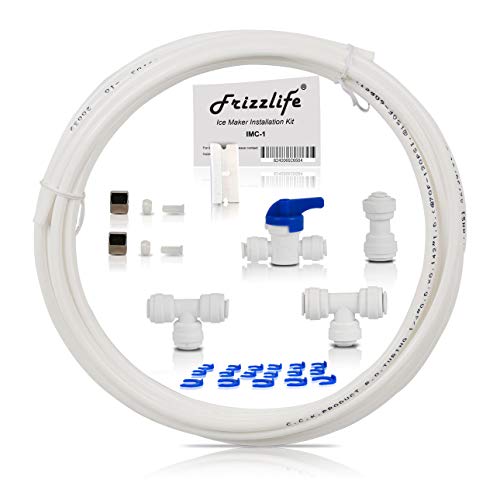
Frizzlife IMC-1 Ice Maker Water Line Installation Kit
- ✓ Easy DIY installation
- ✓ Compatible with multiple systems
- ✓ High-quality components
- ✕ Slightly rigid tubing
- ✕ Limited length options
| Tubing Length | 20 feet |
| Tubing Material | NSF certified plastic |
| Fitting Compatibility | 1/4″ and 3/8″ water lines |
| Fitting Type | Push-in quick connect |
| Included Fittings | Two compression fitting nuts, 1/4″ Tee fitting, 3/8″ Tee fitting |
| Application Compatibility | Reverse osmosis systems and water filtration systems from various brands |
What immediately caught my eye about the Frizzlife IMC-1 Ice Maker Water Line Installation Kit was how effortlessly it snapped into place. The push-in quick connect fittings felt almost magical—no tools, no fuss, just a firm push, and it was secure.
During installation, I appreciated how versatile the kit was. It fits both 1/4″ and 3/8″ lines, which means I didn’t have to worry about compatibility issues with my fridge or RO system.
The 20-foot tubing gave me plenty of slack to run the line neatly behind my appliances without feeling cramped.
The quality of the components is impressive. The fittings feel sturdy, and the NSF certification gave me confidence in the water purity and durability.
Connecting it to my existing system was straightforward, thanks to the clear instructions and tool-free design.
One of the best parts? The multi-application design.
I can now use the same line for my ice maker, refrigerator water dispenser, or even a water cooler—no complicated switching needed. It’s a simple upgrade that makes a noticeable difference in water quality and convenience.
If you’re tired of dealing with leaks or complicated installs, this kit is a game-changer. It’s reliable, easy to set up, and works seamlessly with many popular systems.
Honestly, it’s made my ice and water experience much smoother and more efficient.
What is a Reverse Osmosis System and How Does It Work for Ice Makers?
Best practices for selecting the best reverse osmosis system for an ice maker involve considering the system’s capacity, the specific contaminants targeted, and the flow rate. It’s also vital to ensure that the RO system is compatible with the ice maker in question. Regular maintenance, including replacing filters and membranes as recommended by the manufacturer, is essential for optimal performance and longevity of both the RO system and the ice maker.
Why is Water Quality Important for Ice Production?
Water quality is crucial for ice production because impurities in the water can affect the clarity, taste, and texture of the ice, ultimately impacting the quality of beverages served. Clean water ensures that the ice is free from contaminants that could alter its flavor or introduce harmful substances.
According to the World Health Organization (WHO), water used for food and beverage production must meet strict safety and quality standards to prevent health risks. Inadequate treatment can lead to the presence of chlorine, minerals, and other contaminants in the ice, which can compromise both safety and palatability (WHO, 2021).
The underlying mechanism involves the freezing process itself; when water containing impurities freezes, these particles can become trapped within the ice, resulting in cloudy ice cubes and undesirable flavors. Additionally, minerals such as calcium and magnesium can lead to scaling in ice-making equipment, reducing efficiency and lifespan (American Water Works Association). Thus, utilizing a high-quality reverse osmosis system can effectively remove these impurities, ensuring that the water used for ice production is as pure as possible, leading to clearer and better-tasting ice.
How Do Total Dissolved Solids (TDS) Affect Ice Quality?
Total Dissolved Solids (TDS) can significantly impact the quality of ice produced by an ice maker.
- Clarity of Ice: High levels of TDS can cause cloudiness in ice cubes, making them less visually appealing. The impurities present in water, such as minerals and metals, can create tiny air bubbles that become trapped in the ice, leading to a cloudy appearance.
- Flavor of Ice: TDS can affect the taste of the ice, which can subsequently alter the flavor of beverages it is used in. When TDS levels are high, the ice may carry over flavors from the dissolved solids, which can be undesirable for drinks that rely on pure, clean ice.
- Melting Rate: Ice made from water with high TDS levels may melt faster than ice made from purified water. The additional minerals and dissolved solids can alter the density and structure of the ice, affecting how it holds up in drinks and how quickly it melts.
- Health Considerations: Some dissolved solids may include harmful contaminants that could pose health risks. Using a reverse osmosis system to reduce TDS in water can ensure that the ice produced is not only of higher quality but also safer for consumption.
- Equipment Longevity: High TDS levels can lead to scaling and buildup in ice makers, potentially causing mechanical issues over time. Using purified water can help extend the lifespan of the ice maker by minimizing the risk of damage from mineral deposits.
What Features Should You Consider When Choosing a Reverse Osmosis System for an Ice Maker?
When choosing the best reverse osmosis system for an ice maker, consider the following features:
- Filtration Capacity: The filtration capacity of the system indicates how much water it can purify within a certain timeframe. A higher capacity is essential for ice makers as it ensures a consistent supply of clean water, preventing any interruptions during ice production.
- Membrane Quality: The quality of the reverse osmosis membrane is crucial, as it determines the system’s efficiency in removing contaminants. A high-quality membrane can effectively filter out a broad range of impurities, including heavy metals, chlorine, and sediment, which can affect the taste and quality of the ice.
- Storage Tank Size: The size of the storage tank is significant for ice makers that require a large volume of purified water. A larger tank allows for ample water storage, ensuring that your ice maker can operate continuously without delays caused by insufficient water supply.
- Waste Water Ratio: The waste water ratio indicates how much wastewater is produced during the purification process compared to the purified water generated. A lower waste water ratio is preferable as it means more efficient water use, which is beneficial for reducing water costs and environmental impact.
- Installation and Maintenance: Consider the ease of installation and the maintenance requirements of the reverse osmosis system. A system that is easy to install and maintain can save you time and effort, ensuring that your ice maker runs smoothly without frequent service interruptions.
- Certification and Testing: Look for systems that have been certified by reputable organizations for contaminant removal and performance. Certifications can provide assurance of the system’s effectiveness and safety, ensuring that the water used in your ice maker meets health standards.
- Cost and Warranty: Evaluate the overall cost of the system, including installation and replacement parts, as well as the warranty offered. A good warranty can protect your investment, while a reasonable cost ensures that you get a high-quality system without overspending.
What is the Ideal Filter Type for Ice Maker Applications?
The impact of using a high-quality reverse osmosis system for ice makers is significant. For instance, using purified water leads to clearer and better-tasting ice, which is crucial for restaurants and bars where presentation and flavor are paramount. According to a study by the International Journal of Refrigeration, ice clarity is often a direct indicator of the purity of the water used, making RO systems essential in food service industries.
The benefits of using a reverse osmosis system extend beyond just ice quality. They can also improve the lifespan and efficiency of ice-making equipment by reducing the buildup of scale and mineral deposits that can occur when using unfiltered water. This, in turn, can lead to lower maintenance costs and extended equipment life, providing long-term economic benefits for businesses.
To maximize the effectiveness of a reverse osmosis system for ice makers, best practices include regular maintenance and timely replacement of filters and membranes. It is also advisable to conduct periodic water quality tests to ensure the system continues to perform optimally. Additionally, integrating remineralization filters can help achieve a balanced water profile that enhances both the taste of the ice and the efficiency of the ice maker.
How Do Flow Rate and Storage Capacity Influence Ice Maker Efficiency?
Flow rate and storage capacity are critical factors influencing the efficiency of an ice maker, especially when using a reverse osmosis (RO) system.
Flow Rate:
– The flow rate refers to the speed at which water is produced by the RO system. For ice makers, a higher flow rate ensures a consistent supply of fresh, filtered water.
– Typical ice makers require a flow rate of at least 1 gallon per hour. Systems with a higher flow rate can reduce waiting time for ice production, making them ideal for high-demand settings.
Storage Capacity:
– Storage capacity pertains to the amount of purified water the RO system can hold before needing to refill. A larger storage tank can lead to uninterrupted ice production.
– For home or small business usage, a tank with a 2-3 gallon capacity is often sufficient to meet the daily ice-making requirements.
Understanding these two components allows users to select a reverse osmosis system that aligns with the demands of their ice maker, ensuring efficient operation and the highest quality ice.
What Are the Top Reverse Osmosis Systems Recommended for Ice Makers?
The Home Master TMAFC-ERP is designed with efficiency in mind, utilizing a permeate pump that reduces water waste significantly compared to traditional systems. This means you can consistently have access to high-quality water for your ice maker without worrying about excessive water usage.
The Express Water RO5DX offers an easy setup and thorough filtration process, making it accessible for homeowners looking to enhance their ice quality without complicated installation requirements. Its affordability paired with performance makes it a popular choice among budget-conscious consumers.
The Waterdrop WD-G3-W is ideal for those with limited space, as its compact design allows it to fit in smaller areas without sacrificing filtration quality. The high flow rate ensures that you can quickly produce ice without waiting long periods, making it a practical option for busy households.
Which Systems Offer the Best Filter Lifespan and Maintenance Ease?
The Home Master TMULTRA-RO stands out with its innovative modular design, which allows users to replace only the necessary parts rather than the entire filter system. This not only extends the lifespan of the system but also simplifies the maintenance process, making it user-friendly.
The iSpring RCC7AK incorporates a remineralization filter that not only enhances the taste of water but also prolongs the lifespan of the RO filters. Its clear user guidelines make maintenance easy and accessible, ensuring that users can efficiently manage filter changes without professional help.
Waterdrop WD-G3-W offers a unique filtration process with a long-lasting filter that can last up to two years. This reduces the hassle of frequent filter changes and maintenance, making it an excellent choice for those looking for longevity and ease of use in their reverse osmosis system.
How Do You Properly Install a Reverse Osmosis System for Your Ice Maker?
To properly install a reverse osmosis system for your ice maker, follow these essential steps:
- Choose the Right Location: Identify a suitable location for your reverse osmosis system, ideally under the kitchen sink or near the ice maker.
- Gather Necessary Tools: Collect all necessary tools and materials, including a wrench, drill, tubing, and fittings, to ensure a smooth installation process.
- Install the RO System: Follow the manufacturer’s instructions to install the reverse osmosis system, ensuring all connections are secure and properly sealed.
- Connect to the Ice Maker: Run the purified water line from the RO system to the ice maker, making sure to use appropriate fittings and check for leaks.
- Test the System: After installation, turn on the water supply and check the flow rate, ensuring that the ice maker is receiving sufficient purified water.
Choose the Right Location: Selecting the right spot for the reverse osmosis system is vital for both accessibility and functionality. It should be close enough to the ice maker to minimize the length of tubing required, yet allow for easy maintenance and filter changes.
Gather Necessary Tools: Having the right tools on hand will make the installation process more efficient and help prevent delays. Common tools include a wrench for tightening fittings, a drill for making holes if needed, and various types of tubing and connectors to ensure a secure water line.
Install the RO System: Carefully follow the specific installation instructions provided by the manufacturer, as each system may have unique requirements. Properly mounting the system and ensuring all connections are tight will help prevent leaks and ensure optimal performance.
Connect to the Ice Maker: When connecting the reverse osmosis system to the ice maker, it’s crucial to use high-quality tubing and fittings to avoid any potential leaks. Make sure the tubing is securely attached to both the RO unit and the ice maker to provide a consistent supply of purified water.
Test the System: Once everything is connected, turn on the water supply and test the system to ensure it is functioning correctly. Check for any leaks and observe the flow rate to confirm that the ice maker is receiving adequate purified water for optimal ice production.
What Maintenance Practices Will Keep Your Reverse Osmosis System Running Smoothly?
To ensure your reverse osmosis system runs smoothly, regular maintenance practices are essential.
- Regular Filter Replacement: It is crucial to replace the pre-filters, membrane, and post-filters according to the manufacturer’s schedule, typically every 6 to 12 months. This prevents clogging and ensures that you receive clean, contaminant-free water, which is especially important for applications like ice makers where water quality directly affects the ice produced.
- Sanitization: Periodically sanitizing your reverse osmosis system helps eliminate bacteria and other pathogens that may have developed. Using a food-grade sanitizer during maintenance can keep the system free from microbial growth, ensuring that the water used for your ice maker remains pure and safe.
- Checking Water Pressure: Maintaining optimal water pressure is essential for the effectiveness of the reverse osmosis process. Regularly check the pressure gauge and make adjustments if necessary, as low pressure can lead to inefficient filtration, which can compromise the quality of water for your ice maker.
- Inspecting the Storage Tank: The storage tank should be inspected for any signs of leaks or corrosion. A damaged tank can impact the water supply and quality, so it is important to replace any faulty components and ensure that it is functioning properly to deliver the right amount of filtered water.
- Monitoring TDS Levels: Regularly testing the Total Dissolved Solids (TDS) levels can help you gauge the effectiveness of your reverse osmosis system. Elevated TDS levels may indicate that filters are saturated or the membrane is failing, which could result in poor ice quality if not addressed promptly.
- Checking for Leaks: Regularly inspect all connections and tubing for leaks or signs of wear. Leaks can not only waste water but also lead to more significant problems, like damage to the system or surrounding areas, jeopardizing the reliability of your water supply for the ice maker.