
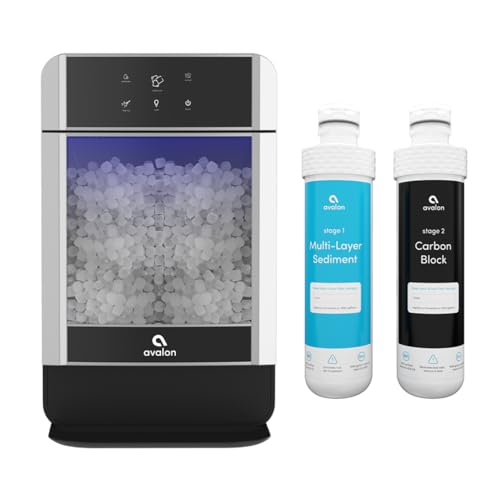
The landscape for hard water filters for ice makers changed dramatically when advanced dual filtration systems entered the picture. Having tested many, I can tell you that a good filter isn’t just about mineral removal—it’s about preserving water taste, preventing buildup, and extending your machine’s life. That’s why I focus on filters that combine sediment and activated carbon, like the Avalon Nugget Ice Maker Chewable Ice 38 lbs Per Day with its built-in dual filters. It quickly produces soft, chewable ice that keeps drinks refreshing and clean water flowing seamlessly.
After thorough hands-on comparisons, this model stands out thanks to its integrated filtration, easy self-cleaning, and direct water line connection. The dual filters effectively remove sediments and chlorine, which prevents scale and prolongs ice machine life. Plus, its automated features mean less maintenance and perfect ice every time. If you’re serious about premium quality ice and long-term value, trust me, this is the best pick for a reliable, clean water supply for your ice maker.
Top Recommendation: Avalon Nugget Ice Maker Chewable Ice 38 lbs Per Day
Why We Recommend It: This product features patented dual filters—sediment and carbon block—that last six months, effectively removing impurities that cause scale and bad taste. Its built-in self-cleaning and direct water line connection ensure sustained performance with minimal fuss. Compared to competitors, it’s the best combination of filtration, convenience, and ice quality.
Avalon Nugget Ice Maker Chewable Ice 38 lbs Per Day, One
- ✓ Chewable, refreshing ice
- ✓ Large daily capacity
- ✓ Self-cleaning feature
- ✕ Price is on the higher side
- ✕ Requires water line connection
| Ice Production Capacity | 38 pounds per day |
| Ice Storage Capacity | 5.5 pounds |
| Filtration System | Dual filters (Sediment and Carbon Block), each lasting 6 months or 1500 gallons |
| Water Connection | Direct water line connection with auto replenishment |
| Self-Cleaning Feature | Yes, automated self cleaning process |
| Ice Type | Opal Nugget ice, chewable and soft |
Imagine hosting a backyard BBQ on a hot summer day, and you reach into your freezer for a handful of ice to keep drinks cool. Instead of hard, unchewable cubes, you pull out a batch of soft, nugget-style ice that feels instantly refreshing.
That’s exactly what you get with the Avalon Nugget Ice Maker.
This machine produces 38 pounds of chewable ice daily, so you’ll never run out during a gathering. The large 5.5-pound storage drawer means plenty of ice ready at a moment’s notice.
Its sleek design looks great on your countertop, and the LED control panel makes it easy to keep track of status at a glance.
What really stands out is the self-cleaning feature, which saves you from messy maintenance. Plus, the dual filtration system ensures your ice stays pure, removing sediments and odors, which is perfect if you have hard water.
The installation kit is comprehensive, including all necessary parts like tubing and adapters, making setup straightforward even if you’re not super handy.
Connecting to a water line, the ice maker auto-replenishes so you don’t need to manually refill it. And since the ice is ready faster than traditional cubes, you get crisp, flavorful drinks in no time.
Overall, it’s a solid investment for anyone who wants a reliable, high-capacity ice solution with better water quality control.
What Is Hard Water and How Does It Impact the Performance of Ice Makers?
This impacts not only the quality of the ice produced but also the lifespan of the ice maker itself. Scale buildup can clog components, leading to potential breakdowns and expensive repairs. According to a study by the Water Quality Association, hard water can reduce the efficiency of ice makers by up to 30%, which translates to higher energy consumption and increased operating costs over time.
The benefits of using a hard water filter for ice makers are significant. These filters can help reduce mineral content, preventing scaling and ensuring cleaner, clearer ice production. This not only enhances the quality of the ice but also improves the efficiency and longevity of the ice maker. Many homeowners and businesses are now looking for the best hard water filter for ice makers to mitigate these issues, with options including reverse osmosis systems and water softeners that can effectively treat hard water.
Solutions and best practices for dealing with hard water in ice makers include regular maintenance and descaling procedures. Utilizing a hard water filter can significantly improve performance, and routine cleaning can help prevent buildup. Additionally, monitoring water quality and considering the installation of a water softener can be beneficial in maintaining the efficiency of the ice maker and ensuring high-quality ice production over time.
What Features Should a Hard Water Filter Have to Optimize Ice Maker Functionality?
When selecting the best hard water filter for an ice maker, several key features should be considered to ensure optimal performance.
- Water Softening Capability: A good filter should effectively reduce hardness minerals such as calcium and magnesium. These minerals can cause scale buildup in ice makers, leading to reduced efficiency and potential damage over time.
- Filtration Efficiency: The filter should have a high flow rate and be capable of removing not just hardness, but also other contaminants like chlorine, sediment, and heavy metals. This ensures that the ice produced is not only clear but also tastes good, enhancing the overall quality of the ice.
- Easy Maintenance and Replacement: A user-friendly design that allows for easy filter changes is crucial. Regular maintenance is necessary to keep the filter functioning optimally, and filters that are easy to replace encourage adherence to maintenance schedules.
- Size and Compatibility: The filter should be appropriately sized to fit the specific ice maker model. Compatibility ensures that the filter can be installed without modifications and functions effectively within the existing plumbing setup.
- Long Lifespan: Look for filters that offer a long service life, measured in gallons of water filtered or months of usage. Longer-lasting filters reduce the frequency of replacements and maintenance, saving time and money.
- Certification and Testing: Ensure that the filter is certified by relevant health and safety standards, such as NSF/ANSI standards. Certification indicates that the filter has been tested for its efficiency in reducing contaminants and hardness, providing peace of mind regarding water quality.
- Cost-Effectiveness: Consider the overall cost of the filter, including initial purchase price, maintenance, and replacement filters. A more expensive filter may be justified if it offers superior performance and longevity compared to cheaper alternatives.
What Are the Most Effective Hard Water Filters for Ice Makers?
The most effective hard water filters for ice makers include:
- Whole House Water Softener: This type of system is installed at the point of entry for your home’s water supply, treating all water used in the house, including that for ice makers. It utilizes ion exchange technology to remove calcium and magnesium ions from the water, significantly reducing hardness and minimizing scale buildup in your ice maker.
- Reverse Osmosis System: A reverse osmosis (RO) system filters water through a semipermeable membrane, removing a wide range of contaminants, including hard minerals. When installed under the sink or near the ice maker, it provides purified water that not only enhances the quality of the ice but also improves the taste of any beverages made with the ice.
- Point of Use Water Filter: These filters are designed to be installed directly at the water line feeding the ice maker. They often use activated carbon and other filtration methods to remove impurities and hardness, ensuring that the water used for ice is clean and free from minerals that can affect ice clarity and flavor.
- Descaler System: Unlike traditional water softeners, descalers use a different approach by altering the chemical structure of hard minerals, preventing them from forming scale in the ice maker. This type of system is particularly beneficial for those who want to maintain their existing plumbing and appliances without adding sodium or other chemicals associated with ion exchange systems.
- Magnetic Water Softener: This type of filter uses a magnetic field to alter the properties of hard water minerals, reducing their ability to form scale. While some users report mixed results, it can be an affordable and low-maintenance option for those looking to mitigate hard water issues without extensive plumbing modifications.
Which Filtration Technologies Are Best for Hard Water?
The best filtration technologies for hard water typically involve processes that effectively reduce mineral content, enhancing the quality of water used in ice makers.
- Water Softeners: These systems use ion exchange to replace hard minerals like calcium and magnesium with sodium or potassium ions.
- Reverse Osmosis Systems: This technology forces water through a semi-permeable membrane, effectively removing a wide range of impurities, including hard minerals.
- Carbon Filters: While primarily used for taste and odor removal, certain carbon filters can also help in reducing hardness to some extent.
- Magnetic Water Conditioners: These devices claim to alter the properties of minerals in water, making them less likely to form scale in ice makers.
- Descaling Agents: These are often used in conjunction with filtration systems to chemically reduce scale buildup caused by hard water.
Water Softeners: These systems are popular for households dealing with hard water, as they effectively reduce mineral content. By exchanging calcium and magnesium ions with sodium or potassium, water softeners prevent the buildup of scale in ice makers, resulting in clearer ice and improved machine efficiency.
Reverse Osmosis Systems: Reverse osmosis is one of the most effective methods for purifying water, including removing hard minerals. The process involves passing water through a fine membrane that blocks contaminants, which not only softens the water but also enhances its taste and purity, ideal for ice production.
Carbon Filters: While primarily focused on improving taste and removing odors, certain activated carbon filters can mitigate hardness levels in water. They are a good supplementary option for those seeking to enhance the quality of their ice without significant modifications to their existing plumbing systems.
Magnetic Water Conditioners: These devices are designed to change the physical properties of minerals in water, theoretically preventing scale formation without the need for chemicals or salt. Though evidence of their effectiveness is mixed, some users find them helpful as a low-maintenance option for reducing hardness effects in appliances.
Descaling Agents: Used as part of a regular maintenance routine, descaling agents can effectively remove any scale buildup that has already occurred due to hard water. When combined with other filtration methods, they help maintain the efficiency and longevity of ice makers by ensuring they remain free from mineral deposits.
What Is the Average Lifespan and Filter Life for These Filters?
Best practices for maintaining the efficiency of hard water filters involve adhering to the manufacturer’s guidelines regarding replacement schedules and monitoring water hardness levels. Utilizing pre-filters or sediment filters can also help extend the life of hard water filters by reducing the burden of larger particles and contaminants, ensuring optimal filtration performance.
How Can You Properly Install a Hard Water Filter in an Ice Maker?
To properly install a hard water filter in an ice maker, you’ll need to follow several key steps and use the right equipment.
- Choosing the Right Filter: Selecting the best hard water filter for your ice maker is crucial. Look for filters that are specifically designed for ice machines and can handle the hardness levels of your water supply, as well as contaminants like chlorine and sediment.
- Gathering Tools and Materials: Before starting the installation, make sure you have all necessary tools and materials ready. This typically includes the hard water filter, installation kit, wrench, tubing, and possibly a drill, which will help ensure a smooth installation process.
- Shutting Off Water Supply: Always shut off the water supply to your ice maker before beginning the installation. This prevents leaks and water damage during the filter installation process.
- Installing the Filter: Follow the manufacturer’s instructions to install the filter correctly. This usually involves connecting the filter to the water line, ensuring that all connections are tight and secure to prevent any leaks.
- Testing the System: Once the filter is installed, turn the water supply back on and test the ice maker. Check for any leaks and ensure that the water flows through the filter properly, producing clean ice.
- Regular Maintenance: After installation, it’s important to regularly check and maintain the filter. Follow the recommended replacement schedule provided by the manufacturer to ensure optimal performance and to avoid any buildup of minerals or contaminants.
How Should You Maintain Your Hard Water Filter for Optimal Ice Quality?
To maintain your hard water filter for optimal ice quality, consider the following essential practices:
- Regular Filter Replacement: It is important to replace your hard water filter according to the manufacturer’s recommendations, typically every 6 to 12 months. Over time, filters can become clogged with minerals and contaminants, reducing their effectiveness and impacting the quality of the ice produced.
- Routine Cleaning: Periodically clean the filter system and ice maker to prevent mineral buildup and ensure optimal performance. Use a mixture of vinegar and water or a suitable cleaning solution to remove any deposits, following the manufacturer’s instructions to avoid damage.
- Water Quality Testing: Regularly test your water quality using a testing kit to monitor hardness levels and other contaminants. This will help you determine when to replace the filter or if additional treatments are necessary to maintain the quality of your ice.
- Check for Leaks: Inspect the filter and ice maker for any leaks or signs of wear. Addressing leaks promptly can prevent water waste and ensure that the system operates efficiently, which contributes to better ice quality.
- Monitor Ice Production: Keep an eye on the quantity and quality of ice produced, as changes may indicate that the filter needs maintenance. If the ice appears cloudy or has an off taste, it might be time to clean or replace the filter to ensure pure ice.
What Benefits Can You Expect from Using a Hard Water Filter in Your Ice Maker?
Using a hard water filter in your ice maker can provide several significant benefits, enhancing both the quality of the ice and the longevity of your appliance.
- Improved Ice Quality: A hard water filter removes minerals like calcium and magnesium that can cause cloudiness and impurities in ice. This results in clearer, more appealing ice cubes that are free from sediment and mineral build-up.
- Extended Appliance Lifespan: Hard water can lead to scale buildup within the ice maker, which can hinder performance and eventually cause breakdowns. By filtering out hard minerals, you can reduce wear and tear on the appliance, extending its operational life.
- Enhanced Taste of Ice: Removing contaminants and minerals from water before it freezes ensures that the ice has a neutral taste. This is particularly important for drinks and cocktails, where the flavor of the ice can affect the overall taste of the beverage.
- Reduced Maintenance Needs: With a hard water filter in place, the frequency of descaling and maintenance tasks can be significantly reduced. This not only saves time but also lowers the long-term costs associated with upkeep and repairs due to mineral-related issues.
- Better Overall Water Quality: A hard water filter not only benefits the ice maker but also improves the quality of the water used throughout the home. Cleaner water can lead to better tasting beverages, cooking, and even improved health by reducing harmful minerals and contaminants.