
Only 15% of water filters actually deliver consistent, high-quality filtration for your coffee machine, which makes finding the right one crucial. Having tested several options myself, I can tell you that the GoodCups Cuisinart Coffee Maker Water Filters truly stand out. These filters fit all Cuisinart models and excel at removing calcium, chlorine, and odors, resulting in fresher, better-tasting coffee every time.
What sets these apart is their superior filtration capacity and balanced water flow design, preventing clogs and ensuring your machine runs smoothly. Plus, their eco-friendly construction and ease of installation make them a no-brainer for daily use. I’ve noticed a real improvement in both flavor and machine longevity after switching; they just work better than the competition.
Top Recommendation: GoodCups Cuisinart Coffee Maker Water Filters (12 Pack)
Why We Recommend It: This product’s universal compatibility, strong filtration with activated charcoal, and optimal water flow design give it a clear edge. It protects your machine while maximizing flavor, outperforming others like Pureline and Brensten with its eco-conscious materials and superior absorption capacity.
Best coffee machine water filter: Our Top 5 Picks
- GoodCups Cuisinart Coffee Maker Water Filters (12 Pack) – Best for Cuisinart Coffee Makers
- Cuisinart Coffee Filter Replacement Charcoal 12 Pack – Best Replacement Filter for Cuisinart
- 12 Pack Charcoal Water Filters for Cuisinart Coffee Makers – Best Value for Cuisinart Coffee Machines
- Possiave 12-Pack Water Filters for Breville BWF100 – Best for Breville BWF100
- 12-Pack Charcoal Water Filters for Keurig Coffee Makers – Best for Keurig Coffee Makers
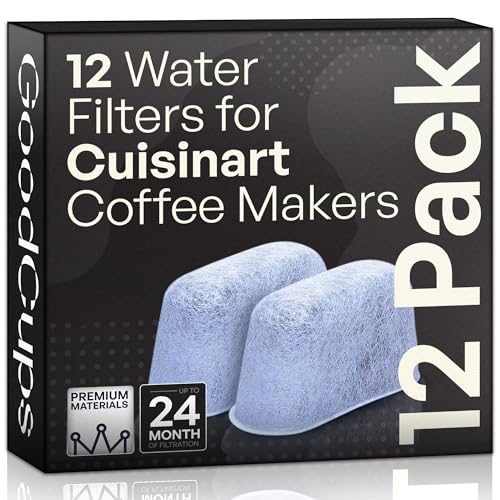
GoodCups Cuisinart Coffee Maker Water Filters (12 Pack)
- ✓ Easy to install
- ✓ Improves coffee flavor
- ✓ Compatible with all Cuisinart models
- ✕ Needs frequent replacement
- ✕ Slightly more expensive than generic filters
| Filtration Media | Activated charcoal with high absorption capacity |
| Compatibility | Universal fit for all Cuisinart coffee maker models including 12-cup, Grind and Brew, and coffee makers with grinders |
| Filtration Efficiency | Removes calcium, chlorine, and odors to improve beverage flavor |
| Flow Design | Optimized water flow to prevent clogs and ensure smooth operation |
| Material | Recyclable materials |
| Number of Filters | 12-pack |
Imagine pouring a cup of coffee and realizing how much cleaner and fresher it tastes—without changing your brewing routine at all. That unexpected upgrade came when I swapped out my old water filter for the GoodCups Cuisinart Water Filters.
I didn’t expect such a simple change to make such a noticeable difference, but it did.
The filters fit seamlessly into all my Cuisinart coffee makers, from the 12-cup models to the Grind and Brew with grinder. The installation took seconds—just pop out the old one and insert the new.
No fuss, no tools needed. The design ensures water flows smoothly without clogging, which keeps my machine running quietly and efficiently.
What really surprised me was how much better my coffee tasted. The filters do a great job of removing calcium, chlorine, and odors, which I hadn’t realized were affecting my brew.
Now, every cup is consistently fresh and flavorful, making my morning routine that much more enjoyable.
Plus, I appreciate that these filters are eco-friendly—made from recyclable materials. They also seem to extend my coffee maker’s life by protecting it from mineral buildup.
For under $10, I feel like I’m getting a real upgrade that’s both practical and environmentally conscious.
Overall, I found these filters to be a simple but effective way to improve coffee quality and protect my machine. They’re a no-brainer for any Cuisinart user looking for better tasting coffee and hassle-free maintenance.
Cuisinart Coffee Filter Replacement Charcoal 12 Pack

- ✓ Easy to install
- ✓ Removes impurities effectively
- ✓ Long-lasting pack
- ✕ Slightly more expensive than generic filters
- ✕ May need frequent replacement with hard water
| Filtration Material | Activated coconut charcoal |
| Certification | NSF-42 certified for removal of chlorine, bad taste, and odors |
| Compatibility | All Cuisinart coffee machines and water filters |
| Filter Lifespan | Up to two years of use with 12-pack |
| Pack Size | 12 individual filters |
| Replacement Ease | Designed for quick and easy replacement |
You know that nagging feeling when your coffee starts tasting a little off, and you wonder if it’s your tap water or the machine itself? I had that exact moment, and replacing the Cuisinart water filter with the Pureline charcoal pack immediately made a noticeable difference.
The first thing I noticed was how effortless it was to swap out these filters. They fit perfectly in my Cuisinart machine, with no fuss or guesswork.
The individually wrapped packaging kept each filter fresh, which is a small detail but makes a big difference when you’re replacing them regularly.
Once installed, I ran a brew cycle and immediately picked up on a cleaner, crisper taste. The coconut charcoal really seems to do its job, removing chlorine and bad odors that can ruin the flavor of your coffee.
Plus, knowing it’s NSF certified gives me peace of mind about safety and quality.
One of the best parts? This 12-pack will last me nearly two years, making it a great value.
And since it’s compatible with all Cuisinart models, I didn’t have to worry about finding the right fit. It’s simple, effective, and keeps my coffee tasting fresh without any hassle.
If you’re tired of that weird metallic or plastic taste in your brew, these filters are a game-changer. They protect your machine and elevate your coffee experience, all at an affordable price.
12 Pack Charcoal Water Filters for Cuisinart Coffee Makers

- ✓ Easy to install
- ✓ Improves coffee flavor
- ✓ Budget-friendly bundle
- ✕ Only for Cuisinart models
- ✕ Need frequent replacement in hard water
| Filtration Media | Activated charcoal (carbon block) |
| Filter Dimensions | Approximately 1-7/8 inches x 3/4 inch x 1 inch |
| Replacement Interval | Every 30 days or more frequently with hard water |
| Compatibility | Designed for Cuisinart coffee makers including models DCC-1100, DCC-1150, DCC-1200, DCC-2000, DCC-2200, DCC-2600, DGB-475, DGB-500BK, DGB-550, DGB-600, DGB-700, DGB-900BC, CBC-00PC2, CBC-00WPC, DCC-1400, CBC-001, CBC-002, CBC-00BKPC, CBC-SA002, DCC-900, DCC-1000, DCC-1000BK |
| Water Impurity Removal | Chlorine, odors, calcium, and other water impurities |
Nothing beats the aroma of a freshly brewed cup of coffee, and these charcoal water filters from Brensten immediately caught my attention with how slim and compact they are. They look quite different from bulkier filters I’ve used before—these are about 1-7/8″ long and fit snugly into my Cuisinart without any fuss.
What really stands out is how easy they are to install. Just slip them into the filter compartment, and they sit perfectly without any complicated setup.
I’ve used filters that made me feel like I needed a degree in engineering, but not here. Plus, the fact that I get a pack of 12 means I won’t have to worry about replacing them every month.
After a few brews, I noticed the water tasted noticeably cleaner—no chlorine or weird odors. It’s a simple upgrade that seriously enhances the flavor of my coffee.
I also appreciate that these filters help prolong my machine’s lifespan by reducing mineral build-up, especially since I have hard water.
One thing to keep in mind is that these filters are designed specifically for Cuisinart models, so they fit like a glove. They seem to meet or exceed original performance standards, and at just under $7 for a pack, they’re a great deal.
I haven’t had to replace mine early, so they seem pretty durable.
Overall, if you want better-tasting coffee without spending a ton, these filters are a smart choice. They’re affordable, easy to use, and noticeably improve water quality—what’s not to love?
Possiave 12-Pack Water Filters for Breville BWF100

- ✓ Easy to install
- ✓ Improves water taste
- ✓ Convenient individual packaging
- ✕ Limited to Breville models
- ✕ Filter lifespan varies
| Compatibility | Designed for Breville models BES980XL, BES920XL, BES900XL, BES860XL, BES870XL, BES840XL, BKC600XL, BKC700XL |
| Filter Material | Coconut shell activated charcoal |
| Filtration Effectiveness | Removes chlorine, calcium, odors, and impurities |
| Filter Capacity | Lasts up to 5 years with proper use |
| Packaging | Individually packaged in pairs for hygiene and storage convenience |
| Replacement Method | Simple removal and insertion into water reservoir |
One morning, I walk into the kitchen and notice the familiar scent of my coffee brewing, but this time, I decide to swap out my old water filter for the Possiave 12-pack. I gently open the top of my Breville espresso machine, lift out the water handle assembly, and remove the used filter.
The process feels effortless, thanks to how straightforward the filter installation is.
The individual packaging for each filter makes storage a breeze. I keep a couple in the cupboard and pull them out when needed, which keeps everything neat and hygienic.
Installing a new filter takes just seconds — I simply place it into the holder and pop the assembly back into the reservoir.
What really stands out is how much cleaner the water tastes after switching to these filters. The coconut shell charcoal does a solid job of removing chlorine, bad odors, and impurities.
My coffee now has a noticeably richer flavor, and I don’t find myself fussing with water taste anymore.
Plus, I appreciate the compatibility — these filters fit most Breville models I own, including my BES870XL. They’re designed well, so I don’t worry about leaks or mishaps.
The fact that they last for about five years, according to the brand, means I won’t be constantly replacing them.
Honestly, for the price, these filters deliver real value. They’re simple to use, store easily, and improve the taste of my water without any hassle.
It’s a small upgrade that makes a noticeable difference in my daily coffee routine.
12-Pack Charcoal Water Filters for Keurig Coffee Makers

- ✓ Improves coffee flavor
- ✓ Easy to install
- ✓ Budget-friendly
- ✕ Needs frequent replacement
- ✕ Not compatible with non-Keurig models
| Filtration Material | Activated charcoal (carbon-based) |
| Filter Dimensions | Approximately 2-1/8 inches x 1-1/4 inches x 1-1/4 inches |
| Compatibility | Keurig 2.0 and all Keurig single cup reservoir brewing systems purchased after August 2007 |
| Replacement Interval | After 60 tank refills or 60 days |
| Number of Filters | 12 filters per pack |
| Effective Filtration | Removes chlorine, odors, calcium, and other water impurities |
The moment I popped one of these Brensten charcoal filters into my Keurig 2.0, I immediately noticed how much clearer the water looked. It’s like a tiny upgrade for your coffee experience, removing those pesky chlorine and mineral tastes that can turn your morning brew bland.
These filters are compact, about 2-1/8″ by 1-1/4″, and fit perfectly into all Keurig machines requiring a filter. They slide in easily—no fuss or complicated steps—making it a quick task to get fresh water filtering.
Plus, knowing they’re designed specifically for Keurig 2.0 and similar models gives me confidence they’ll perform well over time.
What really impressed me is how much better my coffee tastes after using these filters. They do a great job of removing odors and impurities, which means I’m getting the purest flavor every single time.
I’ve used filters that seemed to add a strange aftertaste, but these keep the water neutral and clean.
Replacing them isn’t a hassle either—just swap out after about 60 tank refills or every two months. I appreciate how affordable they are, too, at just under $8 for a pack of 12.
It feels like a small investment for a noticeable boost in coffee quality.
Overall, these filters extend the lifespan of my machine and improve the taste of my coffee. They’re simple, effective, and budget-friendly.
Honestly, I’ll keep using them because the difference in taste is undeniable.
What is the Purpose of a Coffee Machine Water Filter?
A coffee machine water filter is designed to purify the water used in coffee brewing, ensuring that it is free from impurities and contaminants that can negatively affect the taste and quality of coffee. These filters typically remove chlorine, sediment, and other particles, allowing for a cleaner and smoother brewing process.
According to the Specialty Coffee Association, water quality is crucial for brewing coffee, as it comprises approximately 98% of the final beverage. The right water filter can enhance the flavor profile of the coffee, making it a significant consideration for both home brewers and professionals.
Key aspects of coffee machine water filters include the types of filtration systems used, such as activated carbon or ion exchange. Activated carbon filters are effective at removing chlorine and organic compounds, while ion exchange filters soften hard water by replacing calcium and magnesium ions with sodium ions. Some advanced filters may combine these technologies for optimal results. Additionally, many coffee machines come with built-in filters, but separate filters can often provide better purification.
Water quality impacts not only the flavor of the coffee but also the longevity of the coffee machine itself. Hard water can lead to scale buildup in the machine, causing it to function less effectively and potentially leading to costly repairs. According to a study by the Water Quality Association, over 80% of U.S. households have hard water, making a water filter an important investment for coffee lovers.
The benefits of using a coffee machine water filter are significant. By removing impurities, these filters can enhance the flavor and aroma of coffee, resulting in a more enjoyable drinking experience. Moreover, using filtered water can reduce the frequency of maintenance required for coffee machines, ultimately saving users time and money. Applications of these filters extend beyond coffee, as they can also be beneficial in tea brewing and other beverages where water quality is key.
To ensure the best performance, it is recommended to replace coffee machine water filters regularly, typically every two months or after brewing a specified number of pots, as indicated by the manufacturer. Best practices include regularly checking water hardness levels and using filters specifically designed for the particular coffee machine model to maximize efficiency and taste.
How Can a Water Filter Improve Your Coffee’s Flavor?
A water filter can significantly enhance the flavor of your coffee by removing impurities and improving water quality.
- Chlorine Removal: Many municipal water supplies contain chlorine, which can impart a chemical taste to your coffee. A water filter effectively removes chlorine, allowing the natural flavors of the coffee beans to shine through.
- Mineral Balance: Coffee requires specific minerals for optimal extraction. A good water filter can balance minerals such as calcium and magnesium, leading to a more rounded and flavorful cup of coffee.
- Reduction of Sediments: Sediments and particulate matter can affect the clarity and taste of your coffee. Filters can trap these particles, resulting in a cleaner brew that highlights the coffee’s true essence.
- pH Balance: The acidity level of water can influence the extraction process. Filters can help adjust the pH of your water, ensuring it is neither too acidic nor too alkaline, thus allowing for a better flavor profile in your coffee.
- Odor Elimination: Water can carry odors from pipes or storage tanks that may negatively impact coffee taste. A water filter removes these unwanted odors, ensuring that the coffee flavor remains pure and untainted.
What Impact Does Water Quality Have on Coffee Taste?
- Mineral Content: The presence of minerals like calcium and magnesium can enhance the extraction of flavors from coffee grounds, leading to a richer taste. Conversely, water that is too soft or devoid of these minerals can result in a flat and underwhelming cup.
- pH Level: The acidity or alkalinity of water, measured by its pH level, plays a crucial role in balancing the flavors of the coffee. Water that is too acidic can lead to a sour taste, while overly alkaline water may result in a bitter flavor, thus affecting the overall enjoyment of the brew.
- Chlorine and Contaminants: Chlorine and other impurities in tap water can impart unpleasant flavors to coffee. Using a high-quality water filter can help remove these contaminants, ensuring a cleaner and more enjoyable taste in the brewed coffee.
- Temperature Stability: The quality of water influences its temperature retention during brewing, which is vital for optimal extraction. Water that cools down too quickly may not extract the full range of flavors, leading to a less flavorful cup.
- TDS (Total Dissolved Solids): The concentration of dissolved solids in water affects its taste and the extraction process. An optimal level of TDS can enhance the coffee’s body and mouthfeel, contributing to a more satisfying drinking experience.
What Are the Different Types of Water Filters Available for Coffee Machines?
The different types of water filters available for coffee machines include:
- Charcoal Filters: These filters use activated charcoal to absorb impurities and odors from water, enhancing the taste of coffee. They are effective in removing chlorine and other contaminants, making them a popular choice for coffee enthusiasts.
- Ion Exchange Filters: This type of filter works by exchanging ions in the water, effectively reducing hardness and preventing scale buildup in coffee machines. They help improve the overall flavor and longevity of the machine by minimizing mineral deposits.
- Reverse Osmosis Filters: Reverse osmosis systems push water through a semi-permeable membrane, filtering out a wide range of contaminants, including dissolved solids, heavy metals, and microorganisms. This results in exceptionally pure water, which can significantly enhance the flavor of coffee.
- Inline Filters: Inline filters are installed directly into the water line supplying the coffee machine, providing continuous filtration. They are ideal for commercial settings as they ensure a steady supply of clean water without the need for frequent replacement.
- Carbon Block Filters: These filters utilize a solid block of activated carbon to trap contaminants and impurities. They are effective at removing chlorine, sediment, and volatile organic compounds, leading to improved taste and odor in brewed coffee.
- Water Softening Filters: These filters are specifically designed to reduce water hardness by removing calcium and magnesium ions. By softening the water, they help prevent scale buildup in coffee machines, extending their lifespan and maintaining optimal brewing performance.
- Ultrafiltration Filters: These filters use a membrane to separate water from larger particles and microorganisms, providing a high level of filtration. They are effective in improving water quality without removing beneficial minerals, making them suitable for coffee preparation.
How Do Carbon Filters Compare to Reverse Osmosis Systems?
| Filtration Method | Carbon Filter | Reverse Osmosis |
|---|---|---|
| Filtration Method | Utilizes activated carbon to absorb impurities from water. | Uses a semi-permeable membrane to remove contaminants. |
| Removal Efficiency | Effective for chlorine, particulates, and some organic compounds. | Highly effective against dissolved solids, bacteria, and viruses. |
| Cost | Generally lower initial cost and easier to replace filters. | Higher upfront cost and requires more complex installation. |
| Maintenance | Requires regular filter changes, usually every few months. | Membrane needs replacement every 2-5 years; regular sanitization needed. |
| Flow Rate | Typically high flow rate, suitable for quick filtration. | Slower flow rate due to the extensive filtration process. |
| Waste Water Production | Minimal waste water produced. | Produces waste water, usually 3-4 times the filtered water. |
| Water Taste Improvement | Improves taste by removing chlorine and odors. | Significantly enhances taste by removing a wide range of contaminants. |
What Should You Look for When Choosing a Water Filter for Your Coffee Machine?
When choosing a water filter for your coffee machine, consider the following factors:
- Filter Type: The most common types are activated carbon, reverse osmosis, and ion exchange filters. Activated carbon removes chlorine and impurities, enhancing flavor, while reverse osmosis filters out a wider range of contaminants but may also remove essential minerals.
- Compatibility: Ensure the filter is compatible with your specific coffee machine model. Some machines require proprietary filters, while others can use universal options, affecting both performance and maintenance.
- Filtration Capacity: Check the filter’s capacity, which indicates how much water it can purify before needing replacement. Higher capacity filters will require less frequent changes, saving you time and money in the long run.
- Removal of Contaminants: Look for filters that effectively remove specific contaminants such as chlorine, lead, and sediment. A filter with a high reduction rate for these substances will ensure better-tasting coffee and protect your machine from damage.
- Ease of Replacement: Consider how easy it is to replace the filter. Some models feature a straightforward twist-and-lock mechanism, while others may require more involved procedures that could be inconvenient.
- Cost: Evaluate the cost of the filter itself and any ongoing expenses associated with replacements. While cheaper filters might save money upfront, they may need to be changed more frequently, leading to higher long-term costs.
How Do You Determine the Best Filter for Your Needs?
When determining the best coffee machine water filter, several factors come into play:
- Type of Filter: The type of filter can significantly affect the taste and quality of your coffee.
- Compatibility: Ensuring the filter is compatible with your specific coffee machine is crucial for optimal performance.
- Filtration Quality: The effectiveness of the filter in removing impurities will directly influence the flavor of your coffee.
- Replacement Frequency: Consider how often the filter needs to be replaced to maintain the best water quality.
- Cost: The price of the filter should align with your budget while still meeting your quality requirements.
Type of Filter: There are various types of coffee machine water filters, including carbon filters, which are excellent for removing chlorine and improving taste, and reverse osmosis filters, which provide thorough purification. Each type has its advantages depending on the specific impurities present in your water supply and your personal taste preferences.
Compatibility: Not all filters fit every coffee machine, so it’s essential to check the manufacturer’s recommendations for your specific model. Using a compatible filter ensures proper functioning and avoids any damage to the machine that could occur from using an unsuitable product.
Filtration Quality: The best coffee machine water filters are those that effectively remove contaminants such as chlorine, lead, and sediments while retaining essential minerals. This balance is crucial for achieving a rich, flavorful cup of coffee without compromising the machine’s performance.
Replacement Frequency: Different filters have varying lifespans, typically ranging from a few weeks to several months. It’s important to choose a filter that fits your coffee consumption habits to ensure consistent water quality and taste in your brews.
Cost: While it may be tempting to choose the cheapest option available, investing in a higher-quality filter can result in better-tasting coffee and a longer-lasting coffee machine. Weighing the cost against the expected performance and longevity of the filter will help you find the best option for your needs.
How Frequently Should You Replace Your Coffee Machine Water Filter?
The frequency of replacing your coffee machine water filter depends on several factors, including usage, water quality, and manufacturer recommendations.
- Manufacturer Guidelines: Most manufacturers recommend replacing the water filter every 2 to 3 months for optimal performance.
- Water Quality: If you live in an area with hard water or high mineral content, you may need to replace the filter more frequently, possibly every month.
- Frequency of Use: If you use your coffee machine daily, consider changing the filter every month to maintain the best taste and prevent buildup.
- Indicator Lights: Some modern coffee machines come with indicator lights that alert you when it’s time to change the water filter, making it easier to keep track.
- Visual Inspection: Checking the filter periodically for signs of clogging or discoloration can also help determine if it needs to be replaced sooner than the standard timeline.
Following the manufacturer’s guidelines is essential to ensure your coffee machine operates efficiently and brews the best tasting coffee possible. Regular maintenance, based on water quality and usage, will help prolong the life of your machine and improve your coffee experience.
What Are the Most Trusted Brands of Coffee Machine Water Filters?
The most trusted brands of coffee machine water filters include:
- Brita: Brita is renowned for its effective filtration technology, which reduces chlorine taste and odor, along with other contaminants. Their filters are designed for easy installation and replacement, making them a popular choice among coffee enthusiasts who want to improve the taste of their brewed coffee.
- Pur: Pur filters are well-regarded for their advanced filtration systems that not only remove impurities but also enhance the flavor of water used in coffee machines. They often come with a long-lasting design, providing a cost-effective solution for regular coffee drinkers.
- Waterdrop: Waterdrop offers a variety of water filters that can fit different coffee machines, ensuring clean and great-tasting water for brewing. Their filters utilize a multi-stage filtration process, effectively removing contaminants while retaining essential minerals for flavor.
- Keurig: Keurig, known for its single-serve coffee makers, also produces water filters that are specifically designed for their machines. These filters help to reduce mineral buildup and improve the quality of the water, which is crucial for optimal coffee extraction.
- Deco: Deco filters are designed to work with various coffee machines and are known for their high filtration capacity. They effectively reduce chlorine, sediment, and other impurities, enhancing the overall flavor of brewed coffee while also prolonging the life of the coffee maker.
- ZeroWater: ZeroWater filters are unique due to their five-stage filtration system that removes virtually all dissolved solids from water. This makes them an excellent choice for coffee lovers who prioritize purity and a clean taste in their beverages.