
Before testing this water distiller, I never realized how much impurities in tap water could affect the flavor of my coffee. It’s surprising how much better a brew tastes when you start with pure, filtered water. The 4L Countertop Water Distiller 110V 750W with Glass Pitcher instantly stood out with its efficient purification—producing water at up to 0.25 gallons per hour and removing VOCs and impurities that can dull your cup.
What impressed me most is its versatility: not just for drinking, but also perfect for brewing coffee, filling humidifiers, or maintaining aquarium health. The durable, food-grade 304 stainless steel interior is easy to wipe clean, and the auto shut-off adds peace of mind. Compared to other models, this distiller’s combination of safety features, high purity output, and user-friendly maintenance makes it a reliable addition to any kitchen. Trust me, once you experience the cleaner taste, you won’t go back. Highly recommended for anyone serious about premium coffee quality.
Top Recommendation: 4L Countertop Water Distiller 110V 750W with Glass Pitcher
Why We Recommend It: This distiller offers superior impurity removal and high efficiency, producing water with just 2ppm purity. Its built-in auto shut-off prevents overheating, unlike many alternatives. The stainless steel construction ensures durability and easy cleaning, while the included accessories simplify maintenance. Its versatility extends beyond mere hydration, directly enhancing coffee flavor by starting with truly clean water.
4L Countertop Water Distiller 110V 750W with Glass Pitcher
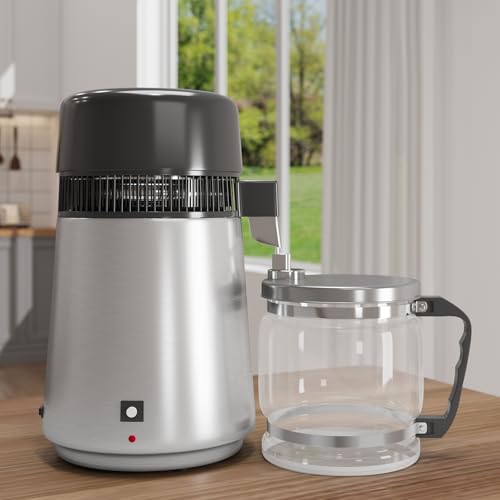
- ✓ Efficient purification process
- ✓ Easy to clean and maintain
- ✓ Safe with auto shut-off
- ✕ Slightly slow output rate
- ✕ Compact design limits volume
| Capacity | 4 liters (1.06 gallons) |
| Power | 750W |
| Voltage | 110V |
| Purity Level | Water with 2ppm impurity level |
| Filtration Rate | Up to 0.25 gallons per hour |
| Material | 304 stainless steel |
The first thing that catches your eye when unboxing this 4L Countertop Water Distiller is its sleek, stainless steel build—solid and shiny without feeling heavy in your hand. As you set it up, you notice how straightforward the design is; no complicated buttons, just a simple on/off switch and a glass pitcher that feels sturdy and clear.
Running your first batch, you’ll be impressed by how quietly it operates—almost meditation-like, with only a gentle hum. Within about 15 minutes, you see the water boiling and condensing smoothly, thanks to the efficient internal heating system.
The auto shut-off kicks in right at 302°F, giving you peace of mind that it’s safe to leave unattended.
What really surprises you is the purity of the water—crystal clear, with no lingering odors or tastes. It’s perfect for brewing coffee, especially since you’re now confident no impurities will mess with the flavor.
Plus, the included cleaning powder and step-by-step instructions make maintenance feel less like a chore and more like a quick routine.
Handling the stainless steel interior is a breeze; a quick wipe keeps it spotless. You appreciate how durable and corrosion-resistant it feels, promising long-term use.
Whether you’re using it for daily hydration, cooking, or even filling your humidifier, this distiller reliably delivers pure water every time without fuss.
What Features Should You Look for in the Best Benchtop Coffee Machine?
When searching for the best benchtop coffee machine, there are several key features to consider to ensure optimal performance and satisfaction.
- Brewing Capacity: The brewing capacity is essential as it determines how much coffee the machine can make at one time. Look for a model that fits your daily consumption needs, whether that’s a single cup or multiple servings for guests.
- Grind Settings: Machines with adjustable grind settings allow you to customize the coarseness of the coffee grounds. This feature is crucial for extracting the best flavor from your beans, as different brewing methods require different grind sizes.
- Temperature Control: Consistent brewing temperature is vital for great coffee. A machine that offers precise temperature control ensures that your coffee is brewed at the optimal temperature, enhancing flavor extraction and aroma.
- Ease of Use: User-friendly controls and interfaces are important for a smooth brewing experience. Look for machines that have intuitive buttons, clear displays, and simple programming options to make your coffee-making process effortless.
- Build Quality: The durability of materials used in the construction of the coffee machine can impact its lifespan. A well-built machine not only withstands daily use but also maintains consistent performance over time.
- Maintenance Features: Machines that come with self-cleaning options or easy-to-remove parts simplify maintenance. Regular upkeep is essential for ensuring longevity and the quality of each brew.
- Additional Features: Consider machines that offer features such as a built-in grinder, programmable timers, or milk frothers. These extras can elevate your coffee experience by providing convenience and versatility, allowing you to make a variety of coffee styles.
How Important Is the Type of Boiler in a Benchtop Coffee Machine?
- Single Boiler: A single boiler system uses one boiler for both brewing coffee and steaming milk, which can lead to temperature fluctuations. While these machines are typically more affordable and compact, they require users to wait for the temperature to adjust between brewing and steaming, potentially affecting the quality of espresso and milk foam.
- Heat Exchanger: Heat exchanger boilers allow simultaneous brewing and steaming by using a separate heat exchange system. This design maintains temperature stability for both espresso extraction and milk frothing, making it a popular choice for those who need efficiency and speed in their coffee-making process.
- Dual Boiler: Dual boiler systems feature two independent boilers, one dedicated to brewing and the other to steaming. This setup provides the greatest control over temperature and pressure, allowing for the best extraction of espresso and the ability to steam milk simultaneously, making it ideal for serious coffee enthusiasts who prioritize precision.
- Thermoblock: Thermoblock systems heat water on demand, which can result in faster heating times and less energy consumption. However, they may not provide the same level of temperature stability as traditional boilers, which can be a drawback for those seeking high-quality espresso.
- PID Control: Many modern benchtop machines incorporate PID (Proportional-Integral-Derivative) control technology to maintain consistent brewing temperatures. This feature is important for achieving optimal coffee extraction and can significantly enhance the flavor profile of the coffee produced, making it an essential consideration for serious coffee drinkers.
What Role Does a Built-in Grinder Play in Coffee Quality?
A built-in grinder significantly enhances coffee quality by ensuring freshly ground beans are used for brewing.
- Freshness: Using a built-in grinder allows coffee enthusiasts to grind beans just before brewing, preserving the essential oils and aromas that contribute to the coffee’s flavor profile. This freshness can dramatically improve the taste, making each cup more vibrant and rich compared to pre-ground coffee.
- Consistency: Many built-in grinders come with adjustable settings that enable users to control the grind size. This consistency in grind size is crucial because it affects extraction rates during brewing, allowing for optimal flavor extraction tailored to different brewing methods.
- Convenience: With a built-in grinder, users can save time and effort since they don’t need a separate device for grinding. This convenience is particularly beneficial for busy mornings or when entertaining guests, as it streamlines the coffee-making process and reduces the clutter of multiple appliances.
- Customization: A built-in grinder often allows for various grind settings, letting users experiment with different grind sizes for different types of coffee drinks. This level of customization enables coffee lovers to fine-tune their brewing technique to achieve their desired taste and strength.
- Space-saving: For those with limited countertop space, a built-in grinder eliminates the need for an additional appliance, making it an ideal feature in a compact kitchen setup. This space-saving design maintains a tidy kitchen environment while still providing all the necessary tools for quality coffee preparation.
Why Is a PID Controller Essential for Temperature Control?
A PID controller is essential for temperature control because it provides a precise and stable method for maintaining the desired temperature by adjusting the heating element’s output based on real-time feedback.
According to a study published in the Journal of Process Control, PID (Proportional-Integral-Derivative) controllers are widely used in industrial applications due to their effectiveness in regulating various processes, including temperature control in devices like coffee machines. The PID controller continuously calculates an error value as the difference between a desired setpoint and a measured process variable, allowing for dynamic adjustments that minimize temperature fluctuations (Astrom & Wittenmark, 2013).
The underlying mechanism of a PID controller involves three components: the proportional, integral, and derivative terms. The proportional component reacts to the current error, providing an immediate response to temperature deviations. The integral component accumulates past errors, addressing any residual steady-state error, while the derivative component predicts future errors based on the rate of change, effectively damping the system’s response to abrupt changes. This combination ensures that the temperature remains stable and closely aligns with the desired setpoint, which is crucial for brewing the best coffee in a benchtop coffee machine, as even slight variations in temperature can significantly affect extraction quality and flavor.
What Are the Top Brands That Offer Benchtop Coffee Machines?
The top brands that offer benchtop coffee machines include:
- Breville: Breville is known for its high-quality, user-friendly coffee machines that blend technology with design. Their machines often feature precise temperature control, integrated grinders, and customizable settings, making them a favorite among coffee enthusiasts and baristas at home.
- De’Longhi: De’Longhi offers a wide range of benchtop coffee machines, from entry-level to high-end models. Their machines are recognized for their stylish designs and innovative features, such as automatic milk frothers and programmable brewing options, catering to both novice and experienced coffee drinkers.
- Rancilio: Rancilio is a brand synonymous with professional-grade espresso machines, and their benchtop offerings maintain that reputation. Known for their durability and quality, Rancilio machines are often equipped with commercial components, allowing home users to replicate café-quality espresso drinks.
- Gaggia: Gaggia combines tradition and modern technology in their benchtop coffee machines, often featuring classic designs inspired by Italian espresso culture. Their machines are designed for ease of use and maintenance, with options for manual espresso making as well as automatic brewing.
- Krups: Krups produces a variety of benchtop coffee machines that are known for their sleek designs and versatility. They provide various brewing methods, including drip coffee, espresso, and even single-serve options, making them suitable for different coffee preferences.
- Sage: Sage, also known as Breville in some markets, focuses on providing sophisticated coffee machines with advanced technology for precise brewing. Their products include features such as digital displays and temperature control, appealing to those who appreciate technical detail in their coffee-making process.
Which Brands Are Known for Quality and Reliability?
When it comes to the best benchtop coffee machines, several brands stand out for their quality and reliability:
- Breville: Known for its innovative features and user-friendly design, Breville offers machines that allow for precise control over coffee brewing. Their models often come equipped with integrated grinders, steam wands, and customizable settings, making them great for both beginners and experienced baristas.
- De’Longhi: This brand is celebrated for its versatile range of espresso machines that combine ease of use with high performance. De’Longhi machines often include features like automatic milk frothers and adjustable settings, catering to a variety of coffee preferences while ensuring consistent quality.
- Rancilio: As a brand known for its commercial-quality machines, Rancilio brings professional-grade performance to the home coffee brewing experience. Their machines are built to last and often feature robust construction, making them ideal for serious coffee enthusiasts who demand reliability and quality.
- Sage: Sage, often known as Breville in some markets, emphasizes precision and technology in their coffee machines. With advanced features such as temperature control and pressure profiling, these machines allow users to experiment and perfect their coffee-making skills.
- Gaggia: A historic name in the coffee industry, Gaggia is recognized for its traditional Italian espresso machines. Their models often feature commercial-grade components, ensuring both quality and longevity, perfect for those who appreciate authentic espresso-making.
Are There Any Newcomers in the Market Making Waves?
There are several newcomers in the market of benchtop coffee machines that are making a significant impact.
- Brand A: This brand features a compact design that fits seamlessly into any kitchen space while offering advanced brewing technology.
- Brand B: Known for its innovative features, this machine allows users to customize brew strength and temperature for a personalized coffee experience.
- Brand C: With a sleek aesthetic and user-friendly interface, this newcomer focuses on delivering high-quality espresso shots with minimal effort.
- Brand D: This model stands out for its eco-friendly materials and energy-efficient operation, appealing to environmentally conscious consumers.
- Brand E: Equipped with smart technology, this coffee machine can be controlled via a smartphone app, allowing for remote brewing and scheduling.
Brand A: This brand features a compact design that fits seamlessly into any kitchen space while offering advanced brewing technology. Its built-in grinder provides fresh coffee grounds, enhancing flavor profiles and ensuring optimal extraction for a rich-tasting cup.
Brand B: Known for its innovative features, this machine allows users to customize brew strength and temperature for a personalized coffee experience. It also includes a milk frother that enables users to create café-style beverages like lattes and cappuccinos at home.
Brand C: With a sleek aesthetic and user-friendly interface, this newcomer focuses on delivering high-quality espresso shots with minimal effort. The intuitive controls and quick heat-up time make it perfect for busy mornings, ensuring you get your caffeine fix without hassle.
Brand D: This model stands out for its eco-friendly materials and energy-efficient operation, appealing to environmentally conscious consumers. It incorporates features such as programmable auto shut-off and reusable filters to minimize waste and reduce energy consumption.
Brand E: Equipped with smart technology, this coffee machine can be controlled via a smartphone app, allowing for remote brewing and scheduling. Users can adjust settings and receive notifications, making it easier to enjoy freshly brewed coffee at their convenience.
What Types of Coffee Can You Prepare with a Benchtop Coffee Machine?
The types of coffee you can prepare with a benchtop coffee machine include:
- Espresso: A concentrated coffee brewed by forcing hot water through finely-ground coffee beans.
- Cappuccino: A rich espresso topped with steamed milk and a thick layer of milk foam, often garnished with cocoa powder.
- Latte: Similar to a cappuccino but with more steamed milk and less foam, creating a creamy texture and milder coffee flavor.
- Americano: Made by diluting espresso with hot water, resulting in a coffee that resembles traditional brewed coffee.
- Flat White: An espresso-based drink with microfoam, giving it a velvety texture and a strong coffee flavor, popular in Australia and New Zealand.
- Macchiato: An espresso “stained” with a small amount of steamed milk or milk foam, balancing the strong coffee taste with a creamy touch.
- Mocha: A chocolate-flavored variant of a latte, made with espresso, steamed milk, and chocolate syrup or cocoa powder.
Espresso is the foundation for many coffee drinks and is characterized by its intense flavor and thick crema, making it the go-to choice for coffee enthusiasts. A good benchtop coffee machine can produce authentic espresso by maintaining optimal pressure and temperature during brewing.
Cappuccino is beloved for its delightful combination of espresso and creamy foam, making it a favorite for those who enjoy a rich coffee experience. The quality of the foam is crucial, and a benchtop machine with a steam wand can create the perfect microfoam needed for an ideal cappuccino.
Latte offers a smoother and creamier coffee experience due to the larger proportion of steamed milk, which helps to mellow the espresso’s intensity. This drink is versatile and can be flavored with syrups, making it popular in cafes and at home.
Americano provides a milder coffee experience, combining the rich flavor of espresso with the dilution of hot water, making it appealing for those who prefer a less intense coffee. This method retains the espresso’s flavors while making it more drinkable for extended enjoyment.
Flat White is known for its balance of strong espresso and velvety microfoam, presenting a unique texture that enhances the coffee’s flavor profile. This drink is especially popular among those who appreciate a more robust coffee taste without being overwhelmed by milk.
Macchiato is perfect for those who want a small drink that highlights the espresso’s flavor while still having a hint of creaminess. The name means “stained” or “spotted,” indicating the minimal amount of milk used to soften the coffee’s boldness.
Mocha combines the richness of chocolate with the boldness of espresso, appealing to those who enjoy sweet coffee drinks. The addition of chocolate syrup or cocoa powder makes it a dessert-like option that pairs well with whipped cream on top.
Can You Brew Espresso and Milk-based Coffee Varieties?
Yes, you can brew espresso and milk-based coffee varieties with the best benchtop coffee machines.
Many of the top-rated benchtop coffee machines are designed specifically to handle a variety of coffee styles, including espresso and milk-based drinks like lattes and cappuccinos. These machines often come equipped with high-pressure boilers, which are essential for extracting rich and flavorful espresso shots. Additionally, they typically include steam wands or milk frothers that allow you to heat and froth milk to create the creamy texture required for these drinks.
When searching for the best benchtop coffee machine, consider models that offer dual functionality, with features tailored for both espresso brewing and milk preparation. Look for machines with adjustable steam pressure, temperature control, and easy-to-use interfaces, as these will enhance your ability to create café-quality beverages at home. With the right machine, you can enjoy a wide range of coffee varieties, catering to your personal taste preferences and impressing your guests.
How Versatile Are These Machines for Different Coffee Styles?
The versatility of benchtop coffee machines allows them to cater to various coffee styles effectively.
- Espresso Maker: These machines are designed specifically to brew espresso, providing high pressure and precise temperature control. They can create rich, concentrated shots that serve as the base for many coffee drinks, including lattes and cappuccinos.
- Drip Coffee Maker: Ideal for brewing larger quantities, drip coffee makers allow users to prepare multiple cups at once. They typically feature programmable settings, making it easy to wake up to freshly brewed coffee, and they can accommodate different grind sizes and coffee types.
- French Press: This machine is perfect for those who appreciate a fuller-bodied coffee experience. By steeping coffee grounds in hot water and using a plunger to separate the grounds, it highlights the coffee’s natural oils and flavors.
- Coffee Pod Machine: These machines offer convenience with single-serve coffee pods, allowing users to switch between various coffee styles effortlessly. They are ideal for busy individuals who want quick, consistent results without the need for grinding or measuring coffee.
- Pour-Over Coffee Maker: Known for its manual brewing method, this machine allows for greater control over the brewing process, resulting in a more refined taste. Users can adjust the pour rate and water temperature, making it suitable for coffee enthusiasts who want to perfect their brew.
- Cold Brew Coffee Maker: Designed specifically for cold brewing, these machines steep coarsely ground coffee in cold water for an extended period. The result is a smooth, less acidic coffee that can be served over ice or used in various iced coffee drinks.
What Is the Average Price Range for a Quality Benchtop Coffee Machine?
Key aspects of a quality benchtop coffee machine include the type of brewing method it employs, such as drip, espresso, or pour-over, and its ability to maintain consistent temperatures for optimal extraction. Additionally, factors like the machine’s build quality, ease of use, cleaning mechanisms, and versatility in brewing different types of coffee contribute significantly to its quality. Machines with built-in grinders and programmable settings offer convenience and customization, further enhancing the user experience.
This impacts consumers by providing them with options that cater to their specific coffee preferences and brewing habits. For instance, a high-quality espresso machine can allow users to create café-style drinks at home, while a versatile drip coffee maker may appeal to those who enjoy a simple cup of coffee. The growing trend of home brewing reflects a shift in consumer behavior, as many seek to replicate the café experience in their kitchens.
According to the Specialty Coffee Association, around 60% of Americans drink coffee daily, which emphasizes the importance of having a reliable coffee machine at home. The convenience of a benchtop coffee machine can lead to cost savings over time compared to purchasing coffee from cafés, making it a worthwhile investment for many households.
Solutions and best practices for selecting the best benchtop coffee machine include researching consumer reviews, considering the specific coffee preferences of the household, and looking for machines that offer good warranties and customer support. It’s also beneficial to assess the machine’s maintenance needs and ease of cleaning, as this can greatly influence long-term satisfaction and performance.
How Do Price and Features Correlate in Benchtop Coffee Machines?
Price and features in benchtop coffee machines are closely linked, often with higher-priced models offering advanced features and better performance.
- Entry-Level Machines: These typically range from $50 to $150 and provide basic functionalities like brewing coffee with simple controls. They often lack advanced features such as programmable settings or built-in grinders, making them suitable for casual coffee drinkers.
- Mid-Range Machines: Priced between $150 and $500, these machines usually offer a balance of quality and price, including features like adjustable brew strength and temperature control. They may also have more durable components, improving longevity and the overall coffee experience for regular users.
- High-End Machines: These models can cost from $500 to over $2,000 and are equipped with premium features such as dual boilers, PID temperature control, and built-in grinders. They are designed for serious coffee enthusiasts who seek precision and customization in their brewing process, delivering a café-quality experience at home.
- Specialty Machines: Often exceeding $1,000, specialty machines feature advanced technology such as app connectivity, automatic milk frothers, and customizable profiles. These machines cater to connoisseurs looking for the highest level of control and versatility in their coffee preparation, allowing for a broad range of brewing styles.
How Do You Maintain Your Benchtop Coffee Machine?
Maintaining your benchtop coffee machine is essential for ensuring optimal performance and longevity.
- Regular Cleaning: Keeping your coffee machine clean is crucial. This includes descaling the machine periodically to remove mineral buildup from water and ensuring that all removable parts, such as the drip tray and coffee grounds container, are washed regularly to prevent coffee oils from accumulating and affecting flavor.
- Daily Maintenance: After each use, it’s important to perform a quick clean by flushing out the brewing group and rinsing any components that have come into contact with coffee. This helps to maintain the quality of the brew and prevents stale coffee oils from affecting future cups.
- Use Quality Water: The quality of water used in your coffee machine can greatly impact the taste of your coffee and the machine’s performance. It’s recommended to use filtered water to reduce limescale buildup and ensure a cleaner taste in your beverages.
- Check and Replace Filters: If your machine has a water filter, checking it regularly and replacing it according to the manufacturer’s recommendations will help maintain water quality. A clogged or old filter can lead to poor tasting coffee and increased strain on the machine.
- Inspect and Maintain Seals and Gaskets: Regularly check the seals and gaskets for wear and tear, as these components are vital for preventing leaks and ensuring a proper brew. Replacing worn seals can help maintain the machine’s efficiency and prevent any unnecessary water loss during brewing.
- Professional Servicing: Depending on the frequency of use, consider having your coffee machine professionally serviced annually. This can include deep cleaning, checking internal components, and ensuring that everything is functioning properly, which can help extend the life of your machine.
What Cleaning Routines Are Necessary for Longevity?
To ensure longevity for the best benchtop coffee machine, regular cleaning routines are essential.
- Daily Cleaning: This involves rinsing the brew basket, water reservoir, and carafe to remove coffee oils and residues.
- Descaling: Regular descaling every few months is necessary to remove mineral buildup from water, which can affect performance and taste.
- Deep Cleaning: A thorough deep clean every few weeks, including cleaning the exterior and any removable parts, helps maintain hygiene and aesthetics.
- Filter Replacement: Changing or cleaning the water filter regularly ensures that the water used in brewing is free from impurities that can affect flavor.
- Inspecting Seals and Gaskets: Regularly checking and replacing any worn seals or gaskets prevents leaks and maintains pressure during brewing.
Daily cleaning is crucial as it prevents the buildup of coffee oils and residues which can alter the flavor of your coffee. Rinsing the brew basket, reservoir, and carafe immediately after use will help in maintaining the machine’s performance.
Descaling is a vital process that should be conducted every few months, depending on the hardness of your water. This process involves using a descaling solution to dissolve mineral deposits that accumulate over time, ensuring optimal machine function and taste consistency.
Deep cleaning every few weeks includes not only the parts mentioned above but also the exterior of the machine. This can involve using a damp cloth to wipe surfaces and checking for any coffee grounds that may have fallen into crevices.
Changing or cleaning the water filter on a regular basis ensures that the quality of water used for brewing is high, which directly impacts the taste of the coffee. A clogged filter can lead to slower brewing times and off-flavors in the coffee.
Finally, inspecting seals and gaskets is important for maintaining the integrity of the machine. Worn or damaged seals can lead to leaks, which not only waste water but can also cause damage to the machine’s internal components over time.
Are There Specific Maintenance Tips for Different Brands?
Different brands of benchtop coffee machines often have unique maintenance needs to ensure optimal performance and longevity.
- Breville: Regularly clean the water tank and group head to prevent buildup of coffee oils and minerals. It’s also advisable to descale the machine every few months, especially in areas with hard water, to maintain brewing efficiency.
- Sage: Similar to Breville, Sage machines require consistent cleaning of the brew group and steam wand. Additionally, using the provided cleaning tablets regularly can help maintain the internal components and ensure a great-tasting coffee.
- De’Longhi: This brand often features removable brewing units, which should be washed regularly. It’s also important to clean the milk frother after each use to avoid clogs and maintain hygiene.
- Rancilio: For Rancilio machines, backflushing the group head with a blind filter is essential to keep the internal components clean. Regularly checking and maintaining the water hardness levels can also help extend the life of the machine.
- Nespresso: Nespresso machines require regular descaling every three months, especially if you’re using hard water. Cleaning the drip tray and capsule container regularly will also help prevent any unpleasant odors and maintain functionality.
What Are the Advantages of Choosing a Benchtop Coffee Machine?
The advantages of choosing a benchtop coffee machine include convenience, versatility, and consistent quality.
- Space Efficiency: Benchtop coffee machines are designed to occupy minimal counter space while still delivering high-quality coffee. Their compact size makes them ideal for small kitchens, offices, or any area where space is limited.
- Ease of Use: Many benchtop models come with user-friendly interfaces and programmable features, allowing users to brew coffee with just a few simple steps. This accessibility makes them suitable for both beginners and experienced coffee enthusiasts alike.
- Variety of Brewing Options: These machines often offer multiple brewing methods, such as espresso, drip, and pour-over, allowing users to experiment with different styles and flavors of coffee. This versatility caters to diverse preferences and helps users master various brewing techniques.
- Consistency in Quality: Benchtop coffee machines are typically equipped with advanced technology that ensures consistent water temperature and brewing time, resulting in a reliably great cup of coffee every time. This eliminates the variability often found in manual brewing methods.
- Customization Features: Many models come with options to adjust grind size, brew strength, and temperature, enabling users to tailor their coffee to their exact taste preferences. This level of customization enhances the overall coffee experience and satisfaction.
- Durability and Longevity: High-quality benchtop coffee machines are built to last, often featuring robust materials and components. Investing in a reliable machine can provide years of excellent performance and enjoyable coffee moments.
How Do They Compare to Other Coffee Makers in Terms of Size and Performance?
| Feature | Best Benchtop Coffee Machine | Other Coffee Makers |
|---|---|---|
| Size | Compact design, ideal for small kitchens | Varies widely; some models are bulkier and take up more counter space |
| Performance | Consistent brewing temperature and quality, designed for efficiency | Performance can differ; some may have slower brewing times or inconsistent results |
| Weight | Lightweight, typically around 5-10 lbs | Can range from 10 lbs to over 20 lbs depending on the model |
| Energy Efficiency | Energy-efficient models available, often with auto shut-off features | Varies; some older models may consume more energy |
| Price Range | $100 – $500, depending on features | $50 – $1000, with a wide range based on brand and features |
| Durability/Warranty | Typically 1-2 year warranty, built for longevity | Warranties vary; some may have shorter warranties or less durable materials |
What Benefits Do Enthusiasts Claim About Using Benchtop Machines?
Enthusiasts claim several benefits of using benchtop machines, especially when it comes to coffee preparation.
- Convenience: Benchtop machines are designed for ease of use, making them accessible for both beginners and experienced coffee lovers.
- Consistency: These machines often provide consistent results, allowing users to replicate their favorite brews with precision.
- Space Efficiency: Benchtop machines are typically compact, making them ideal for kitchens with limited counter space.
- Versatility: Many models offer multiple brewing options, allowing enthusiasts to experiment with various coffee styles and techniques.
- Cost-Effectiveness: Investing in a benchtop coffee machine can save money over time by reducing the need for expensive café purchases.
Convenience: Benchtop machines are designed for ease of use, integrating user-friendly controls and quick heating systems. This makes brewing a perfect cup of coffee a hassle-free process, even for those who are new to coffee making.
Consistency: These machines often include features like precise temperature control and adjustable brew strength, which help ensure that each cup of coffee produced is of high quality and replicable. This level of consistency is critical for coffee enthusiasts who want to enjoy the same flavor profile each time.
Space Efficiency: Benchtop machines are usually compact and designed to fit comfortably on a kitchen counter, making them an excellent choice for those with limited space. Their small footprint allows them to be easily stored or kept on display without taking up too much room.
Versatility: Many benchtop coffee machines offer features that support a variety of brewing methods, such as espresso, drip coffee, or even cold brew. This versatility enables users to explore different coffee styles and cater to various preferences, making them suitable for households with diverse tastes.
Cost-Effectiveness: Although the initial investment in a quality benchtop coffee machine may seem high, it can lead to savings over time. By making coffee at home, enthusiasts can significantly reduce their spending on daily café visits, ultimately making it a financially sensible choice.
Related Post: