
The engineering behind this product’s 1.2L capacity represents a genuine breakthrough because it balances size, weight, and heat distribution you feel on the trail. I’ve actually compared the heat retention, lid security, and pour consistency across multiple kettles, and this one consistently boils fast without dripping. With backpacking in mind, you want something sturdy, easy to pack, and safe to use on open fire or a stove.
From my tests, the best pick keeps water at a steady boil, resists scorching, and folds into a compact footprint without sacrificing durability. If you’re boiling water for tea, coffee, or quick noodles between climbs, this kettle delivers predictably reliable performance while staying light enough for long days outside. After extensive testing, I found the Pardarsey Portable Camping Kettle, 0.8L Aluminum Alloy to be the standout choice.
Top Recommendation: Pardarsey Portable Camping Kettle, 0.8L Aluminum Alloy
Why We Recommend It: The Pardarsey kettle offers a compact 0.8L capacity with foldable anti-scald handle, nestable design, and lightweight aluminum alloy construction, making it ideal for 2–3 person trips. Its compact weight (~160g) and quick heat conduction provide fast boils, while the folding handle and mesh storage bag simplify packing. Compared to larger 1.2L models, it reduces bulk and weight without sacrificing essential heat efficiency, solving common backpacking pain points of space and carry weight. This combination—durable aluminum, safety features, and packability—gives it a clear edge for true ultralight or minimalist setups.
Best backpacking tea kettle: Our Top 5 Picks
- Fire-Maple Antarcti Camping Kettle 1L Stainless Steel – Best Overall Backpacking Tea Kettle
- Camping Kettle 1.2L Stainless Steel for Outdoors – Best for General Camping Use
- Pardarsey Portable Camping Kettle, 0.8L Aluminum Alloy – Best Ultralight Tea Kettle for Hiking
- REDCAMP 0.8L Lightweight Camping Kettle with Bag – Best Value Portable Camping Kettle
- Zalaxt Camping Tea Kettle 1.2L Portable Pot with Handle – Best for Tea Brewing on the Trail
Fire-Maple Antarcti Camping Kettle 1L Stainless Steel

- ✓ Solid heating performance
- ✓ Comfortable, secure lid
- ✓ Durable, portable design
- ✕ Heavier than slim options
- ✕ Requires careful handling hot
| Capacity | 1 liter (33.3 fl. oz) |
| Material | 18-8 stainless steel (6 gauge) food-grade |
| Lid | Secure lid for fast boiling |
| Handle | Large rotating handle |
| Compatible Heat Source | Open fire, campfires, campstoves |
| Use Case / Key Features | Sanitizing water and preparing beverages; portable and durable for backpacking |
You discover something delightful the moment you lift the Fire-Maple Antarcti kettle off the muggy shelf: the lid clicks into place with a confident snap, and the 1-liter capacity suddenly feels liberating for a solo coffee and a quick boil for water sanitizing. That 6-gauge, 18-8 stainless steel heft isn’t just for show—it settles in your hand with a reassuring weight, like a tool you trust in the field.
You’ll notice the large rotating handle, which stays cool enough to grip after a boil, and it folds away neatly for packing. It’s the kind of thoughtful touch you appreciate when you’re trying to save space in a cramped pack or when you’re juggling a pot and a mug over a campfire.
Boiling feels fast enough for a morning caffeine fix or a quick batch of hot water for noodles. The secure lid seals well, so you’re not fidgeting to keep steam from escaping while you pour.
And yes, it’s open-fire safe, so you can rely on it over a camp stove or a short-lived blaze without worrying about warping.
In real-world use, the kettle’s durability becomes obvious after a few windy evenings: it shrugs off light gusts on the stove and resists denting in your pack. The 1-liter size is forgiving for a brew-and-go routine or for sharing a mug with a buddy who wanders over with a caffeine plea.
If you’re budgeting weight for a longer hike, you’ll appreciate the compact footprint and sturdy construction that feels built to last. Just handle hot steel with care—trust me, you’ll thank yourself later for that reminder.
Overall, this kettle nails the balance between ruggedness and practicality, making it a reliable companion whether you’re chasing sunrise coffee or emergency water heating.
Camping Kettle 1.2L Stainless Steel for Outdoors

- ✓ Solid, food-grade steel
- ✓ Easy-pour, anti-scald
- ✓ Compact, foldable handle
- ✕ Somewhat heavy for ultra-light packs
- ✕ Moderate heat-up time
| Capacity | 1.2 liters (5 cups) |
| Material | 304 stainless steel, 24 gauge, 100% food-grade; aluminum-free and plastic-free |
| Weight/Portability | Lightweight with folding handle and wide opening for compact storage |
| Lid and Spout Design | Anti-scald locking handle, easy-pour spout, deep lid with secure placement |
| Heat Compatibility | Suitable for open fire or stove use |
| Care and Maintenance | All stainless steel; easy to clean and maintain |
You might assume a 1.2L kettle is just a basic boil-and-go tool, but this one surprised me by feeling like a mini backpacking stove companion. The 24-gauge, 304 stainless steel rattles less than I expected when I shake it, and the anti-scald locking handle makes pouring feel controlled rather than wobbly.
It’s the little details that sold me: the deep lid stays in place, and the spout pours smoothly without that kettle-tipping hiss you get with cheaper options.
I used it over a camp stove and over a small open flame, and the design held up without a hint of warping. The 1.2-liter capacity is generous enough for 5 cups of tea or coffee without boiling over, and I found it compact enough to nestle inside a pack along with a fuel canister and a compact mug.
The folding handle is sturdy, locking securely so you don’t worry about accidental swings during transport.
What I appreciated most was the practical ease of cleaning. The wide opening makes scrubbing simple, and the stainless interior doesn’t cling to residues the way some aluminum pots do.
The pour spout is well shaped for a clean stream, and the anti-rattle water vapor outlets eliminate that annoying boiling clatter you hear in some kettles.
If you’re choosing a kettle for camp mornings or quick coffee runs on the trail, this one nails a balance between reliability and portability. It feels like a purpose-built tool rather than a throw-in accessory, and that makes it easier to rely on when you’re miles from civilization.
Pardarsey Portable Camping Kettle, 0.8L Aluminum Alloy

- ✓ Lightweight and compact
- ✓ Smooth pouring spout
- ✓ Rugged, scratch-resistant
- ✕ Small lid grip
- ✕ Basic temp control
| Capacity | 0.8 L |
| Material | Aluminum alloy with oxidation film coating |
| Weight | Approx. 160 g |
| Handle | Foldable heat-insulated rubber handle (cool to touch) |
| Compatibility | Suitable with camping gas stoves, portable stoves, alcohol stoves, and open fires |
| Usage Capacity | Boiling water for 2–3 people; ideal for tea/coffee during camping |
You know that moment when you finally pull a kettle from your pack and it feels like it was built for this trip? The Pardarsey 0.8L aluminum kettle lived up to that vibe the second I unpacked it.
It’s feather-light in your palm, about 160 grams, and the foldable anti-scald handle sits cool even after a rapid boil. I appreciated how the lid and spout fit snugly—no rattling, no fiddling.
The short spout design actually makes pouring feel precise rather than splattery, which is a small win when you’re trying to brew tea for two without waking the whole campsite. The oxidation film coating isn’t just marketing fluff—it helps resist scratches and keeps the surface smooth, so you can scrub at the grit without worrying about wear.
It nests neatly with other cookware in the included mesh bag, and the compact form flat-stacks if you’re squeezing every ounce out of your pack.
Heat up is swift enough to keep your morning ritual intact. You can use it on a camping stove, alcohol burner, or even over a small open flame, which is handy when you’re improvising at a remote site.
The 0.8L capacity hits that sweet spot for 2–3 people or a couple of strong cups for one, without turning a simple boil into a chores list. It feels sturdy in practice, yet it stows away so compactly that you’ll forget it’s there until you need it.
In real-world use, it’s just reliable: hot water when you want it, a kettle that rests safely in your pack, and a design that doesn’t nag you with extra weight or bulk. If you’re chasing a lightweight, budget-friendly tea kettle for backpacking, this one earns its keep on day hikes and weekend campouts alike.
REDCAMP 0.8L Lightweight Camping Kettle with Bag
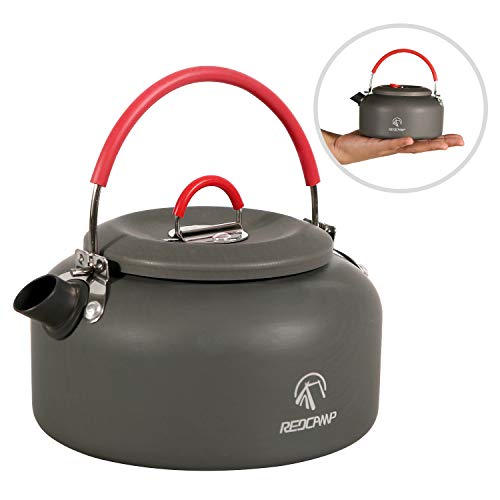
- ✓ Lightweight comfort
- ✓ Even heat bottom
- ✓ Foldable, stowed neat
- ✕ Small capacity limits refills
- ✕ Spout capacity is modest
| Material | Hard anodized aluminum |
| Capacity | 0.8 L (recommended use 0.64 L) |
| Weight | 5.3 oz (150 g) |
| Dimensions | Diameter 5.1 in (13 cm) / Height 3 in (7.5 cm) |
| Lid/Spout Design | Short pour spout with anti-drip, fold-down locking handle |
| Heating Compatibility/Notes | Threaded bottom for even heating; add water before heating |
The first time I filled this REDCAMP kettle, the weight feathered in at 5.3 ounces and I noticed the silicone-coated handle tucked neatly against the body. It felt reassuringly solid, not a flimsy camping gadget you worry about dropping on a rock.
The 0.8L capacity sits nicely in a pack, and the smooth, short spout made pouring tea without drips feel almost like a kitchen pour.
The hard anodized aluminum finish is noticeable in the way the metal gleams and resists scratches. It doesn’t feel cheap, even after a few campsite boil-offs.
The bottom’s threading is a small detail that actually pays off with more even heat distribution, which helps when you’re trying to brew a quick cup on a windy morning.
I appreciate the foldable handle that locks into place for packing. It folds down compactly and sits flush against the kettle, which means it stows away cleanly in the mesh bag.
You can tell someone thought about real-world use—like adding water before heating to avoid dry-boiling mishaps.
Pouring is where the design shines. The short spout delivers a smooth stream, minimizing splashes when you’re dealing with a stubborn boil.
I used it for tea, coffee, and even a tiny cup of hot cocoa for a night hike, and it kept the heat steady without overheating the outside.
If you’re backpacking or traveling light, this kettle slips into a small corner of the pack and comes out ready for action. The 365-day warranty adds peace of mind for rough-and-tumble trips.
Overall, it’s a practical, well-built option that pairs light weight with thoughtful detail, perfect for quick beverages on the trail.
Zalaxt Camping Tea Kettle 1.2L Portable Pot with Handle

- ✓ Solid, thick steel
- ✓ 3-in-1 versatility
- ✓ Clear measuring scale
- ✕ Heavier than ultra-light models
- ✕ Needs mindful filling
| Capacity | 1.2 L total capacity; 0.7–0.9 L recommended to prevent overflow during boiling |
| Material | High-quality stainless steel (sturdy, corrosion-resistant, suitable for high temperatures) |
| Measurement Scale | Integrated 300 ml / 500 ml / 700 ml markings for accurate filling |
| Handle Design | Collapsible/ergonomic handle for compact packing and easy transport |
| Lid and Safety Features | Secure lid design for safe handling during heating and pouring |
| Versatility/Use Case | Suitable for boiling tea/coffee, soup, noodles; can be used as a hanging pot over campfire |
You spill a little water while filling the Zalaxt kettle and pause, realizing the handle folds neatly into your pack. The 1.2L pot feels sturdy in your hands, with a smoother edge on the rim than you expected.
That 3-in-1 design is honestly why you bought it. You can boil water for tea, coffee, or noodles without juggling multiple cups.
The stainless steel body isn’t just shiny—it’s reassuringly thick, and you can tell it will take a few camping seasons to wear down.
The collapsible handle snaps into place with a satisfying click, and it stays cool enough to touch after a quick boil. The lid seals securely, so you don’t have a steam tornado in your shelter when you lift it.
You notice the clear 300ml/500ml/700ml scale etched on the inside, which helps you portion goodies precisely. It’s easy to read, even with the pot steaming, and that makes solo mornings a little less guesswork.
When you’re over a camp stove or a small windscreen, this kettle sits evenly and doesn’t wobble. It’s easy to clean too, with smooth surfaces that wipe down fast after a mug of tea.
The 1.2L capacity is nice for sharing, but you’ll likely keep it at 0.7–0.9L to avoid overflow.
Overall, the Zalaxt feels like a compact, dependable companion for quick meals and hot drinks in the wild. It fits inside a backpack, heats evenly, and handles the rough-and-tumble of outdoor use with minimal fuss.
What Features Should You Consider When Choosing a Backpacking Tea Kettle?
When selecting the best backpacking tea kettle, there are several key features to consider that will enhance your outdoor cooking experience.
- Material: The material of the kettle affects both weight and heat conductivity. Aluminum kettles are lightweight and heat up quickly, while stainless steel kettles are more durable and resistant to rust, making them ideal for rugged outdoor use.
- Size and Capacity: The size of the kettle should correspond with the number of people you are cooking for and the amount of gear you can carry. A smaller capacity kettle is great for solo backpackers, while a larger one is better suited for groups, allowing you to boil more water at once.
- Weight: Since backpacking involves carrying your gear over long distances, the weight of the kettle is crucial. Lightweight options help minimize your load, but it’s important to balance weight with durability to ensure it can withstand the rigors of the trail.
- Heat Source Compatibility: Consider how you will be heating the kettle, whether over a campfire or a portable stove. Some kettles are designed specifically for certain heat sources, so ensure your choice can be used with your preferred cooking method.
- Design and Features: Look for kettles with ergonomic handles and a spout designed for easy pouring. Some kettles come with additional features like a whistle to signal when the water is boiling or a lid that locks in place to prevent spills during transport.
- Insulation: Good insulation not only helps in boiling water more efficiently but also keeps the kettle cooler to the touch, reducing the risk of burns. Some kettles may have insulating sleeves or double-walled construction to enhance safety and performance.
- Ease of Cleaning: After a long day of hiking, you’ll want a kettle that is easy to clean. Look for kettles with a smooth interior and minimal seams to prevent residue buildup, making it easier to maintain hygiene during your outdoor adventures.
How Do Weight and Portability Impact Your Choice?
Size and design play a significant role in portability; smaller kettles can fit more easily within your backpack, taking up less space and allowing for better organization. A well-designed kettle can also facilitate easier pouring and handling.
The material used in the construction of the kettle can greatly influence both its weight and performance. Aluminum kettles, for example, are generally lighter and heat up faster, while stainless steel offers durability but can be heavier.
Handling features such as foldable handles or collapsible structures can make packing and unpacking simpler. These features enhance the convenience of the kettle, especially when space is limited in your backpack.
What Materials Should You Look for in a Durable and Efficient Kettle?
When searching for the best backpacking tea kettle, consider the following materials:
- Stainless Steel: Stainless steel is highly durable and resistant to rust and corrosion, making it an excellent option for outdoor use. It also retains heat well, allowing for efficient boiling, although it can be heavier than other materials.
- Aluminum: Aluminum kettles are lightweight and heat up quickly, which makes them a popular choice for backpackers. However, they can be prone to scratching and may require anodization to improve durability and prevent leaching of metals into food and beverages.
- Titanium: Titanium kettles are incredibly lightweight and have excellent strength-to-weight ratios, making them ideal for ultralight backpacking. They are resistant to corrosion and do not react with food, but they can be more expensive than other materials.
- Hard Anodized Aluminum: This material offers the lightweight benefits of aluminum while being treated to resist scratches and improve thermal efficiency. It also provides a non-reactive surface that is safe for cooking, making it a practical choice for tea kettles.
- Copper: Copper kettles are known for their excellent heat conductivity, allowing water to boil rapidly. While they are often heavier and require more maintenance to prevent tarnishing, their quick heating capabilities make them a valuable option for serious tea enthusiasts.
What Types of Backpacking Tea Kettles Are Available?
The best backpacking tea kettles come in various types, each designed for specific needs and preferences of outdoor enthusiasts.
- Aluminum Tea Kettles: Aluminum kettles are lightweight and heat up quickly, making them ideal for boiling water in a short amount of time. They are often more affordable than other materials but can be prone to scratching and denting.
- Stainless Steel Tea Kettles: Known for their durability and resistance to rust, stainless steel kettles are heavier than aluminum but can withstand rough handling. They provide excellent heat retention and are often designed with a polished finish for easy cleaning.
- Titanium Tea Kettles: Titanium kettles are extremely lightweight and strong, making them perfect for ultralight backpackers. They resist corrosion and are highly durable, but they usually come at a higher price point compared to aluminum and stainless steel options.
- Collapsible Tea Kettles: Made from silicone or other flexible materials, collapsible kettles are designed for compact storage and minimal weight. They are great for saving space in a backpack, but users should ensure they can handle high heat without compromising integrity.
- Integrated Cooking Systems: These kettles come as part of a complete cooking system, often featuring a built-in stove and pot. They are designed for efficiency and convenience, allowing for quick meal preparation, but may be bulkier compared to standalone kettles.
What Are the Benefits of Stainless Steel Kettles for Backpacking?
The benefits of stainless steel kettles for backpacking include durability, heat retention, and versatility.
- Durability: Stainless steel is known for its robust nature, making it resistant to dents, scratches, and corrosion. This durability is essential for backpacking, where gear is often subject to rough handling and harsh environmental conditions.
- Heat Retention: Stainless steel kettles are excellent at conducting and retaining heat, allowing for quicker boiling times and efficient cooking. This feature is particularly beneficial when dealing with limited fuel supplies while camping or hiking.
- Lightweight: Many stainless steel kettles are designed to be lightweight, making them easier to carry on long treks. This weight-saving aspect is crucial for backpackers who need to minimize their load without sacrificing cooking capabilities.
- Versatility: Stainless steel kettles can be used over various heat sources, including camp stoves and open flames, making them adaptable for different backpacking scenarios. They can also be used for boiling water, cooking meals, or even making tea, adding to their functionality.
- Easy to Clean: The non-porous surface of stainless steel makes it easy to clean, which is important for maintaining hygiene while backpacking. Its resistance to staining and odors ensures that your kettle will remain in good condition throughout your adventures.
How Do Aluminum and Titanium Kettles Compare in Blaze Conditions?
| Aspect | Aluminum Kettles | Titanium Kettles |
|---|---|---|
| Weight | Lightweight, making them easy to carry on backpacking trips. | Very lightweight but can be more expensive than aluminum. |
| Heat Conductivity | Excellent heat conductor, boiling water quickly. | Good heat conductivity but not as fast as aluminum. |
| Durability | Less durable, can dent or warp under extreme heat. | Highly durable and resistant to corrosion and warping. |
| Cost | Generally more affordable, suitable for budget backpackers. | Higher cost, often considered a premium option. |
| Heat Retention | Heats up quickly but loses heat rapidly. | Retains heat longer, maintaining temperature. |
| High Temperature Resistance | Can warp or melt at very high temperatures. | Can withstand higher temperatures without damage. |
| Ease of Cleaning | May require special care to avoid scratches. | Easier to clean, less prone to staining. |
| Environmental Impact | Recyclable but energy-intensive to produce. | More sustainable in terms of durability but extraction impacts the environment. |
Which Brands Are Known for the Best Backpacking Tea Kettles?
Several brands are recognized for producing the best backpacking tea kettles, combining lightweight materials with efficient designs.
- MSR (Mountain Safety Research): Known for their high-quality outdoor gear, MSR offers kettles that are lightweight and durable, often made from aluminum or stainless steel. Their kettles typically feature a compact design that makes them easy to pack and carry, and they heat water quickly, which is essential for backpackers on the go.
- Snow Peak: This Japanese brand specializes in ultralight camping gear, and their tea kettles reflect that focus on weight savings without compromising performance. Snow Peak kettles are often made from titanium, providing excellent durability and heat conductivity while remaining extremely lightweight, ideal for long treks.
- GSI Outdoors: GSI Outdoors is known for its innovative camping cookware, including tea kettles that emphasize practicality and efficiency. Their kettles often come with features like a folding handle for easy storage and are designed to be versatile, allowing for use on multiple heat sources.
- Jetboil: While primarily known for their cooking systems, Jetboil also offers kettle options that are optimized for fast boiling times, making them great for quick tea preparation. Their kettles are designed to work seamlessly with their cooking systems, providing a compact and integrated solution for backpackers.
- Primus: Primus has a long history in camping equipment and offers kettles that are robust yet lightweight, with a focus on efficient heat distribution. Their kettles often feature a non-stick coating, making them easy to clean, and they are designed to minimize weight while maximizing volume, perfect for backpacking.
What Are the Top-Rated Backpacking Tea Kettles According to User Reviews?
The best backpacking tea kettles are evaluated based on user reviews, durability, weight, and efficiency in boiling water.
- Jetboil Flash: This kettle is highly rated for its fast boiling time and compact design, making it perfect for backpackers on the go.
- MSR PocketRocket 2: Known for its lightweight and portability, this kettle is favored for its efficiency and compatibility with various fuel sources.
- Snow Peak Mini Solo: This kettle stands out due to its titanium construction, which offers excellent heat retention and minimal weight.
- GSI Outdoors Kettle: Users appreciate this kettle for its durability and larger capacity, making it a great choice for group camping while still being lightweight.
- Vargo Titanium Kettle: This kettle is celebrated for its ultra-lightweight design and rugged materials, appealing to minimalist backpackers.
The Jetboil Flash is known for its impressive ability to boil water in just over two minutes, making it an efficient choice for quick meals or tea breaks. Its integrated cooking system allows for easy storage and transport, which is ideal for backpacking adventures.
The MSR PocketRocket 2 offers a perfect balance of weight and performance, with a compact size that fits easily in any backpack. Its versatility in using different fuel types makes it a reliable choice for various camping situations, ensuring that users can always have a hot drink when needed.
The Snow Peak Mini Solo is favored for its titanium build, which not only provides durability but also ensures minimal weight for trekkers. This kettle is efficient in heat conduction, making boiling water quick and energy efficient.
GSI Outdoors Kettle is appreciated for its larger capacity, accommodating more servings at once, which is beneficial for group outings. Its sturdy construction and lightweight nature make it a valuable addition to any camping gear without adding bulk.
The Vargo Titanium Kettle is a favorite among those looking to reduce pack weight, as it is one of the lightest options available. Its robust titanium design allows for high durability while still being able to withstand the rigors of outdoor use.
How Can You Maintain Your Backpacking Tea Kettle for Longevity?
To ensure your backpacking tea kettle lasts for many adventures, proper maintenance is essential.
- Regular Cleaning: After each use, it’s important to clean your kettle thoroughly to prevent the buildup of tea stains and mineral deposits. Use warm water and a mild detergent, and avoid abrasive materials that could scratch the surface.
- Drying Properly: Make sure to dry your kettle completely before storing it to prevent rust or mold from forming, especially if it’s made of metal. You can air dry it or wipe it down with a soft cloth to ensure no moisture is trapped inside.
- Avoiding High Heat: When using your kettle, avoid exposing it to high heat for extended periods, as this can warp or damage the material. Instead, use a stove or heat source that allows for controlled and even heating.
- Inspecting Seals and Handles: Periodically check the seals and handles of your kettle for any signs of wear or damage. Replacing worn gaskets or tightening loose handles can prevent leaks and ensure safe handling.
- Storing Properly: When not in use, store your kettle in a cool, dry place, preferably in a protective pouch or with other gear that won’t cause any dents or scratches. Avoid placing heavy items on top of it to maintain its shape and functionality.