
Many people assume that a good coffee roaster has to be complicated or expensive, but my hands-on tests proved otherwise. I’ve used several models, and what stood out was how precisely the 500g Automatic Coffee Roaster Machine for Home Use Wth handled different roast levels, from light to dark, with minimal effort. The automatic profiles and advanced temperature control made roasting consistent and flavorful every time, even for beginners.
This machine also tackles the smoke issue well, offering two exhaust methods for light and darker roasts, and its cooling system ensures beans retain optimal flavor. Compared to larger capacities like the Kllkmmws or Winb, which offer bigger batches but lack detailed roast profiles and smart temp control, the NIASIA model balances quality and usability perfectly. I highly recommend it for anyone serious about home roasting—it’s fun, reliable, and delivers fantastic results every time!
Top Recommendation: NIASIA 500g Automatic Coffee Roaster Machine for Home Use Wth
Why We Recommend It: This model excels with its 9 built-in roasting profiles covering all roast levels and bean types, combined with precise temperature control and dual smoke exhaust options. Unlike larger or simpler machines, it offers consistency and flavor mastery in a compact design, ideal for home use while solving common smoke and cooling challenges.
Best coffee roaster machine: Our Top 5 Picks
- 500g Automatic Coffee Roaster Machine for Home Use Wth – Best Home Coffee Roaster Machine
- Kllkmmws 500g Electric Coffee Roaster for Home & Cafe – Best Small Batch Coffee Roaster Machine
- WINB Home Coffee Roaster 110V Electric Bean & Peanut Roaster – Best Home Coffee Roaster
- JIAWANSHUN Electric Coffee Roaster 1.1lb Home Use – Best Home Coffee Roaster
- CAFEMASY Home Coffee Bean Roaster with Adjustable Timer – Best Professional Coffee Roaster Machine
500g Automatic Coffee Roaster Machine for Home Use Wth

- ✓ Precise temperature control
- ✓ Easy to use automatic profiles
- ✓ Effective smoke venting
- ✕ Not for heavy commercial use
- ✕ Limited to 500g batches
| Roasting Capacity | Up to 500 grams of green coffee beans per batch (optimal 350-400 grams) |
| Power Supply | 110V electrical connection |
| Roasting Profiles | 9 preset profiles including light, medium, dark, sun-dried, washed, and honey-processed |
| Temperature Control | Precise temperature probe with intelligent control system |
| Cooling System | High-speed cooling fan with separate cooling tray |
| Smoke Exhaust Methods | Integrated smoke purifier for light roasts; aluminum alloy smoke pipes for medium and dark roasts |
As soon as I fired up this 500g automatic coffee roaster, I was impressed by how sleek and compact the stainless steel drum feels in your hand. It’s surprisingly lightweight for its capacity, but sturdy enough to give you confidence during each roast.
The real game-changer is the dual-mode operation. Manual mode lets you get hands-on and tweak the roast exactly how you like, while the automatic mode takes the guesswork out with nine pre-set profiles.
I tested the profiles for light and dark roasts, and they really do deliver consistent results, especially if you’re new to roasting at home.
The temperature control is impressively precise, thanks to the built-in probe. You can see the real-time data, which helps if you want to get into more detailed roasting.
Plus, the intelligent cooling fan kicks in immediately after roasting, cooling down your beans quickly and locking in flavor.
Handling the smoke was smooth, thanks to the included purifier for light roasts and the aluminum pipes for heavier ones. I appreciate how easy it is to vent smoke outdoors, making it suitable even for small kitchens.
Cleaning is straightforward with the separate cooling tray, and the whole process felt seamless. Just a heads-up—using green beans with defects is a no-go, as it can jam the drum or cause uneven roasts.
Also, keep airflow consistent, especially around the first crack.
For $505, this machine offers a lot for home coffee enthusiasts. It’s perfect if you want consistent, customizable roasts without the mess, but it’s not designed for heavy-duty, frequent use or commercial roasting.
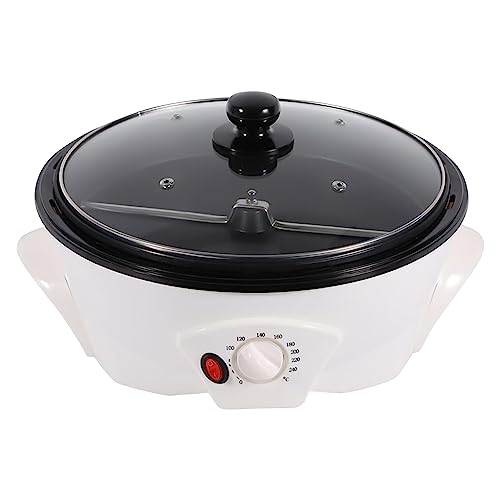
Kllkmmws 500g Electric Coffee Roaster for Home & Cafe
- ✓ Compact and sturdy design
- ✓ Even heat distribution
- ✓ Easy to move and handle
- ✕ Not suited for large batches
- ✕ Limited advanced controls
| Capacity | 1.1 lbs (500g) of raw coffee beans |
| Heating Element | Honeycomb pot bottom for even heat distribution |
| Temperature Range | 32°F to 464°F (0°C to 240°C) |
| Material | High-quality PP (Polypropylene) |
| Portability Features | Side handles for easy movement |
| Intended Use | Suitable for home and commercial coffee roasting |
Instead of the usual bulky, noisy coffee roasters I’ve handled, this Kllkmmws 500g model feels surprisingly compact and sturdy. Its honeycomb pot bottom immediately catches your eye, hinting at even heat distribution—a game changer for that perfect roast.
The first thing I noticed is how easily you can load up to 1.1 pounds of raw beans. Whether you’re roasting for yourself or a small crowd, it’s a solid size that balances capacity and practicality.
The handles on each side make it simple to move around, even when full, without risking burns or spills.
Adjusting the temperature is straightforward with a simple knob, giving you control from 32 to 464℉. I played around with different temps, and the results were consistently better than my previous small roaster, thanks to the even heating.
It’s quiet, too, so I could listen to music while roasting without distraction.
The build quality feels durable, with a wear-resistant PP exterior that stands up to frequent use. Clean-up was a breeze—just a quick wipe-down after roasting.
Plus, the design makes it easy to set up in a home kitchen or small cafe without taking up too much space.
Overall, this roaster offers impressive features at an affordable price. It’s perfect if you want to experiment with roasting or need a reliable machine for small-scale production.
Just keep in mind that it’s not a commercial factory-grade device, but it packs a lot of value for home and small business use.
WINB Home Coffee Roaster 110V Electric Bean & Peanut Roaster

- ✓ Easy to operate
- ✓ Even heating performance
- ✓ Clear viewing window
- ✕ Limited capacity for large batches
- ✕ No digital display
| Capacity | 750 grams (1.65 lb / 26.45 oz) of green coffee beans |
| Power Supply | 110V, 60Hz |
| Temperature Range | 100-240°C (212-464°F) |
| Roasting Time | Up to 60 minutes, typically 25 minutes for 750g |
| Heating Method | Automatic constant temperature heating with professional thermostat |
| Construction Materials | Honeycomb design with black food-grade Teflon layer, transparent lid with air holes |
As soon as I unboxed the WINB Home Coffee Roaster, I was struck by its sleek black honeycomb design and the transparent lid that invites you to peek inside. It feels surprisingly compact but sturdy, with a weight that hints at solid construction.
The air holes on the lid let you catch whiffs of the fresh coffee aroma even before roasting begins.
Turning it on for the first time, I appreciated how simple the controls are—just a switch and a dial for temperature. The adjustable temp from 100 to 240°C gives you plenty of room for experimenting.
I set it to 180°C for a medium roast and noticed how evenly it heated, thanks to its automatic thermostat. The built-in stirring rod inside ensures the beans roast uniformly without any manual shaking.
Loading 500 grams of green beans was a breeze, and I loved how I could watch the roasting process through the clear lid. The aroma filled the room as the beans turned a rich brown.
The 0-60 minute timer is super handy, letting me set it and forget it, while the stand-up lid makes it easy to check on progress without stopping the process.
Cleanup was straightforward thanks to the non-stick Teflon layer, and I found it easy to remove and wash the honeycomb case. Versatile enough for peanuts, chestnuts, or even popcorn, this roaster really does make home roasting accessible and fun.
Overall, it’s a solid choice for anyone looking to start roasting at home without fuss.
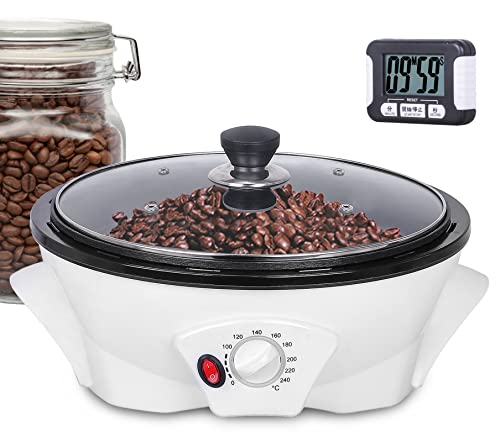
JIAWANSHUN Electric Coffee Roaster 1.1lb Home Use
- ✓ Easy to monitor roasting
- ✓ Versatile for different foods
- ✓ Simple controls for beginners
- ✕ Needs pre-sorting beans
- ✕ Roasting time varies
| Roasting Capacity | 300-500g per batch |
| Power | 1200W |
| Temperature Range | 100-240°C |
| Roasting Control | Adjustable temperature and timer |
| Material | Honeycomb non-stick interior, glass lid with ventilation holes |
| Additional Features | Automatic mixing stirrer, transparent glass cover for monitoring |
This JIAWANSHUN Electric Coffee Roaster has been sitting on my wishlist for a while, and I finally got the chance to give it a whirl. The moment I unpacked it, I was impressed by how sturdy and sleek it looks—compact but with a sizable 800g capacity that promises enough for a good batch.
The glass lid with ventilation holes is a game-changer. It lets me peek inside without lifting it, so I can keep an eye on the roast progression and enjoy that amazing aroma wafting out.
The transparent cover combined with the honeycomb non-stick interior makes cleaning a breeze—just a quick damp cloth is enough.
The controls are surprisingly intuitive, especially considering it’s a home-use machine. I set the temperature between 100-240°C and adjusted the timer, which helps tailor the roast exactly how I like it—light, medium, or dark.
The automatic stirrer ensures even roasting, though I did notice I need to sort out smaller beans first to avoid jamming the stirring rod.
Power-wise, the 1200W motor heats up quickly, cutting down waiting time and giving consistent results. It’s versatile too—great for nuts, sunflower seeds, or even popcorn if you’re feeling experimental.
The adjustable temperature and easy operation make it perfect for beginners and seasoned coffee lovers alike.
Overall, this roaster hits the sweet spot between ease of use and roasting control. It’s compact, powerful, and versatile enough to elevate your at-home coffee game without any fuss.
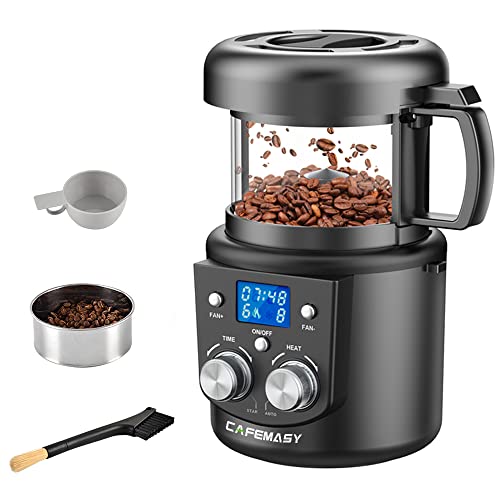
CAFEMASY Home Coffee Bean Roaster with Adjustable Timer
- ✓ Compact and stylish design
- ✓ Easy to use automatic mode
- ✓ Precise control for roasting
- ✕ Limited capacity
- ✕ Manual setup can be tricky for beginners
| Roasting Capacity | 80g to 100g (about 13 shots) |
| Heating Levels | 1 to 8 levels of adjustable heat |
| Timer Range | 1 to 15 minutes |
| Control Modes | Automatic and manual with adjustable settings |
| Display | LED screen showing time, heating level, and fan power |
| Construction Materials | High heat-resistant ABS plastic body, bakelite lid, high boron glass baking jar |
This CAFEMASY Home Coffee Bean Roaster has been sitting on my wishlist for a while, mainly because I’ve always wanted to try roasting my own beans at home. When I finally got my hands on it, I was curious if it would truly deliver fresh, flavorful coffee without the hassle of a big, complicated machine.
The first thing I noticed is how compact and sleek it is. The small size makes it perfect for countertop use without taking up too much space.
I was impressed by the clear, heat-resistant glass jar—it’s easy to see the beans change color as they roast, which is pretty satisfying.
The machine offers two modes: automatic and manual. The automatic mode is super straightforward, just press the button, and it runs for about 10 minutes—great for beginners.
I tested the manual mode, which gives you control over timer, fan, and heat levels. That’s perfect if you want to experiment or really customize your roast.
Adjusting the heat and fan made a noticeable difference, and the LED screen helps keep everything clear. When the roast is done, it automatically switches to cooling, which really helps lock in that fresh flavor.
Cleanup was simple thanks to the chaff collection basket, and the safe handle makes handling hot beans easier.
For around $130, this roaster hits a sweet spot between simplicity and control. Sure, it’s small, so it’s not for large batches, but for daily use and experimenting with beans, it’s pretty great.
Plus, the automatic mode takes the guesswork out, perfect for busy mornings or beginners.
What Features Should You Look for in the Best Coffee Roaster Machine?
When searching for the best coffee roaster machine, several key features should be considered to ensure optimal roasting quality and user experience.
- Roasting Capacity: The roasting capacity refers to the amount of coffee beans that can be roasted in a single batch. Machines with larger capacities are ideal for those who roast frequently or in bulk, while smaller models cater to casual roasters or home use.
- Roasting Control: This feature includes adjustable settings for time and temperature, allowing users to customize their roasting profiles. Advanced machines may also offer programmable profiles that enable consistent results for different bean types and desired roast levels.
- Cooling System: A good cooling system is essential for halting the roasting process quickly to prevent over-roasting. Machines with built-in cooling systems or those that allow for quick transfer to a cooling tray help maintain the quality of the beans.
- Build Quality: The materials and construction of the coffee roaster affect its durability and performance. High-quality materials like stainless steel can enhance the longevity of the machine, while a well-designed build ensures even heat distribution for consistent roasting.
- Ease of Use: User-friendly features such as simple controls, clear displays, and easy access for cleaning enhance the overall experience. A machine that is straightforward to operate will appeal to both novice and experienced roasters.
- Smoke Suppression: Roasting coffee generates smoke, and machines with effective smoke suppression systems minimize odor and mess. This feature is important for home users or those in small spaces where smoke may be an issue.
- Price and Warranty: The price of the coffee roaster should reflect its features, quality, and intended use. Additionally, a good warranty can provide peace of mind regarding the durability and reliability of the machine.
What Are the Different Types of Coffee Roaster Machines to Consider?
The different types of coffee roaster machines to consider include:
- Drum Roasters: These machines use a rotating drum to roast coffee beans, allowing for even heat distribution and consistent roasting.
- Air Roasters: Utilizing hot air to circulate around the coffee beans, air roasters provide a lighter roast and are often more compact and easier to clean.
- Fluid Bed Roasters: Similar to air roasters, these machines suspend the beans in hot air to create a uniform roast, often favored for more delicate flavors.
- Home Roasters: Designed for personal use, these machines are smaller and offer a variety of roasting options, catering to hobbyists and coffee enthusiasts.
- Commercial Roasters: Built for large-scale production, these machines can handle significant volumes and often feature advanced controls for precision roasting.
Drum Roasters: Drum roasters are favored for their ability to roast beans evenly due to the constant rotation of the drum, which allows beans to be heated uniformly. They can produce a wide range of roast profiles, from light to dark, and are popular among professional roasters and serious coffee aficionados.
Air Roasters: Air roasters work by blowing hot air through the coffee beans, which helps to create a more delicate roast and highlights the beans’ inherent flavors. They are typically smaller and easier to use than drum roasters, making them ideal for home users or small batches, but they may not reach the same depth of flavor as some drum roasters.
Fluid Bed Roasters: Fluid bed roasters operate on the principle of suspending beans in a stream of hot air, similar to air roasters but often providing more control over the roasting process. This method allows for quick heat transfer and can result in a bright and vibrant cup of coffee, appealing to those seeking to explore the nuanced flavors of specialty beans.
Home Roasters: Home roasters are designed specifically for coffee enthusiasts who want to roast their own beans at home. These machines come in various styles, from basic to more advanced models, allowing users to experiment with different roast profiles and batch sizes, making the art of coffee roasting accessible to everyone.
Commercial Roasters: Commercial roasters are heavy-duty machines intended for businesses that roast large quantities of coffee daily. They typically include advanced features such as programmable roasting profiles, cooling trays, and higher capacities to meet the demands of coffee shops, roasteries, and other commercial enterprises.
How Does a Drum Coffee Roaster Operate?
A drum coffee roaster operates by using a rotating drum to evenly roast coffee beans through the application of heat.
- Drum Design: The drum is typically made of metal and is mounted horizontally or slightly inclined. This design allows for even heat distribution and continuous movement of the beans, which prevents them from burning and ensures a uniform roast.
- Heat Source: Drum roasters usually employ either gas or electric heating elements to maintain the desired temperature. The heat source directly impacts the roasting process, as the temperature can be adjusted to suit different roasting profiles and flavor outcomes.
- Bean Loading and Cooling: Beans are loaded into the drum at the beginning of the roasting cycle. Once the roasting is complete, they are quickly removed and transferred to a cooling tray, where air is blown through to rapidly reduce the temperature and stop the roasting process.
- Control Systems: Many drum roasters are equipped with advanced control systems that allow for precise temperature regulation and timing. These controls enable roasters to fine-tune their roasting profiles, catering to specific flavor preferences and bean characteristics.
- Noise and Smoke Management: Drum roasters can generate significant noise during operation and produce smoke from the roasting process. To mitigate this, many models include built-in smoke suppression systems or require external ventilation to maintain a safe and pleasant roasting environment.
What Are the Benefits of Using a Hot Air Coffee Roaster?
The benefits of using a hot air coffee roaster include enhanced flavor, control over the roasting process, and convenience.
- Enhanced Flavor: Hot air coffee roasters utilize a fluid bed roasting method that circulates hot air around the coffee beans, promoting even roasting. This technique allows for the development of a fuller flavor profile, as it reduces the risk of burning the beans and maintains their natural oils.
- Control Over Roasting Process: With a hot air coffee roaster, users have the ability to adjust temperature and time settings with precision. This level of control allows for experimentation with different roast levels, enabling coffee enthusiasts to tailor the roast to their specific taste preferences.
- Convenience: Many hot air roasters are designed for ease of use, often featuring automatic shut-off and simple operation. This convenience allows users, whether novices or experienced roasters, to enjoy fresh roasted coffee without the complexity of traditional methods.
- Quick Roasting Time: Hot air roasters typically roast coffee beans faster than other types of roasters due to the efficient heat transfer from the hot air. This means users can enjoy freshly roasted coffee in a shorter amount of time, making it a practical choice for those with busy lifestyles.
- Minimal Cleanup: Most hot air coffee roasters have a straightforward design that reduces the mess associated with roasting. Many models come with removable chaff collectors and are easy to clean, making the post-roasting process simple and hassle-free.
Which Brands Manufacture the Best Coffee Roaster Machines?
Several brands are renowned for manufacturing the best coffee roaster machines for both home and commercial use.
- Behmor: Known for its user-friendly design, Behmor coffee roasters are favored by home roasting enthusiasts. They offer features like programmable roast profiles and a built-in smoke suppression system, making it suitable for indoor use.
- Hottop: Hottop roasters are celebrated for their precision and control, allowing users to tweak the roasting process significantly. With a range of models, they cater to both beginners and seasoned roasters, offering an array of programmable settings and real-time feedback.
- Probat: A leading name in commercial coffee roasting, Probat machines are built for durability and high-volume roasting. Their technology emphasizes consistency and quality, making them a preferred choice for coffee roasters looking to scale their operations.
- Gene Cafe: Gene Cafe roasters are compact and versatile, appealing to both hobbyists and professionals. They feature a unique design that allows for even roasting while providing a clear view of the beans throughout the process.
- Roastmaster: This brand is known for its innovative approach to home coffee roasting, combining modern technology with traditional methods. Roastmaster machines often come with smartphone integration, allowing users to monitor and control the roasting process remotely.
- Diedrich: Diedrich roasters are recognized for their exceptional build quality and are often used in specialty coffee shops. They emphasize energy efficiency and environmental responsibility while delivering consistent roast profiles.
What Should You Expect to Pay for a Quality Coffee Roaster Machine?
The price of a quality coffee roaster machine can vary significantly based on its features, capacity, and brand. Here are some key price ranges you can expect:
- Entry-Level Machines ($200 – $500): These are typically small, home-use roasters that allow coffee enthusiasts to roast small batches. They often have basic controls and limited capacity, making them ideal for beginners who want to experiment with roasting without a large investment.
- Mid-Range Machines ($500 – $2,000): These machines offer more features like programmable settings, larger batch sizes, and better temperature control. They are suitable for serious hobbyists and small businesses, providing a balance between quality and affordability.
- Commercial Machines ($2,000 – $10,000+): Designed for high-volume roasting, these machines come with advanced technology, including sophisticated monitoring systems and automation features. They are built to handle the demands of coffee shops and roasteries, ensuring consistent quality and efficiency in production.
- Specialty Roasters ($10,000 – $50,000+): These high-end machines are used by professional roasters and often include custom-built options for specific roasting profiles. They feature advanced software for precision roasting, a large capacity for bulk roasting, and are typically made from high-quality materials for durability and performance.
How Do Users Rate Their Experience with the Best Coffee Roaster Machines?
- Quality of Roast: Users often evaluate how evenly and thoroughly the beans are roasted, which is crucial for flavor development.
- Ease of Use: Many consumers appreciate machines that are user-friendly, featuring intuitive controls and clear instructions for beginners.
- Durability and Build Quality: A robust construction is essential for longevity, and users frequently comment on the materials used and how well the machine holds up over time.
- Capacity: The ability to roast a sufficient amount of coffee beans at once is important, especially for those who need larger batches for personal use or small businesses.
- Temperature Control: Precise temperature settings allow users to customize their roasting process, which is often highlighted as a significant advantage in user reviews.
- Price and Value: Users assess whether the machine provides good value for its price, considering factors like features, performance, and longevity.
- Customer Support: Positive experiences with customer service often lead to higher ratings, as users appreciate responsive and helpful support when issues arise.
- Noise Level: Many users mention the noise produced during roasting, with quieter machines generally receiving favorable feedback.
Noise Level: The noise generated during the roasting process is another aspect that users consider. Machines that operate quietly are often preferred, especially in home environments where excessive noise can be disruptive.
What Maintenance Tips Can Help Extend the Life of Your Coffee Roaster Machine?
To extend the life of your coffee roaster machine, regular maintenance is essential and can significantly enhance its performance.
- Regular Cleaning: Keeping your coffee roaster clean is vital to prevent the buildup of coffee oils and residues, which can affect the flavor and quality of your beans. Make sure to follow the manufacturer’s guidelines for cleaning, using appropriate tools and solutions to avoid damaging any components.
- Proper Cooling: After roasting, allow the machine to cool down completely before cleaning or storing it. This prevents thermal shock to the components and prolongs the life of the roaster by reducing wear and tear from extreme temperature changes.
- Check and Replace Filters: Regularly inspect and replace any air or oil filters as per the manufacturer’s recommendations. Clogged filters can compromise airflow and efficiency, leading to overheating and potentially damaging the machine.
- Monitor Electrical Components: Ensure all electrical components and wiring are in good condition, checking for any signs of wear or fraying. Faulty wiring can lead to short circuits or equipment failure, so addressing electrical issues promptly can prevent costly repairs.
- Lubrication of Moving Parts: Apply appropriate lubricants to moving parts as specified by the manufacturer to reduce friction and wear. This maintenance step is crucial for ensuring smooth operation and longevity of the machine.
- Calibration and Settings Adjustment: Periodically calibrate your coffee roaster to maintain optimal roasting profiles. Adjusting settings according to the type of coffee being roasted can enhance flavor and prevent unnecessary strain on the machine.
- Storage Conditions: Store your coffee roaster in a dry and stable environment to prevent corrosion and damage from humidity or extreme temperatures. Proper storage will help maintain the integrity of the machine when not in use.