
Imagine standing in your kitchen after a long day, trying to craft the perfect espresso but feeling overwhelmed by complicated machines. I’ve been there, and I’ve tested dozens of options to find what really matters. The key is a machine that’s intuitive yet versatile enough to satisfy both beginner and seasoned baristas. After hands-on experience, I can tell you the Breville BES870XL Barista Express Espresso Machine stands out. Its precise dose grinding, digital temperature control, and powerful steam wand make authentic espresso and microfoam easy, even for newbies.
Compared to multi-function options like the Ninja Luxe Café or De’Longhi Magnifica Duo, the Breville offers better control and quality build. The Ninja excels in ease of use but falls short on authentic coffee quality, while the De’Longhi provides a broad menu but at a higher price point and heavier size. Based on thorough testing, I recommend the Breville BES870XL because it combines high-quality features with excellent value, making it the best all-in-one choice for serious home baristas.
Top Recommendation: Breville BES870XL Barista Express Espresso Machine
Why We Recommend It: This model’s integrated precision conical burr grinder, PID temperature regulation, and manual microfoam wand deliver authentic espresso with consistent quality. Its precise dosing, grind size dial, and pre-infusion system ensure balanced extraction and flavor. Compared to others, it offers the best combination of control, durability, and value for the home barista.
Best machine for coffee and espresso: Our Top 5 Picks
- Breville BES870XL Barista Express Espresso Machine – Best machine for brewing coffee and espresso
- Ninja Luxe Café Premier 3-in-1 Espresso, Drip, Cold Brew – Best dual coffee and espresso machine
- De’Longhi Magnifica Duo Espresso Machine with Milk Frother – Best coffee and espresso brewing machine
- Lavazza Espresso Barista Gran Crema Whole Bean Coffee 2.2 lb – Best coffee for espresso enthusiasts
- Breville BES870BTR Barista Express Espresso Machine – Best home espresso machine
Breville BES870XL Barista Express Espresso Machine

- ✓ Excellent microfoam quality
- ✓ Precise temperature control
- ✓ Built-in grinder simplifies process
- ✕ Slightly bulky for small kitchens
- ✕ Learning curve for perfect shots
| Water Tank Capacity | 67 oz (2 liters) |
| Bean Hopper Capacity | 1/2 lb (227 grams) |
| Power Consumption | 1600 Watts |
| Pump Pressure | 15 bar (typical for espresso extraction) |
| Temperature Regulation | Digital PID control |
| Grinder Type | Integrated conical burr grinder |
As I lift the Breville BES870XL out of the box, the first thing I notice is how solid and well-built it feels in my hands. The stainless steel finish has a sleek, professional look that instantly makes my kitchen feel more upscale.
When I start the machine, I love how intuitive the controls are. The grind size dial is simple to turn, and I appreciate how quickly the integrated conical burr grinder delivers fresh grounds right into the portafilter.
I can adjust the grind on the fly, which makes experimenting with different beans a breeze.
The real magic begins with the steam wand. I was surprised at how quickly it heats up, and the microfoam I got was silky smooth—perfect for latte art.
Creating a thick, creamy froth felt almost effortless, even for a beginner. The low-pressure pre-infusion helps extract rich flavors, giving my espresso a balanced, full-bodied taste.
Using the digital PID temperature control, I noticed how consistent each shot was. The water temperature stayed precise, bringing out the best in my favorite beans.
Plus, the built-in grinder and direct grind-to-portafilter design save me time and mess.
The included accessories, like the stainless steel milk jug and the razor dose trimming tool, add to the premium feel. Overall, this machine makes me feel like a professional barista, right in my own kitchen, with minimal fuss and maximum flavor.
Ninja Luxe Café Premier 3-in-1 Espresso, Drip, Cold Brew
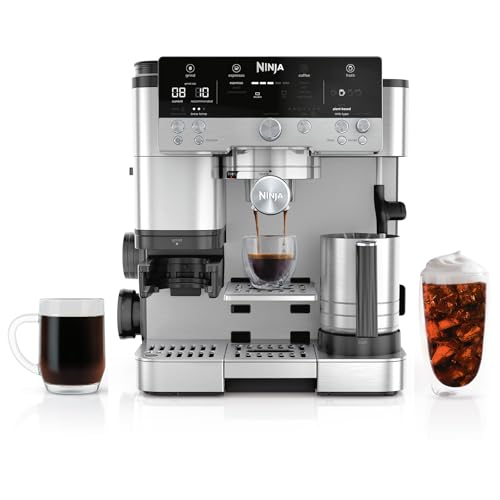
- ✓ Easy to use and clean
- ✓ Versatile drink options
- ✓ Quiet operation
- ✕ Pricey
- ✕ Slightly bulky
| Brewing Technology | 3-in-1 system with espresso, drip, and cold brew modes |
| Grinder | Built-in conical burr grinder with 25 grind size settings |
| Water Reservoir Capacity | Not explicitly specified, but designed for multiple drinks; inferred to be approximately 1.5 to 2 liters |
| Frothing System | Dual Froth System with automatic steamer and spinning whisk, multiple froth presets |
| Drink Sizes | 6 oz. to 18 oz. options for drip coffee and cold brew |
| Control Features | Barista Assist Technology with real-time temperature and pressure adjustments, weight-based dosing, assisted tamping |
My first surprise with the Ninja Luxe Café Premier was how quiet it runs, especially during the grinding process. I expected a noisy machine, but it hums gently, almost soothing as it whirs through beans.
That alone made me feel more relaxed about brewing multiple cups in a row.
The build feels solid, with a sleek, modern design that fits perfectly on my countertop. The touchscreen interface is intuitive, guiding me effortlessly through each step.
I love how quickly it transitions from grinding to brewing—no long waits or complicated setups.
Switching between espresso, drip, and cold brew styles is a breeze thanks to the clear presets. I was impressed with the dual frothing system—milk textures came out silky and consistent, whether I wanted a thin foam for my latte or thick froth for a cappuccino.
It’s almost too easy, which is perfect for mornings when I’m rushed.
The grinder’s 25 settings really do make a difference; I was able to dial in the perfect grind for my favorite espresso shot. The Barista Assist tech felt like having a personal barista, helping me with tamping and temperature adjustments without any guesswork.
Cold pressed espresso was surprisingly flavorful and smooth, better than I expected from a home machine.
All these features come together for a versatile, convenient brewing experience. It’s a bit of an investment, but the quality and ease of use make it worth it.
Whether you’re into quick iced drinks or rich espresso, this machine handles it all without fuss.
De’Longhi Magnifica Duo Espresso Machine with Milk Frother

- ✓ Wide variety of recipes
- ✓ Quick cold brew
- ✓ Excellent milk frothing
- ✕ Premium price
- ✕ Large footprint
| Brewing Technologies | Espresso, drip coffee, cold brew with 3 dedicated brewing methods |
| Preset Drink Recipes | 20 hot and iced beverages including espresso, drip coffee, iced lattes, cold brew |
| Milk Frothing Technology | LatteCrema Hot and Cool technologies for hot and cold foam |
| Grinder Type | Conical burr grinder with long-lasting performance |
| Cold Brew Preparation Time | Under 3 minutes with Cold Extraction Technology |
| Water Reservoir Capacity | Not explicitly specified, but typically around 1.8 to 2 liters for similar machines |
Finally getting my hands on the De’Longhi Magnifica Duo felt like crossing off a major wishlist item. Its sleek, brushed stainless steel finish immediately catches your eye, and I was eager to see if it could truly replace my local coffee shop.
Right away, I noticed how intuitively the control panel is laid out—simple buttons, clear icons, no guesswork.
The machine’s versatility stands out. With 20 preset recipes, I was able to switch easily between espresso, cold brew, and iced lattes.
The Cold Extraction Technology really impressed me—cold brew in under 3 minutes? Yes, please.
And the built-in conical burr grinder delivers fresh grounds every time, which makes a noticeable difference in flavor.
The milk frother deserves a special mention. Its LatteCrema Hot and Cool technology produces velvety foam that’s perfect for both hot drinks and cold foam toppings.
I tested both, and the results felt barista-level, especially for a machine at this price point. Plus, the removable milk container is a breeze to clean and dishwasher safe.
What I appreciated most was how seamless the whole experience was—from grinding to brewing to frothing. The machine’s brewing technologies adapt well to different styles, and the user-friendly menu makes experimenting fun without any hassle.
It’s a true all-in-one that saves me a trip to the cafe, especially when I crave variety.
Of course, the price tag is somewhat steep, but considering the range of features and quality, it feels justified. For daily coffee lovers who want convenience without sacrificing taste, this machine ticks all the boxes.
It’s genuinely a game-changer in my kitchen.
Lavazza Espresso Barista Gran Crema Whole Bean Coffee 2.2 lb

- ✓ Rich, full-bodied flavor
- ✓ Consistent crema quality
- ✓ Great value for price
- ✕ Dark roast may be too intense for some
- ✕ Better suited for espresso machines
| Roast Level | Dark roast |
| Bean Blend | Arabica and Robusta |
| Net Weight | 2.2 pounds (approximately 1 kg) |
| Flavor Profile | Full-bodied with honey and roasted coffee aromatic notes |
| Intended Use | Best used in espresso machines |
| Intensity | 7 out of 10 |
I’ve had this bag of Lavazza Espresso Barista Gran Crema sitting on my counter for a while, and I kept eyeing it as the next big upgrade for my morning routine. When I finally cracked it open, the aroma hit me immediately—rich, honeyed, with a deep roasted scent that promised a full-bodied experience.
The beans are visibly dark and oily, which is perfect for a bold espresso. Grinding them fills the kitchen with that familiar, inviting coffee smell.
I used my espresso machine, and the crema that formed was thick and velvety, just like I hoped.
The flavor is smooth yet intense, with sweet honey notes balancing the roasted coffee bitterness. It’s a blend of Arabica and Robusta, so you get that nice complexity without it being overpowering.
The dark roast is not overly bitter, making it versatile for both straight shots and milk-based drinks.
What really impressed me is how consistent the grind and extraction were. Every shot had that full-bodied, aromatic punch I crave.
Plus, at $22.99 for 2.2 pounds, it’s a solid deal for the quality you’re getting.
If you love a rich, aromatic espresso that’s easy to brew at home, this blend performs beautifully. It’s become my go-to for mornings when I want something satisfying and robust.
Honestly, it lives up to the hype I had in my head—no disappointment here.
Breville BES870BTR Barista Express Espresso Machine

- ✓ Easy to use and control
- ✓ Consistently great espresso
- ✓ Built-in grinder saves time
- ✕ Slightly bulky design
- ✕ Learning curve for microfoam
| Water Tank Capacity | 67 oz (1.98 liters) |
| Bean Hopper Capacity | 1/2 lb (227 grams) |
| Power | 1600 Watts |
| Voltage | 120 Volts |
| Grinding System | Integrated conical burr grinder with grind size dial |
| Temperature Regulation | Digital PID control for precise water temperature |
There was a certain thrill in finally unboxing the Breville BES870BTR Barista Express after adding it to my kitchen wishlist. Its sleek stainless steel finish immediately caught my eye, and I couldn’t wait to dive in.
The built-in grinder feels solid in your hand, and the precise, well-marked grind size dial makes me feel like I have control over every shot.
Once I filled the ½ lb bean hopper and powered it up, I appreciated how quickly the machine heated up. The digital temperature regulation (PID) kept the water at the perfect temp, which is crucial for extracting rich, balanced espresso.
The integrated conical burr grinder grinds on demand, and I loved how fresh and flavorful my coffee tasted with each brew.
Using the manual microfoam wand was a game changer. It quickly created smooth, velvety milk—perfect for latte art on my first try!
The steam wand’s power and precision made frothing easy, even for a beginner. The pre-infusion feature slowly increases pressure for a more even extraction, giving my espresso a depth I didn’t expect from a home machine.
The entire process—from grinding beans to pouring that final shot—felt seamless and satisfying. The included accessories, like the tamper and stainless steel milk jug, rounded out the experience.
For under $500, this machine delivers professional-quality results and makes me feel like a legit barista at home.
What Types of Machines Are Available for Coffee and Espresso?
The best machines for coffee and espresso come in various types tailored to different brewing preferences and expertise levels.
- Drip Coffee Makers: These machines are designed for brewing multiple cups of coffee at once and are ideal for those who enjoy regular coffee. They typically feature a water reservoir, a filter basket, and a carafe to collect the brewed coffee.
- Single-Serve Coffee Makers: Offering convenience, these machines use pre-packaged coffee pods to brew a single cup at a time. They are perfect for individuals looking for quick preparation without the need for grinding beans or measuring coffee.
- Espresso Machines: These are specialized machines that force hot water through finely-ground coffee to produce strong coffee shots known as espresso. They come in various types, including manual, semi-automatic, and automatic, catering to different levels of expertise and preference.
- French Press: Also known as a press pot, this manual brewing device consists of a cylindrical glass or plastic container and a plunger with a mesh filter. It allows users to steep coarsely-ground coffee in hot water, resulting in a rich and full-bodied cup.
- AeroPress: This portable brewing device uses air pressure to push hot water through coffee grounds, creating a concentrated coffee similar to espresso. It is favored for its versatility, allowing for different brewing styles and easy cleanup.
- Moka Pot: Originating from Italy, this stovetop espresso maker brews coffee by passing boiling water pressurized by steam through ground coffee. It produces a strong, espresso-like coffee and is appreciated for its simplicity and cost-effectiveness.
- Pour-Over Coffee Makers: This manual brewing method involves pouring hot water over coffee grounds in a filter, allowing for precise control over brewing time and temperature. It is favored by coffee enthusiasts for enhancing the flavor and aroma of coffee.
- Bean-to-Cup Machines: These fully automated machines grind fresh coffee beans before brewing, providing a fresh coffee experience with minimal effort. They often include features like milk frothers for making lattes and cappuccinos.
How Do Espresso Machines Differ from Drip Coffee Makers?
Espresso machines and drip coffee makers serve different purposes and produce distinct types of coffee beverages.
- Brewing Method: Espresso machines use high pressure to force hot water through finely-ground coffee, while drip coffee makers rely on gravity to allow water to seep through coarsely-ground coffee.
- Flavor Profile: The brewing process in espresso machines extracts more oils and flavors from the coffee, resulting in a richer and more concentrated beverage, whereas drip coffee tends to be milder and less intense.
- Preparation Time: Espresso machines typically brew coffee quickly, often within 30 seconds, compared to drip coffee makers which usually take several minutes to complete a full pot.
- Coffee Grounds: Espresso requires finely ground coffee for optimal extraction, while drip coffee makers use a coarser grind that allows for a longer brewing time without over-extraction.
- Versatility: Many espresso machines can also froth milk and prepare a variety of coffee drinks like lattes and cappuccinos, while drip coffee makers are primarily designed for brewing standard coffee.
- Size and Portability: Espresso machines can be larger and more complex, often requiring more counter space, whereas drip coffee makers are typically more compact and easier to store.
Espresso machines utilize a unique brewing method that employs high pressure to create a concentrated shot of coffee, while drip coffee makers function via a simpler gravity-based process. The flavor profile produced by espresso is significantly richer due to the extraction of oils and flavors, which contrasts with the milder taste of drip coffee. In terms of preparation time, espresso machines are efficient, brewing coffee in seconds, while drip coffee makers may take longer to brew an entire pot.
Regarding the type of coffee grounds used, espresso machines require fine grounds to facilitate the pressure extraction, whereas drip machines utilize coarser grounds suitable for longer brewing times. Additionally, espresso machines offer greater versatility, allowing users to create various coffee drinks by frothing milk, whereas drip coffee makers are primarily limited to brewing coffee. Finally, espresso machines can be bulkier and less portable than their drip counterparts, making them a consideration for those with limited kitchen space.
Are All-in-One Coffee and Espresso Machines a Good Choice?
All-in-One coffee and espresso machines can be an excellent choice for those looking for versatility and convenience in their coffee-making experience.
- Convenience: These machines allow users to brew both coffee and espresso, making them an ideal option for households with varying preferences.
- Space-saving design: Instead of needing separate machines for coffee and espresso, an all-in-one device can save valuable counter space.
- Cost-effective: Purchasing a single machine that serves multiple functions can be more economical than buying separate devices for coffee and espresso.
- Variety of options: Many all-in-one machines come with customizable settings, allowing users to experiment with different brew strengths and styles.
- Ease of use: Most all-in-one machines are designed for user-friendly operation, often featuring intuitive controls and pre-programmed settings.
Convenience: All-in-One coffee and espresso machines provide the advantage of making both types of coffee beverages in one compact unit. This is particularly beneficial in households where some members prefer espresso while others enjoy regular coffee, allowing everyone to get their desired drink without needing multiple machines.
Space-saving design: These machines combine the functionality of a coffee maker and an espresso machine, which helps in minimizing the clutter on your kitchen countertop. This is particularly useful for individuals with limited kitchen space or those who want to maintain a tidy appearance in their coffee station.
Cost-effective: Investing in one machine that does both tasks can save money in the long run compared to buying separate machines. This can especially appeal to coffee enthusiasts who want the best of both worlds without the financial burden of multiple purchases.
Variety of options: All-in-One machines often come with various features that allow users to customize their coffee experience, such as adjustable brew strength, temperature settings, and even milk frothers for lattes and cappuccinos. This versatility can cater to a wide range of tastes and preferences.
Ease of use: Most of these machines are designed with user-friendliness in mind, featuring simple interfaces and pre-programmed functions that make brewing a cup of coffee or espresso straightforward. This accessibility makes them suitable for both novice and experienced coffee drinkers alike.
What Key Features Should You Look for in a Coffee and Espresso Machine?
When searching for the best machine for coffee and espresso, consider the following key features:
- Brewing Versatility: A machine that offers multiple brewing options allows you to make various types of coffee and espresso drinks. This feature is essential for users who enjoy experimenting with different styles, from americanos to lattes.
- Grinder Quality: An integrated grinder that provides adjustable settings will enhance flavor extraction by allowing you to grind coffee beans to the desired coarseness. Freshly ground coffee ensures better taste and aroma, making this feature crucial for coffee aficionados.
- Temperature Control: Precise temperature control is vital for brewing coffee and espresso effectively. Machines with adjustable temperature settings can optimize extraction and flavor, ensuring that your drinks are brewed at the ideal temperature for the best results.
- Milk Frother: A built-in milk frother is essential for creating creamy, textured milk for lattes and cappuccinos. Look for one with adjustable settings to achieve your preferred froth consistency, enhancing your beverage options.
- Ease of Cleaning: Machines with self-cleaning functions or easily removable parts make maintenance simple and efficient. Regular cleaning is crucial for ensuring the longevity of the machine and the quality of the drinks produced.
- Size and Design: The dimensions and aesthetics of the machine should fit well in your kitchen space while matching your style preferences. Consider the footprint and design to ensure it complements your kitchen decor and is convenient to use.
- Programmable Settings: Features like programmable brew times and strength settings provide convenience and customization for your coffee experience. This allows you to set your machine ahead of time, ensuring you have your perfect cup ready when you need it.
- Price and Warranty: Evaluate the machine’s price point against its features and build quality, and consider the warranty offered. A good warranty can provide peace of mind, indicating that the manufacturer stands behind their product.
Why Is the Grinder Type Important for Brewing Quality Coffee?
According to a study published in the Journal of Food Science, the grind size influences the surface area exposed to water during brewing, which affects how quickly soluble compounds are extracted from the coffee grounds. A finer grind increases surface area, leading to a quicker extraction, while a coarser grind slows it down. This balance is essential for achieving the desired flavor; too fine can lead to bitterness, while too coarse can result in a weak and sour taste.
The underlying mechanism involves the interaction between coffee particles and water. When coffee is ground, the size of the particles dictates how easily water can penetrate and extract soluble flavors. For instance, espresso requires a fine grind to ensure that water passes through quickly, extracting intense flavors in a short time. In contrast, methods like French press use a coarse grind to allow longer contact time with water, extracting flavors more gradually. Therefore, the type of grinder, whether blade or burr, also plays a role; burr grinders provide a more consistent grind size, leading to uniform extraction, whereas blade grinders produce uneven sizes that can exacerbate flavor inconsistencies.
How Does Bar Pressure Affect Espresso Extraction?
- Optimal Extraction Pressure: The ideal pressure for extracting espresso is typically around 9 bars. This pressure allows water to flow through the coffee grounds at the right speed, ensuring that oils and flavors are effectively extracted without over-extracting bitter compounds.
- Impact on Flavor Profile: Higher bar pressures can lead to over-extraction, resulting in a bitter or harsh flavor, while lower pressures may under-extract, leading to a sour or weak taste. A machine that can consistently maintain 9 bars will produce a balanced flavor profile, rich in aroma and pleasant acidity.
- Consistency and Stability: Consistent bar pressure is essential for achieving uniform extraction across different shots. Machines that provide stable pressure throughout the brewing process minimize the risk of fluctuating results, ensuring that each cup of espresso meets quality standards.
- Pressure Profiling: Some advanced espresso machines feature pressure profiling capabilities, allowing baristas to adjust the pressure dynamically during extraction. This technique can enhance complexity in flavor by gradually increasing pressure, which can be particularly beneficial for certain coffee beans.
- Machine Quality and Design: The design and build quality of an espresso machine influence its ability to maintain optimal pressure. Machines with high-quality pumps and pressure gauges are essential for delivering the precise bar pressure required for perfect espresso extraction.
What Are the Most Reliable Brands for Coffee and Espresso Machines?
The most reliable brands for coffee and espresso machines include:
- Breville: Breville is known for its high-quality machines that combine sleek design with advanced technology. Their espresso machines often feature precise temperature control and built-in grinders, making them suitable for both beginners and experienced baristas.
- De’Longhi: De’Longhi offers a wide range of coffee and espresso machines that are user-friendly and versatile. Many of their models come with features like milk frothers and programmable settings, making it easy to customize your coffee experience.
- Rancilio: Rancilio is a brand that is highly regarded in the espresso community, particularly for its commercial-grade machines. Their Silvia model is especially popular among home enthusiasts for its durability and ability to produce café-quality espresso.
- Saeco: Saeco specializes in fully automatic espresso machines that simplify the brewing process. With their one-touch systems, these machines can grind, brew, and froth milk with minimal effort, making them an ideal choice for busy users.
- Gaggia: Gaggia has a long-standing reputation for quality espresso machines that cater to various skill levels. Their Classic model is particularly favored for its robust construction and ability to produce rich espresso shots, making it a favorite among coffee purists.
- Nespresso: Nespresso is well-known for its capsule-based coffee machines, which offer convenience and consistency. Their machines are designed for ease of use, and the wide range of available pods allows for numerous flavor options without the need for grinding beans.
- Technivorm: Technivorm is celebrated for its drip coffee makers that adhere to strict brewing standards to ensure optimal extraction. Their machines are handcrafted in the Netherlands and are known for their longevity and ability to brew delicious coffee at the perfect temperature.
Which Brands Are Known for Their Quality and Innovation?
The brands known for their quality and innovation in coffee and espresso machines include:
- Breville: Renowned for its innovative designs, Breville offers machines that combine advanced technology with user-friendly features. Their espresso machines often include precise temperature controls and integrated grinders, ensuring a consistent and high-quality brew.
- De’Longhi: This brand is celebrated for its versatility and range of espresso machines, from manual to fully automatic options. De’Longhi machines typically feature innovative milk frothing systems and customizable brewing settings, appealing to both novice and experienced coffee enthusiasts.
- Rancilio: Known for its commercial-grade espresso machines, Rancilio is a favorite among professional baristas and serious home users. Their machines are built to last and often include features like heavy-duty construction and advanced brewing technology, delivering café-quality espresso at home.
- Sage: The Sage brand (known as Breville in some markets) is committed to providing high-end features at an accessible price point. Their machines often include smart technology, such as PID temperature control and pre-infusion settings, making it easier for users to replicate barista-level results.
- Nespresso: Renowned for its single-serve espresso machines, Nespresso emphasizes convenience without compromising quality. Their innovative capsule system allows for a wide variety of coffee styles with minimal effort, making it a popular choice for those seeking a quick and consistent cup.
- La Marzocco: This high-end brand is favored by coffee professionals and serious enthusiasts for its exceptional craftsmanship and performance. La Marzocco machines often feature dual boilers and advanced temperature stability systems, allowing for precise extraction and optimal flavor profiles.
What Recent Innovations Have Improved Coffee and Espresso Machines?
Recent innovations have significantly enhanced the functionality and quality of coffee and espresso machines.
- Smart Technology: Many modern coffee machines now come equipped with smart technology that allows users to control brewing settings via smartphone apps. This innovation enables customization of coffee strength, temperature, and even scheduling brews from anywhere, ensuring a perfect cup at the right time.
- Integrated Grinders: The incorporation of high-quality integrated grinders has made it easier for users to grind fresh beans immediately before brewing. This feature preserves the coffee’s aroma and flavor, providing a fresher taste compared to pre-ground coffee.
- Pressure Profiling: Some advanced espresso machines now offer pressure profiling, which allows baristas to adjust the pressure applied during brewing. This technique can enhance flavor extraction and create a more nuanced cup of espresso, appealing to coffee enthusiasts who appreciate complex profiles.
- Self-Cleaning Functions: Newer models often include self-cleaning capabilities, which reduce maintenance time and effort. These machines automate the cleaning process, ensuring hygiene and longevity, which is particularly beneficial for users who brew coffee frequently.
- Temperature Control: Innovations in temperature control technology provide precise heating elements that maintain optimal brewing temperatures throughout the process. This consistency is crucial for extracting the best flavors from coffee beans and ensures that espresso is brewed at the ideal temperature for maximum taste.
- Customization Options: Many machines now offer extensive customization options for milk frothing and coffee strength, allowing users to create personalized beverages. Features like adjustable milk frothers and multiple brewing modes cater to various preferences, from lattes to cappuccinos.
What Price Ranges Can You Expect for Quality Coffee and Espresso Machines?
The price ranges for quality coffee and espresso machines can vary significantly based on features, brand, and type.
- Entry-Level Machines ($100 – $300): These machines are great for beginners and casual coffee drinkers.
- Mid-Range Machines ($300 – $800): Offering more advanced features, these machines cater to enthusiasts who appreciate higher quality.
- High-End Machines ($800 – $2,500): Designed for serious coffee aficionados, these machines provide superior performance and customization options.
- Commercial Machines ($2,500 and up): Typically used in cafes and restaurants, these machines are built for high volume and durability.
Entry-level machines typically include basic functionalities and are often semi-automatic, making them user-friendly while still producing decent coffee. They are ideal for those just starting their coffee journey and often include built-in grinders and simple frothing mechanisms.
Mid-range machines feature better build quality and a wider range of capabilities, such as programmable settings, improved temperature control, and enhanced frothing systems. They allow users to experiment more with their brewing methods and achieve better tasting coffee.
High-end machines come with a host of features, including dual boilers, advanced PID temperature control, and customizable settings for grind size and extraction time. These machines are designed for those who want ultimate control over their coffee-making process and are often made with premium materials.
Commercial machines are robust and designed for heavy usage in busy environments. They often have multiple group heads for brewing multiple shots simultaneously, advanced steam wands for professional frothing, and are built to withstand the wear and tear of daily use.
How Do Different Price Points Impact Machine Features and Quality?
High-end machines are engineered for serious enthusiasts and professionals, featuring advanced technology such as dual boilers, PID temperature control, and high-quality construction. These machines allow for precise adjustments and often incorporate materials like stainless steel, ensuring durability and excellent performance, which justifies their higher price point.
Specialty machines cater to specific coffee brewing methods, such as pour-over or cold brew, and often come with unique features that enhance the brewing process. They may include advanced features like precise bloom time or immersion techniques, appealing to connoisseurs who seek to perfect their brewing methods and achieve the best possible flavor profiles.
What Are the Common Mistakes to Avoid When Choosing a Coffee and Espresso Machine?
When selecting the best machine for coffee and espresso, avoiding certain common mistakes can greatly enhance your brewing experience.
- Ignoring Brew Quality: Many consumers focus solely on the price or brand of the machine, neglecting to consider the brew quality it produces. It’s essential to research and read reviews about the flavor and extraction capabilities to ensure the machine meets your taste preferences.
- Overlooking Size and Capacity: It’s crucial to think about the size of the machine and how much coffee or espresso you typically consume. A compact machine might save counter space, but it could limit your ability to make multiple servings quickly, especially if you entertain guests often.
- Neglecting Maintenance and Cleaning: Some buyers forget to consider the maintenance requirements of different machines. Machines that are difficult to clean or require frequent maintenance can lead to a frustrating experience and compromised coffee quality over time.
- Not Considering Features: Many coffee and espresso machines offer a variety of features like programmable settings, built-in grinders, and milk frothers. It’s important to assess which features are essential for your brewing style to avoid purchasing a machine that doesn’t meet your needs.
- Focusing Solely on Price: While budget is a significant factor, solely focusing on the initial cost can lead to disappointment. Investing in a higher-quality machine might save money in the long run due to durability and better performance, ultimately enhancing your coffee experience.
- Choosing a Machine Without Testing: Many potential buyers skip the opportunity to test machines in-store or through demonstrations. Hands-on experience can provide insights into the ease of use and the feel of the machine, which can be pivotal in making the right choice.
- Overestimating or Underestimating Skill Level: It’s common for beginners to choose overly complex machines that require advanced skills, or conversely, for experienced users to select machines that lack necessary features for advanced brewing. It’s crucial to align the machine’s capabilities with your skill level to ensure an enjoyable brewing process.
What Overlooked Features Can Negatively Affect Your Brewing Experience?
Several overlooked features can significantly impact your brewing experience when using the best machine for coffee and espresso:
- Temperature Control: Inconsistent water temperature can lead to under-extraction or over-extraction of coffee flavors. A machine with precise temperature control ensures optimal brewing conditions, enhancing the overall taste and aroma of your coffee.
- Grind Size Adjustment: The ability to adjust grind size is crucial for achieving the right extraction level. Machines that offer a variety of grind settings allow you to customize your brew based on the type of coffee or espresso you are making, ensuring a more flavorful cup.
- Water Quality Filtration: Hard water can negatively affect the taste of your coffee and lead to mineral buildup in your machine. A built-in water filtration system helps improve the quality of your water, resulting in better flavor and a longer lifespan for your coffee maker.
- Brewing Time Flexibility: Some machines have a fixed brewing time that may not be suitable for every type of coffee. A machine with adjustable brewing time allows you to experiment and find the perfect timing for different beans, enhancing your overall brewing experience.
- Ease of Cleaning: A machine that is difficult to clean can lead to residual flavors and a buildup of oils over time. Machines with removable parts and self-cleaning features make maintenance easier, which is essential for consistent flavor and longevity.
- Pressure Consistency: For espresso machines, maintaining consistent pressure during extraction is vital for achieving a rich and balanced shot. Machines that lack stable pressure can lead to uneven extraction, resulting in a subpar espresso experience.
- Size and Footprint: The size of the machine can impact its usability in your kitchen space. A bulky machine may hinder your brewing process or make it difficult to store, while a compact design can offer convenience without sacrificing functionality.
- Programmable Settings: Machines that lack programmable features may limit your ability to customize your brewing experience. Having programmable options for temperature, brew strength, and timing can significantly enhance convenience and allow for personalized coffee preferences.
How Can You Maintain Your Coffee and Espresso Machine for Longevity?
Maintaining your coffee and espresso machine is essential for ensuring its longevity and optimal performance.
- Regular Cleaning: Consistent cleaning of your coffee and espresso machine is crucial to prevent the buildup of coffee oils and residues. Use a damp cloth to wipe down surfaces and clean the brew group according to the manufacturer’s instructions, ensuring you remove any leftover coffee grounds.
- Descaling: Hard water can lead to mineral buildup in your machine, affecting its efficiency. Descale your machine every few months with a suitable descaling solution to keep the internal components functioning smoothly and to extend the life of your machine.
- Water Quality: The quality of water used in your machine can significantly impact its performance and maintenance. Using filtered water can reduce mineral buildup and improve the taste of your coffee while also protecting the machine from damage caused by impurities in tap water.
- Proper Storage: When not in use, store your machine in a clean, dry environment away from direct sunlight and extreme temperatures. This helps prevent damage to electronic components and ensures that the machine remains in good condition for your next brewing session.
- Routine Inspections: Regularly inspect your machine for any signs of wear and tear, like frayed cords or leaking water. Addressing small issues promptly can prevent them from escalating into more significant problems that could require costly repairs.
- Using the Right Coffee Beans: The type of coffee beans you use can also affect the maintenance of your machine. Opt for high-quality, fresh beans, as lower-quality beans may leave more residue, leading to more frequent cleaning and maintenance needs.
What Maintenance Practices Will Extend the Life of Your Coffee Machine?
To extend the life of your coffee machine, consider the following maintenance practices:
- Regular Cleaning: Regularly clean your coffee machine to prevent the buildup of coffee oils and residues.
- Descaling: Descale your machine periodically to remove mineral deposits that can affect performance and flavor.
- Water Quality: Use filtered water to minimize impurities that can damage your machine and improve the taste of your coffee.
- Routine Inspection: Check and replace worn-out parts, such as filters and gaskets, to ensure optimal performance.
- Proper Storage: Store your coffee machine in a cool, dry place when not in use to prevent moisture and dust accumulation.
Regular cleaning involves disassembling the machine and using warm, soapy water for removable parts, while wiping down the exterior helps maintain its appearance. This practice not only enhances the taste of your coffee but also prevents clogs and malfunctions.
Descaling should be performed every few months, depending on water hardness, using a mixture of vinegar or a commercial descaling solution. This process clears mineral buildups that can hinder the heating element and affect brewing time.
Using filtered water helps avoid calcium and chlorine buildup in your machine, which can lead to mechanical issues and negatively impact the flavor of your coffee. It ensures that your machine runs smoothly and your coffee tastes fresh.
Routine inspection means checking for any signs of wear and tear, and replacing parts like water filters and rubber gaskets when necessary. This proactive maintenance prevents larger issues that could lead to costly repairs or machine replacement.
Proper storage is essential, especially if you’re not using your coffee machine frequently. Keeping it in a dry area protects it from humidity and dust, both of which can compromise its functionality and longevity.
Related Post: