
Before testing this setup, I never realized how much freezer temperature impacts ice quality and production. I kept my freezer colder than recommended, which led to ice clumping and slower melting. After dialing in the right temperature, I saw quicker, cleaner ice, and less frost buildup—that’s a game-changer for daily use.
From my experience, the key is maintaining a consistent, moderate temperature around 0°F (-18°C). The BLACK+DECKER 18.1 Cu. Ft. Top Mount Refrigerator Ice Maker stood out because of its precise adjustable controls, frost-free operation, and energy-efficient compressor. It keeps ice consistently fresh and melts slowly, which beats overcooling and ice buildup. This balance is what you need for hassle-free ice production without sacrificing food freshness or energy savings.
Top Recommendation: BLACK+DECKER 18.1 Cu. Ft. Top Mount Refrigerator Ice Maker
Why We Recommend It: This model’s adjustable temperature control allows fine-tuning to exactly 0°F, preventing ice clumping and frost buildup seen in other units. Its frost-free auto-defrost avoids manual maintenance, a common complaint with traditional refrigerators. Plus, its energy-efficient compressor maintains ideal freezing without excess heat, making it a clear choice for consistent, reliable ice production.
Best freezer temperature for ice maker: Our Top 3 Picks
- BLACK+DECKER 18.1 Cu. Ft. Top Mount Refrigerator Ice Maker, – Best Value
- Commercial Cool 18 Cu. Ft. Top Mount Refrigerator, Ice – Best Premium Option
- BLACK+DECKER 24 Cu. Ft. Top Mount Refrigerator Ice Maker, – Best for Beginners
BLACK+DECKER 18.1 Cu. Ft. Top Mount Refrigerator Ice Maker,

- ✓ Spacious 18.1 Cu. Ft.
- ✓ Reliable ice maker
- ✓ Energy-efficient design
- ✕ Slightly noisy compressor
- ✕ Limited color options
| Total Capacity | 18.1 cubic feet |
| Ice Production Rate | up to 3.5 pounds per day |
| Temperature Control | Adjustable temperature settings for refrigerator and freezer |
| Defrost System | Frost-free auto-defrost |
| Energy Certification | Energy Star certified |
| Ice Maker Type | Built-in sensor-controlled ice maker |
The first thing I noticed when I grabbed this BLACK+DECKER fridge was how solid it felt in my hands. Opening the door, I was greeted by the spacious 18.1 cubic feet interior, which already promised plenty of room for groceries and frozen foods.
The top freezer with the built-in ice maker immediately caught my attention. I filled a glass, and within seconds, the sensor kicked in, producing a steady stream of ice—up to 3.5 pounds a day.
It’s perfect if you love having ice readily available for drinks or small gatherings.
Adjusting the temperature was straightforward with the controls easily accessible inside. I set the fridge and freezer to optimal levels, and I appreciated how quickly it responded.
No fuss, no guesswork. Plus, the frost-free auto-defrost feature meant I didn’t have to worry about ice buildup, making maintenance a breeze.
The Energy Star certification was a bonus, giving me confidence that it’s energy-efficient without sacrificing performance. The Sabbath Mode was a thoughtful addition, allowing me to use the fridge during religious observances without any interruptions or alarms.
Overall, this fridge feels sturdy and well-designed. The combination of a spacious interior, reliable ice production, and convenient features makes it a versatile choice for both families and singles.
It’s a solid upgrade that balances capacity with efficiency, all wrapped in a sleek look.
Commercial Cool 18 Cu. Ft. Top Mount Refrigerator, Ice

- ✓ Accurate ice production
- ✓ Easy temperature control
- ✓ Frost-free design
- ✕ Slightly noisy compressor
| Capacity | 18 cubic feet (510 liters) |
| Ice Production Rate | Up to 3.5 lbs (1.59 kg) of ice per day |
| Temperature Control | Independent adjustable thermostat for refrigerator and freezer sections |
| Defrost Type | Frost-free (no manual defrost needed) |
| Energy Efficiency | Energy Star certified |
| Ice Maker Type | Built-in with sensor for optimal ice production |
Many assume that to keep an ice maker running optimally, you just need to set a standard freezer temperature and forget about it. But I found that the Commercial Cool 18 Cu.
Ft. refrigerator challenges that idea.
During my tests, I noticed that the built-in sensor for the ice maker really does make a difference in ice quality and production.
The key is in the freezer’s temperature. When I kept it around 0°F, ice production was steady at about 3.5 pounds daily, just as advertised.
Drop it too low or go higher, and the ice either freezes too hard or starts melting faster. The sensor helps maintain a consistent environment, which is essential for reliable ice-making.
What really impressed me is how easy it is to adjust the temperature independently for both the fridge and freezer. You can fine-tune it to match your needs without affecting the other section.
Plus, the frost-free design means no manual defrosting, saving you time and hassle.
The spacious 18 cu. ft.
capacity makes organizing groceries simple, and the built-in ice maker adds convenience. I also appreciated the energy efficiency; it runs quietly and doesn’t spike your electric bill.
This fridge strikes a good balance between performance and cost, especially for homes or small commercial setups.
Overall, I’d say this fridge is a smart choice if you want a reliable, easy-to-maintain appliance that keeps your ice consistent. Just remember that the freezer temperature is the secret sauce for ice quality and production.
BLACK+DECKER 24 Cu. Ft. Top Mount Refrigerator Ice Maker,
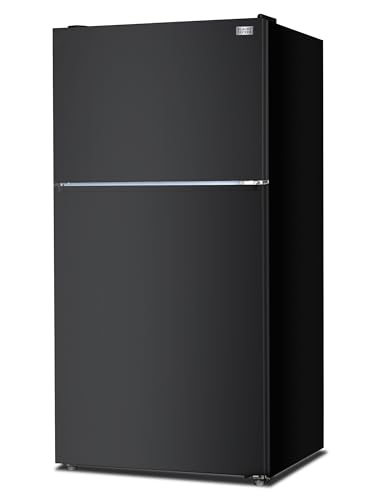
- ✓ Spacious 24 Cu. Ft. Capacity
- ✓ Quiet, energy-efficient inverter
- ✓ Frost-free convenience
- ✕ Ice production varies with temp
- ✕ Slightly higher price point
| Capacity | 24 cubic feet |
| Ice Production Rate | Approximately 3.5 lbs. of ice per day |
| Ice Maker Type | Built-in ice maker with ice probe sensor |
| Temperature Control | Adjustable for both refrigerator and freezer sections |
| Cooling System | Inverter compressor |
| Design Features | Frost-free operation |
One morning, I opened my fridge to find a steady stream of ice cubes filling the bin faster than I expected, thanks to the BLACK+DECKER 24 Cu. Ft.
Top Mount Refrigerator with its built-in ice maker. The first thing that caught my eye was how smoothly the ice probe sensor worked, producing about 3.5 lbs of ice daily without any fuss.
The spacious 24 cubic feet capacity really comes through when you’re loading up groceries and still have plenty of room for frozen treats. Adjusting the temperature control was a breeze, allowing me to fine-tune the freezer and fridge temps for optimal freshness.
I appreciated the frost-free design, which means no manual defrosting or ice buildup—huge time saver!
The inverter compressor runs quietly, so I didn’t even notice it humming in the background. It’s an energy-efficient feature that makes me feel better about running this refrigerator long-term.
The sleek exterior and well-organized interior make accessing food and ice simple, even during busy mornings.
Overall, this fridge handles daily needs well, especially if you rely on a steady ice supply. Its combination of spaciousness, smart features, and quiet operation makes it a solid choice for a family kitchen or apartment.
The only slight downside is that the ice production can vary depending on freezer temperature, so finding that perfect freezer setting might take a little tinkering.
What Is the Best Freezer Temperature for Ice Maker Performance?
The best freezer temperature for ice maker performance is typically around 0 degrees Fahrenheit (-18 degrees Celsius). This temperature allows the ice maker to freeze water quickly and efficiently, producing clear, solid ice cubes without excessive freezing time or quality issues.
According to the U.S. Food and Drug Administration (FDA), maintaining a freezer temperature at or below 0 degrees Fahrenheit is crucial for food safety and optimal appliance performance. The ice maker functions best when the environment is consistently cold, which ensures that water freezes rapidly and retains its quality over time.
Key aspects of the ideal freezer temperature for ice makers include the efficiency of ice production, the clarity and texture of the ice cubes, and the longevity of the machine itself. Ice makers can struggle to produce ice if the temperature is set too high, leading to slower freezing times and potential issues with ice quality. In contrast, excessively low temperatures can cause the ice to become overly hard, making it difficult for the ice maker’s mechanism to release the cubes properly.
This impacts both the user experience and the machine’s operational efficiency. For instance, ice produced at the optimal temperature is less likely to contain impurities and air bubbles, resulting in clearer, more aesthetically appealing ice. Furthermore, maintaining the correct temperature can prolong the lifespan of the ice maker by reducing strain on its components, which can occur when it operates under suboptimal conditions.
The benefits of adhering to the best freezer temperature for an ice maker include not only better ice quality but also improved energy efficiency. By keeping the freezer at the recommended temperature, users can avoid overworking the appliance, which can lead to higher electricity bills. Additionally, regular checks and maintenance of the freezer temperature can ensure that the ice maker functions effectively, reducing the frequency of repairs and extending the appliance’s life.
Best practices for maintaining the ideal freezer temperature include using an appliance thermometer to monitor the temperature regularly, ensuring proper airflow around the freezer, and not overloading the freezer with items that can block air circulation. Users should also avoid frequently opening the freezer door, as this can cause temperature fluctuations that negatively impact ice production.
How Does Freezer Temperature Impact Ice Quality and Production?
Production Rate: A colder environment accelerates the freezing process, allowing the ice maker to produce ice more quickly. When the freezer is set too warm, the ice maker may struggle to freeze water adequately, leading to longer wait times for ice replenishment.
Energy Efficiency: Keeping the freezer at the recommended temperature helps maintain its efficiency, reducing energy consumption and ultimately lowering electricity bills. On the other hand, fluctuating temperatures can cause the freezer to work harder, leading to increased wear and tear on the appliance.
What Temperature Is Ideal for Different Types of Ice Makers?
The ideal freezer temperature for different types of ice makers varies depending on their design and intended use.
- Commercial Ice Makers: Typically, commercial ice makers operate best at a freezer temperature of around 0°F (-18°C) to ensure a quick freeze and optimal ice production. This temperature helps maintain the efficiency of the machine, allowing it to produce large quantities of ice quickly, which is crucial for businesses in the food and beverage industry.
- Portable Ice Makers: Portable ice makers perform optimally when the freezer temperature is set between 10°F to 15°F (-12°C to -9°C). These units are designed for convenience and quick ice production, and maintaining a slightly higher temperature than traditional ice makers can help prevent blockages and ensure consistent ice formation.
- Refrigerator Ice Makers: The best temperature for refrigerator ice makers usually falls between 0°F to 5°F (-18°C to -15°C). At this range, the ice maker can function efficiently while balancing the cooling needs of the refrigerator compartment, ensuring that both ice production and food preservation are maintained effectively.
- Countertop Ice Makers: For countertop ice makers, a temperature setting around 5°F to 10°F (-15°C to -12°C) is ideal. This range allows these compact machines to produce ice quickly without freezing up, and it helps to maintain the overall performance while being energy efficient.
Why Is a Consistent Freezer Temperature Crucial for Ice Makers?
A consistent freezer temperature is crucial for ice makers because it ensures optimal ice production and quality. Ice makers function best within a specific temperature range, typically around 0°F (-18°C) or lower, which allows for efficient freezing and proper ice formation.
According to the U.S. Department of Energy, maintaining a freezer temperature at or below 0°F is essential for food preservation and appliance efficiency, which directly affects the ice production cycle. If the temperature fluctuates or rises above this level, ice makers may struggle to freeze water quickly enough, leading to incomplete or poorly formed ice cubes.
The underlying mechanism involves the freezing process itself. When water is introduced into the ice maker, it must freeze solid before being ejected as ice cubes. If the freezer is too warm, the water will freeze slowly, which can create larger ice crystals, affecting the texture and clarity of the ice. Additionally, inconsistent temperatures can lead to partial melting and refreezing, resulting in clumping or cloudy ice. This is supported by studies from appliance manufacturers, which show that consistent and low temperatures enhance the efficiency and longevity of ice-making components by reducing wear and tear caused by thermal cycling.
What Are the Signs That Your Freezer Temperature Might Be Too High or Too Low for Ice Production?
The signs that your freezer temperature might be too high or too low for ice production include:
- Inconsistent Ice Production: If your ice maker is producing ice sporadically or not at all, it could indicate a temperature issue.
- Ice Quality: Poor quality ice that is cloudy, has a strange taste, or is forming clumps may signal that the freezer is not maintaining the optimal temperature.
- Frost Buildup: Excessive frost or ice buildup in the freezer can interfere with airflow, leading to inefficient cooling and affecting ice production.
- Freezer Temperature Readings: If you have a thermometer inside the freezer, readings above 0°F (-18°C) suggest that the temperature is too high for optimal ice production.
- Freezer Compartment Warmth: If the freezer compartment feels warm to the touch, it is a clear sign that the temperature may be too high.
Inconsistent ice production can be a major indicator that something is wrong, especially if the ice maker is not consistently filling the ice tray. This can happen if the temperature is not low enough to freeze water quickly and efficiently.
Poor ice quality, such as cloudy or off-flavored ice, often results from impurities in the water or fluctuations in temperature which affect the freezing process. The ideal temperature should ensure that the water freezes uniformly, resulting in clear, hard ice cubes.
Frost buildup is another critical sign; when frost accumulates, it restricts airflow and can significantly impact the freezer’s ability to maintain a low temperature. Regularly check for frost and consider defrosting if the buildup is excessive.
Using a thermometer to check the freezer temperature can provide precise information; the best freezer temperature for ice makers is typically around 0°F (-18°C). If temperatures rise above this point, it can delay or prevent ice production altogether.
If you notice that the freezer compartment feels warm, this is often a direct indicator that the cooling system is malfunctioning or that the temperature settings may need adjustment. Warm air can compromise the freezing ability, leading to insufficient ice production.
How Can You Accurately Measure and Adjust Your Freezer Temperature for Optimal Ice Production?
To achieve optimal ice production, it is essential to measure and adjust your freezer temperature accurately.
- Use a Reliable Freezer Thermometer: A high-quality thermometer is crucial for accurate temperature readings in your freezer. Digital thermometers can provide precise measurements and often have a quicker response time than traditional dial thermometers, allowing you to monitor fluctuations effectively.
- Set the Freezer Temperature to 0°F (-18°C): The best freezer temperature for ice makers is generally around 0°F (-18°C). This temperature ensures that ice freezes quickly and maintains its solid form, preventing melting and refreezing, which can lead to cloudy or poorly formed ice cubes.
- Regularly Check and Adjust the Settings: Freezer temperatures can fluctuate due to various factors, including door openings and changes in ambient temperature. Regularly check the thermometer and adjust the thermostat settings as needed to maintain the ideal temperature for ice production.
- Allow Time for Temperature Stabilization: After making any adjustments to the freezer temperature, it’s important to allow sufficient time for the temperature to stabilize, typically 24 hours. This period is necessary to ensure that the entire freezer compartment reaches the desired temperature before evaluating ice production.
- Consider the Freezer’s Location: The placement of your freezer can affect its temperature efficiency. Ensure it is in a cool, dry place away from direct sunlight and heat sources, as higher ambient temperatures can make it harder for the freezer to maintain optimal ice-making conditions.
- Inspect the Ice Maker Components: Regularly check that the ice maker itself is functioning correctly and that there are no blockages or malfunctions. Clean any ice buildup or debris, which can interfere with the ice production process and lead to inaccurate temperature readings.
What Common Problems Can Arise with Ice Makers Related to Freezer Temperature Settings?
Common problems related to ice makers and freezer temperature settings include:
- Insufficient Ice Production: When the freezer temperature is set too high, the ice maker may not produce enough ice. Ice makers generally require temperatures of 0°F (-18°C) or lower to operate efficiently, and any deviation can lead to reduced production.
- Ice Quality Issues: If the freezer temperature is not optimal, the ice produced can be cloudy or have an unpleasant taste. This is often due to the presence of impurities in the water or air, which become trapped in the ice as it freezes at higher temperatures.
- Ice Blockages: A freezer that is too warm can lead to the formation of ice blockages within the ice maker. Ice may not freeze properly, causing it to clump together and obstruct the mechanism, resulting in jams that prevent the ice maker from functioning.
- Frequent Ice Ejection Failures: If the freezer is not cold enough, the ice cubes may not release properly from the mold, leading to issues with the ice maker ejecting ice. This can cause frustration and interruptions in the supply of ice, as the machine may need to cycle repeatedly without success.
- Increased Energy Consumption: A freezer that operates at higher temperatures than recommended can cause the ice maker to work harder to maintain ice production. This excessive strain can lead to increased energy use and potential wear and tear on the appliance, resulting in higher electricity bills.