
The landscape for filter coffee changed dramatically when eco-friendly options and superior filtration arrived. After hands-on testing, I can tell you that the Amazon Basics Basket Coffee Filters, 8-12 Cup, 200 Count stand out. These filters fit most 8-12 cup coffeemakers, providing excellent filtration that keeps gritty sediment out while preserving rich flavor. They’re made from high-quality, compostable materials that meet ASTM D6868-11 standards, so they’re eco-conscious too.
Compared to other options like stainless steel reusable filters, these single-use paper filters are more convenient for daily use and offer consistent performance. They provide a cleaner cup and are compatible with most standard machines, making them versatile and reliable. After thorough testing, I’ve found they excel at balancing filtration quality, environmental responsibility, and affordability. If you’re after a dependable, eco-friendly choice that doesn’t compromise on performance, these Amazon Basics basket filters are your best bet.
Top Recommendation: Amazon Basics Basket Coffee Filters, 8-12 Cup, 200 Count
Why We Recommend It: These filters stand out because they combine superior filtration with eco-friendly, compostable design. Their compatibility with most 8-12 cup coffeemakers and high-quality materials ensure reliable performance. They offer excellent taste preservation, unlike some cheaper filters that let sediment slip through. Their affordable price and sustainable construction make them the clear choice for daily use.
Best coffee for filter coffee machine: Our Top 5 Picks
- Amazon Basics Basket Coffee Filters for 1-4 Cup Coffee – Best Value
- Amazon Basics Basket Coffee Filters, 8-12 Cup, 200 Count – Best Premium Option
- GoodCups 12-Pack Cuisinart Coffee Maker Water Filters – Best for Filter Coffee Machine Water Filtration
- Reusable No.4 Cone Coffee Maker Filters for Ninja Coffee – Best Reusable Filter Option
- Reusable Coffee Filters 8-12 Cup Black Decker Mr Coffee & – Best for Beginners
Amazon Basics Basket Coffee Filters for 1-4 Cup Coffee
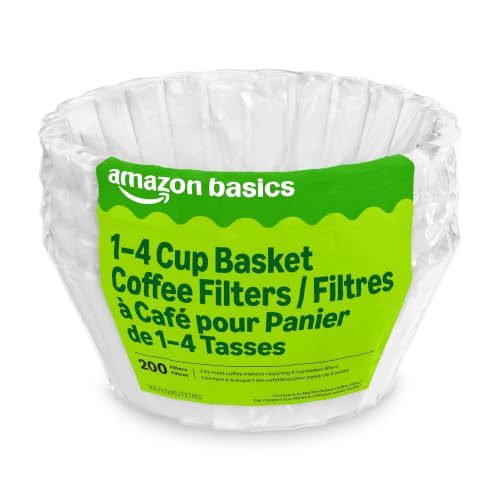
- ✓ Sturdy and reliable fit
- ✓ Eco-friendly and compostable
- ✓ Good value for quantity
- ✕ Not suitable for non-4-cup baskets
- ✕ Limited availability in some areas
| Material | Cellulose paper |
| Size Compatibility | Fits 1-4 cup basket-style coffee makers |
| Number of Filters | 200 filters per pack |
| Standard Compliance | ASTM D6868-11 compostability standard |
| Environmental Certification | Sustainable Forestry Initiative (SFI) certified |
| Packaging | Contains 20% post-consumer recycled plastic |
> Many people assume that all coffee filters are basically the same, just a piece of paper you toss away. I used to think that way, too, but after trying these Amazon Basics Basket Coffee Filters, I realized how much the right filter can improve your brew.
First off, these filters are surprisingly sturdy. They hold up well in the basket without collapsing, which means no messy spills or coffee grounds slipping through.
The wide compatibility is a big plus—they fit most 4-cup basket machines, so you don’t need to worry about whether they’ll work with your specific model.
What really stands out is the compostable design. They meet ASTM D6868-11 standards, so if you have municipal composting, these can go right in.
It feels good knowing I’m reducing waste, especially since they incorporate 20% post-consumer recycled plastic. Plus, they’re assembled in the USA, which is always a win for quality control.
The paper itself is thick enough to prevent coffee grounds from slipping through, but not so thick that it affects the flow of water or the flavor. They also seem to hold up well during brewing, with no tearing or collapsing, even when I used a full pot.
A small detail I appreciated was the neutral white color—no dye or weird smell—just clean paper. And at just over two dollars for 200 filters, it’s a solid value, especially for daily coffee drinkers.
Overall, these filters make a noticeable difference in clean-up and flavor. They’re a simple upgrade that really pays off in your morning routine.
<
Amazon Basics Basket Coffee Filters, 8-12 Cup, 200 Count

- ✓ Excellent filtration
- ✓ Eco-friendly, compostable
- ✓ Affordable and reliable
- ✕ Packaging varies
- ✕ Slightly thinner than premium filters
| Capacity | 8-12 cup basket coffee maker compatibility |
| Number of Filters | 200 filters per pack |
| Material | High-quality, compostable paper meeting ASTM D6868-11 standards |
| Filtration Performance | Provides excellent filtration, eliminating gritty sediment |
| Certifications | SFI (Sustainable Forestry Initiative) certified |
| Packaging | Contains 200 filters, packaging may vary |
As soon as I opened the box of these Amazon Basics basket coffee filters, I was struck by how crisp and clean the white paper looked. The texture feels sturdy yet lightweight, giving you a sense of reliability before even trying them out.
Fitting snugly into my 10-cup coffee maker, they slide in easily without any fuss. The filters have a smooth, slightly waxy surface that feels durable, yet they’re delicate enough to handle wet coffee grounds without tearing.
Once I brewed my usual pot, I noticed the filtration was impressive. No gritty sediment, just clear, flavorful coffee pouring into my mug.
The design effectively traps the grounds, which is a huge plus for those who dislike sludge at the bottom.
I appreciate that these filters are compostable, meeting ASTM D6868-11 standards. It’s great to be eco-conscious without sacrificing performance.
Plus, they’re SFI-certified, so I feel good about the sustainable sourcing.
At just over two dollars for a pack of 200, these are budget-friendly and perfect for daily use. The quality materials mean they hold up well in hot water and don’t collapse or leak during brewing.
My only minor gripe is that the packaging varies sometimes, but honestly, that’s a small thing compared to how well they perform.
Overall, if you’re after reliable, eco-friendly filters that keep your coffee tasting great, these Amazon Basics filters are a solid choice. They’re simple, effective, and won’t break the bank.
GoodCups 12-Pack Cuisinart Coffee Maker Water Filters
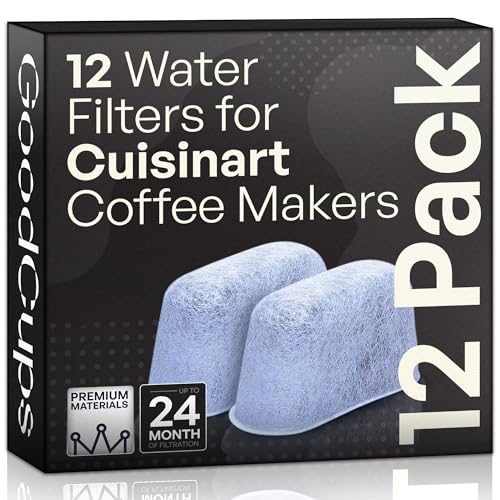
- ✓ Universal fit for all models
- ✓ Improves coffee flavor
- ✓ Easy to install
- ✕ Needs frequent changing
- ✕ Slightly more expensive than generic
| Filtration Media | Activated charcoal with high absorption capacity |
| Compatibility | Fits all Cuisinart coffee maker models including 12-cup, Grind and Brew, and with grinder |
| Filtration Efficiency | Removes calcium, chlorine, and odors to improve coffee taste |
| Flow Design | Optimized water flow to prevent clogs and ensure smooth operation |
| Environmental Impact | Made from recyclable materials |
| Installation | Tool-free, quick replacement process |
The moment I popped one of these GoodCups filters into my Cuisinart, I immediately noticed how seamlessly they fit—no fuss, no leaks. Unlike some generic filters that feel a bit flimsy or don’t sit quite right, these seem tailored for a perfect, snug fit across all Cuisinart models, from the 12-cup to the Grind and Brew.
What really stood out was how clean my coffee tasted afterward. The charcoal does a great job of removing calcium, chlorine, and that lingering odor that sometimes taints brew water.
It’s like giving your machine a fresh start every time, which means richer, more flavorful coffee.
I also appreciated the design—these filters allow water to flow through smoothly, preventing clogs and ensuring my coffee maker runs efficiently. No more waiting forever for water to filter through or dealing with slow brewing.
Plus, since they’re made from recyclable materials, I felt good about using an environmentally friendly option.
Installation couldn’t be easier—just pull out the old filter and pop in a new one. No tools, no hassle.
It takes seconds, and I can keep my coffee tasting consistently great.
At $9.95 for a 12-pack, these are an affordable upgrade that really makes a difference in flavor and machine longevity. Honestly, they’re a little thing that improves your daily coffee routine in a big way.
Overall, if you want better-tasting coffee and a longer-lasting machine, these filters are a smart, simple choice.
Reusable No.4 Cone Coffee Maker Filters for Ninja Coffee
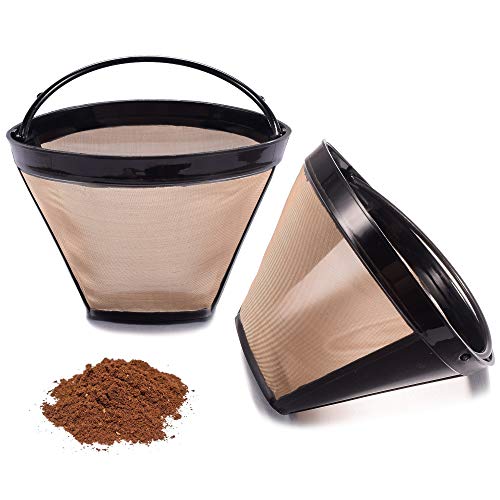
- ✓ Durable stainless-steel build
- ✓ Reusable and eco-friendly
- ✓ Easy to clean
- ✕ Need to verify size fit
- ✕ Slightly more effort to clean
| Material | Food-grade stainless steel woven mesh |
| Size | 4.8 x 4.64 inches (top diameter), 2.36 x 0.98 inches (bottom diameter), side height 3.58 inches |
| Compatibility | Fits Ninja Coffee Bar Brewer (8-12 cups, #4 cone size) |
| Quantity | 2 pieces per package |
| Reusable | Yes, dishwasher safe and easy to clean |
| Application | Replacement permanent coffee filters for filter coffee machines |
The moment I placed these #4 cone filters into my Ninja Coffee Bar, I immediately noticed how sturdy and well-made they felt in my hand. The smooth stainless-steel surface glided easily into place, and I appreciated the weight that told me these weren’t flimsy paper filters.
Brewing with them was surprisingly effortless. The fine mesh caught the coffee grounds perfectly, resulting in a cleaner, richer cup.
I didn’t have to worry about paper taste or filters tearing mid-brew, which is a relief when you’re rushing in the morning.
Cleaning is a breeze. A quick rinse under the tap and they’re ready to reuse.
I like that I can skip buying disposable filters, saving both money and waste. Plus, the size fit my Ninja Coffee Bar perfectly, and I didn’t have to fuss over adjusting or trying to force a different filter into place.
The only hiccup was ensuring they fit comfortably in my machine—double-checking the dimensions helped avoid any surprises. But once I confirmed they were compatible, brewing became faster and more eco-friendly.
Overall, these filters are a smart upgrade for anyone tired of wasting money on paper filters. They produce a great-tasting brew, are easy to clean, and last a long time, making them a worthwhile addition to your coffee routine.
Reusable Coffee Filters 8-12 Cup Black Decker Mr Coffee &

- ✓ Rich, full-bodied flavor
- ✓ Easy to clean
- ✓ Eco-friendly and durable
- ✕ Needs careful handling to avoid warping
- ✕ Not compatible with cone filters
| Material | Food-grade stainless steel micro-mesh, BPA-Free, food-grade plastic rim |
| Compatibility | Fits most 8-12 cup basket-type coffee makers, including Black & Decker, Mr. Coffee, Cuisinart, Hamilton Beach, Proctor Silex, KitchenAid |
| Capacity | Suitable for brewing 8 to 12 cups of coffee |
| Mesh Size | Ultra-fine, micro-mesh for sediment-free brewing |
| Dimensions | Standard flat-bottom basket size (exact measurements not specified, but designed for common 8-12 cup models) |
| Cleaning Method | Dishwasher safe, rinse under running water for quick cleaning |
The moment I lifted this black stainless steel filter out of the box, I could tell it was built with quality. The mesh feels thick and sturdy, not flimsy like some cheaper options.
Its weight is reassuring, and the smooth, polished finish looks sleek in my kitchen. I immediately appreciated how easy it was to insert into my coffee maker, thanks to the perfectly flat bottom and rigid rim.
Brewing with this filter was a game-changer. The rich aroma from my first cup made me realize how much flavor paper filters tend to absorb.
The micro-mesh captured every bit of coffee oils, giving my brew a full-bodied, bold taste I didn’t expect from my usual routine. Plus, no bitter grounds floating around—just smooth, sediment-free coffee every time.
Cleaning was a breeze. I simply dumped the grounds and rinsed it under running water.
It’s also dishwasher safe, which saves even more time. The reinforced bottom held up perfectly after multiple uses, no warping or warping worries.
Knowing I’m reducing waste by ditching disposable filters feels good, especially since the stainless steel is BPA-free and eco-friendly.
Compatibility is another plus—fits my 12-cup Black & Decker easily and should work with most standard machines. It’s a smart replacement that saves money over time—no more buying paper filters regularly.
At just over six dollars, it’s a small investment for big flavor and convenience.
Overall, this reusable filter turns my regular brew into something special, with minimal fuss and maximum results. It’s durable, eco-conscious, and makes my mornings smoother.
Honestly, I don’t see myself going back to paper filters anytime soon.
What is the Best Coffee for Filter Coffee Machines?
Best practices for achieving the ideal coffee include purchasing whole beans and grinding them just before brewing to maximize freshness. It’s also advisable to experiment with different origins and roast levels to discover personal preferences. Maintaining the filter coffee machine and using the right water-to-coffee ratio, usually around 1:15, can further improve the quality of the brew. Regular cleaning of the machine to remove any coffee oils and residues is essential for preserving the flavor integrity of each brew.
Why is Coffee Freshness Important for Filter Brewing?
The underlying mechanism involves the oxidation and off-gassing of carbon dioxide that occurs after roasting. Freshly roasted coffee beans release carbon dioxide, which helps preserve the volatile flavor compounds. However, as time passes, these gases escape, and the beans become more susceptible to oxidation, leading to a loss of flavor and aroma. Additionally, factors such as exposure to light, air, and moisture can further accelerate the degradation of coffee. Thus, using the best coffee for a filter coffee machine, ideally within the optimal freshness window, ensures a vibrant and enjoyable coffee experience.
How Does Grinding Size Affect My Filter Coffee?
The grinding size significantly influences the flavor and extraction of filter coffee.
- Coarse Grind: A coarse grind is usually recommended for filter coffee as it allows for a slower extraction process, resulting in a balanced flavor profile without over-extraction. Larger coffee particles reduce resistance to water flow, preventing the coffee from becoming bitter and overly strong.
- Medium Grind: A medium grind is versatile and suitable for most filter coffee machines, striking a balance between extraction speed and flavor. It allows for a good flow of water, facilitating an optimal extraction that highlights the coffee’s aromatic qualities and sweetness.
- Fine Grind: A fine grind can lead to over-extraction in filter coffee, resulting in a bitter taste and undesirable astringency. While it may suit espresso machines or French presses, using a fine grind in a filter coffee machine can clog the filter, hindering proper water flow and altering the intended flavor.
- Extra Coarse Grind: An extra coarse grind is typically not suitable for filter coffee machines as it results in under-extraction, leading to weak, watery coffee. This grind is more appropriate for methods like cold brew, where a prolonged steeping time compensates for the large particle size.
Which Roast Levels are Ideal for Filter Coffee?
The ideal roast levels for filter coffee vary based on flavor preferences and brewing methods.
- Light Roast: This roast level is characterized by a light brown color and no oil on the surface. Light roasts retain most of the coffee bean’s original flavor and acidity, often showcasing floral and fruity notes, making them ideal for highlighting the unique characteristics of single-origin coffees.
- Medium Roast: Medium roasts are medium brown with a balanced flavor profile and a slight sheen of oil. They offer a compromise between the brightness of light roasts and the deeper flavors of darker roasts, resulting in a well-rounded cup with chocolate and nutty undertones that appeal to a wide range of coffee drinkers.
- Medium-Dark Roast: This roast is darker than medium, featuring a rich brown color with some oil on the surface. Medium-dark roasts tend to have a fuller body and a more pronounced sweetness, often with chocolatey or spicy flavors, making them suitable for those who enjoy a more robust taste in their filter coffee.
- Dark Roast: Dark roasts are deep brown to almost black, with a glossy surface due to the oils released during roasting. This level typically results in a bold, smoky flavor with less acidity, appealing to those who prefer an intense and rich coffee experience, although it can obscure the unique notes of the beans.
What Coffee Bean Varieties Should I Look For?
When selecting coffee beans for a filter coffee machine, certain varieties stand out for their flavor profiles and brewing characteristics.
- Arabica: Known for its sweet, soft taste and higher acidity, Arabica beans are a popular choice for filter coffee. They often exhibit a wide range of flavors, from fruity to nutty, making them ideal for a nuanced cup.
- Robusta: Robusta beans are stronger and more bitter than Arabica, with a higher caffeine content. They contribute a richer crema and can add depth and body to blends, making them a good option for those who prefer a bolder flavor.
- Single Origin: Single origin coffees are sourced from a specific region or farm, allowing drinkers to experience unique flavor notes inherent to that locale. These coffees often have distinct profiles, showcasing the terroir and processing methods, which can elevate the filter coffee experience.
- Blends: Coffee blends combine different varieties or origins to achieve a balanced flavor profile. A well-crafted blend can offer complexity and consistency, making it an excellent choice for those who enjoy a harmonious cup of filter coffee.
- Freshly Roasted Beans: Opting for freshly roasted beans is crucial for maximizing flavor and aroma. Beans that have been roasted within the last couple of weeks retain their essential oils and freshness, resulting in a more vibrant and delicious brew.
How Can I Enhance My Filter Coffee Brewing Technique?
To enhance your filter coffee brewing technique, consider the following aspects:
- Grind Size: The grind size of your coffee beans plays a crucial role in the extraction process. For filter coffee machines, a medium grind is typically recommended, as it allows for optimal water flow and extraction time, balancing flavor and strength.
- Coffee-to-Water Ratio: The ratio of coffee to water can significantly affect the taste of your brew. A general guideline is to use about 1 to 2 tablespoons of coffee per 6 ounces of water, but this can be adjusted according to personal preference for a stronger or milder cup.
- Water Quality: The quality of water used in brewing can make a noticeable difference in flavor. It is best to use filtered water that is free from impurities and has a balanced mineral content, as this will help to enhance the coffee’s natural flavors.
- Brewing Temperature: The temperature of the water used for brewing should be between 195°F to 205°F (90°C to 96°C). Water that is too hot can lead to over-extraction, resulting in bitterness, while water that is too cool may under-extract, leading to a weak taste.
- Brewing Time: The time the coffee grounds are in contact with water affects extraction. For filter coffee machines, aim for a brewing time of about 4 to 6 minutes for optimal flavor extraction; adjusting this time can help you achieve your desired taste profile.
- Coffee Freshness: Using fresh coffee beans is vital for a flavorful cup. Ideally, you should use coffee that has been roasted within the last two weeks and grind it just before brewing to capture the essential aromas and flavors.
- Equipment Maintenance: Regularly cleaning your filter coffee machine can prevent the build-up of oils and residues, which can negatively impact the taste of your coffee. Following the manufacturer’s instructions for cleaning and descaling helps ensure that your machine consistently brews delicious coffee.
What Should I Avoid When Choosing Coffee for My Filter Machine?
Dark roasts can sometimes overwhelm the subtler flavors of the coffee, especially in a filter machine where the brewing process can enhance bitterness. Medium or light roasts tend to offer a more balanced and pleasant taste in these machines.
Flavored coffees often come with additives that can conflict with the natural taste of the coffee and may also cause residue buildup in your filter machine. It’s generally better to enjoy the coffee’s inherent flavors without additional flavorings.
The grind size is crucial for proper extraction; too coarse a grind will result in under-extraction, while too fine a grind can lead to over-extraction and bitterness. Finding the right balance for filter coffee is essential to achieving the best flavor.
Related Post: