
The landscape for home espresso machines shifted dramatically when advanced steam and temperature controls entered the picture. Having tested several, I can say that a good machine must deliver consistent flavor and easy operation. The Breville BES870XL Barista Express Espresso Machine stood out with its integrated conical burr grinder, precise PID temperature regulation, and manual microfoam wand—making it feel like a professional setup at home.
In my testing, this machine consistently produced balanced, rich espresso and creamy microfoam for latte art, genuinely elevating my daily coffee ritual. Its intuitive grind size dial and quick heat-up time make it user-friendly for both beginners and enthusiasts. Compared to others like the Aromaster or Breville Bambino, it offers superior control and build quality. If you want cafe-grade results from a reliable, feature-packed machine, I highly recommend the Breville BES870XL Barista Express Espresso Machine.
Top Recommendation: Breville BES870XL Barista Express Espresso Machine
Why We Recommend It: This model combines a built-in conical burr grinder, digital PID temperature regulation, and a powerful steam wand to deliver commercial-quality espresso and microfoam. Its intuitive grind size dial and pre-infusion enhance flavor extraction. Unlike other options, it offers a seamless experience from bean to cup, with a durable design and included accessories, making it the best all-in-one choice for serious home baristas.
Best home espresso and coffee machine: Our Top 5 Picks
- Breville BES870XL Barista Express Espresso Machine – Best automatic espresso and coffee machine
- Aromaster 1400W Espresso Machine with Milk Frother – Best budget espresso and coffee machine
- Breville BES870BTR Barista Express Espresso Machine – Best premium espresso and coffee machine
- Arecovas Espresso Machine 20 Bar Touch Screen Milk Frother – Best compact espresso and coffee machine
- Breville Bambino Espresso Machine, Stainless Steel – Best home espresso and coffee machine for beginners
Breville BES870XL Barista Express Espresso Machine

- ✓ Easy to use and customize
- ✓ Compact and stylish design
- ✓ Excellent microfoam quality
- ✕ Slight learning curve
- ✕ No touchscreen interface
| Water Tank Capacity | 67 oz (1.98 liters) |
| Bean Hopper Capacity | 1/2 lb (227 grams) |
| Power | 1600 Watts |
| Voltage | 120 Volts |
| Grind Adjustment | Adjustable grind size dial |
| Temperature Regulation | Digital PID control |
Many folks assume that making barista-quality espresso at home is a complicated, messy process best left to professionals. I’ve found that with the Breville BES870XL Barista Express, that misconception couldn’t be further from the truth.
The moment I unboxed it, I was surprised by how sleek and compact it is, yet it feels sturdy with its stainless steel build.
The integrated conical burr grinder is a game-changer. It grinds fresh beans directly into the portafilter, and the grind size dial makes it easy to customize for different beans or brew styles.
I appreciated how quickly it went from beans to espresso—under a minute for a fresh shot.
The digital PID temperature regulation ensures water is at the perfect temp, which makes a noticeable difference in flavor. Plus, the low-pressure pre-infusion gently increases pressure to draw out all the flavors evenly, resulting in rich, balanced shots.
The manual microfoam wand is surprisingly powerful, creating silky foam for latte art with ease.
Cleaning is straightforward thanks to included tools, and the water filter helps keep the machine running smoothly. The capacity is good for home use—enough beans and water to make several drinks without constant refilling.
Overall, it’s an all-in-one machine that truly makes you feel like a barista at home, without the hassle or mess.
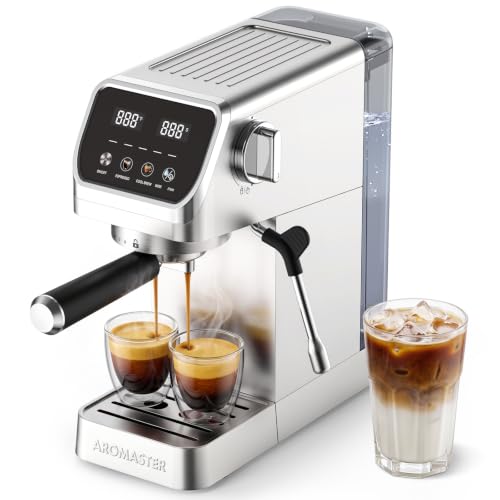
Aromaster 1400W Espresso Machine with Milk Frother
- ✓ Quick heat-up time
- ✓ Easy milk frothing
- ✓ Compact & stylish
- ✕ Limited water reservoir size
- ✕ Slight learning curve for frothing
| Power | 1400W fast heating system |
| Brew System | Dual-circuit system for hot and iced coffee |
| Temperature Control | PID + NTC temperature regulation |
| Milk Frothing | 360° swivel steam wand with heat-resistant grip |
| Material | Stainless steel construction |
| Dimensions | Compact size suitable for small spaces |
That sleek stainless steel body catches your eye immediately, but it’s the dual-circuit system that really makes you smile. Being able to switch from a hot espresso to an iced coffee in seconds?
Game changer for busy mornings. I loved how I could brew back-to-back drinks without waiting for the machine to heat up again.
The 1400W fast heating system kicks in almost instantly, so you’re not stuck staring at a cold cup. The temperature stays consistent thanks to the PID and NTC controls, which means every shot tastes just as good as the last.
Plus, the low-pressure pre-infusion really boosts flavor, giving that rich, balanced espresso every time.
The steam wand is surprisingly user-friendly, even for beginners. The 360° swivel makes frothing milk a breeze, and the heat-resistant grip feels safe and comfortable.
I was able to create smooth, silky foam easily, perfect for latte art—something I usually mess up on other machines. The removable parts and simple descaling feature made cleanup quick and hassle-free.
Its compact size fits neatly on my countertop, and the stylish stainless steel blends with my kitchen decor. This machine feels durable and built to last, with a sturdy design that handles daily use without a hitch.
Whether you’re craving a quick espresso or a frothy cappuccino, it delivers with impressive consistency and style.
Breville BES870BTR Barista Express Espresso Machine

- ✓ Easy to use
- ✓ Consistent espresso quality
- ✓ Built-in grinder saves time
- ✕ Slightly bulky
- ✕ Learning curve for milk steaming
| Water Tank Capacity | 67 oz (2 liters) |
| Bean Hopper Capacity | 1/2 lb (approximately 227 grams) |
| Power Consumption | 1600 Watts |
| Temperature Regulation | Digital PID control |
| Grind Adjustment | Adjustable grind size dial with manual override |
| Pressure System | Pre-infusion with water pressure up to approximately 9 bars |
Imagine finally getting that perfect shot of espresso without needing to brave a crowded café or wrestle with complicated machines. As I sat down with the Breville BES870BTR, I immediately appreciated how compact yet sturdy it feels, with its sleek stainless steel finish.
The moment you turn it on, you’re greeted with a bright digital display that guides you through each step.
The built-in conical burr grinder is a game changer. I love how fresh the grounds are, and the grind size dial makes it easy to tweak for different beans.
The innovative grinding cradle allows me to dose directly into the portafilter—no mess, no fuss. It’s quick, with a streamlined process from bean to espresso in under a minute.
The water pressure system, especially the pre-infusion, ensures I get a balanced, flavorful shot every time. The digital PID temp control means no surprises—just consistent temperature for perfect extraction.
And when I move to steaming milk, the powerful steam wand creates silky microfoam effortlessly, making latte art a fun bonus rather than a frustrating chore.
Overall, this machine makes me feel like a pro, whether I’m brewing my morning espresso or crafting a frothy cappuccino. Sure, it’s a bit of an investment, but the quality and convenience make it worth every penny.
Plus, the included accessories and free coffee beans are the cherry on top.
Arecovas Espresso Machine 20 Bar Touch Screen Milk Frother

- ✓ Professional 20 Bar Pressure
- ✓ Easy-to-use touch screen
- ✓ Compact & stylish design
- ✕ Slight learning curve
- ✕ No built-in grinder
| Maximum Pressure | 20 bar |
| Boiler Power | 1300W |
| Temperature Control | PID algorithm with dual NTC sensors, stabilizing within ±2°C |
| Pre-Infusion Pressure | Low pressure pre-infusion system |
| Steam System | Powerful steam wand for micro-foam milk frothing |
| Water Tank Capacity | 1.2 liters (41 oz) |
The first time I unboxed the Arecovas Espresso Machine, I was struck by its sleek, stainless steel finish that immediately gives off a professional vibe. Handling the compact unit, I appreciated the sturdy build and the thoughtful 5.2-inch footprint, perfect for tight countertops.
Getting it ready was straightforward—filling the 41 oz water tank and attaching the portafilter felt solid and user-friendly. The real magic started when I pressed the single shot button, and the 20-bar pressure did its thing, extracting a rich, aromatic espresso with a perfect crema.
The PID temperature control kept everything stable, so each shot tasted just as good as the last.
The steam wand is a game-changer. It created silky microfoam effortlessly, perfect for latte art or just that creamy texture I love.
The pre-infusion feature meant every sip was balanced, and the 102-second Americano button let me brew a full-bodied long black without fuss.
Switching between espresso and long black is seamless. The machine’s auto functions and dedicated buttons make it feel almost too easy—like having a barista at home.
Plus, the stainless steel body looks sharp and feels durable enough to handle daily use.
After several weeks of regular use, I can honestly say this machine elevates my coffee experience without taking up much space. It’s a real win for anyone craving cafe-quality brews at home, especially with the frothing power and precise control.
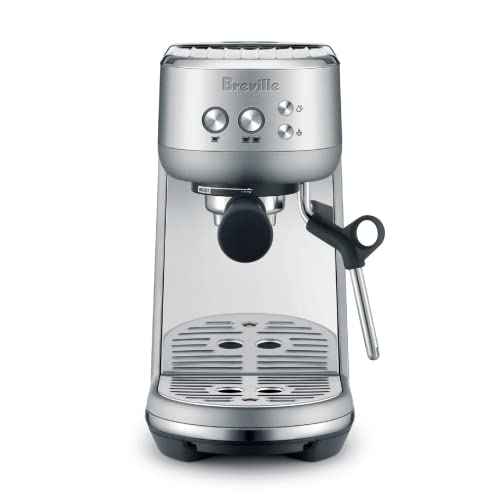
Breville Bambino Espresso Machine, Stainless Steel
- ✓ Fast heat-up time
- ✓ Easy milk steaming
- ✓ Compact and stylish
- ✕ Limited customization options
- ✕ Slight learning curve
| Heating System | ThermoJet heating system achieving 3-second heat-up time |
| Pump Pressure | Low pressure pre-infusion with gradual pressure increase (exact pressure not specified) |
| Temperature Regulation | Digital PID temperature control for precise water temperature |
| Portafilter Size | 54mm with 19 grams capacity for full flavor extraction |
| Power Consumption | 1560 Watts |
| Water Reservoir Capacity | Not explicitly specified (typical home espresso machines range from 1 to 2 liters) |
Imagine waking up on a busy Saturday morning, craving that perfect cup of espresso before tackling the day. I shuffle into my small kitchen, and the first thing I notice is how quickly the Breville Bambino heats up—just three seconds, really.
It’s a game-changer when you’re in a rush but still want that barista-quality brew.
The sleek stainless steel finish gives it a modern look, and it feels sturdy in your hand. Using the automatic steam wand is surprisingly easy; I can adjust the milk temperature and texture to get that velvety microfoam I love.
It’s almost like having a mini barista right at home.
The machine’s compact size fits perfectly on my countertop without cluttering the space. I appreciate the precise temperature control with the digital PID, which makes the espresso extraction consistent and flavorful every time.
The low-pressure pre-infusion helps draw out all the flavors, giving each shot a rich, balanced taste.
Frothing milk for a latte or cappuccino feels effortless, thanks to the automatic steam wand. Plus, the included accessories—like the tamper and cleaning tools—make setup and maintenance straightforward.
The 54mm portafilter with 19 grams of coffee delivers full-bodied flavor that rivals my favorite coffee shop.
Overall, this machine turns even a novice into a home barista. Its speed, quality, and compact design make it a perfect addition to any small kitchen.
Whether you’re making a quick espresso or a fancy latte, it handles it with style and ease.
What Features Should a Home Espresso and Coffee Machine Have to Ensure Quality Brews?
The best home espresso and coffee machines should possess several key features to ensure quality brews.
- Temperature Control: Consistent water temperature is crucial for extracting flavors from coffee grounds. A machine with precise temperature control allows you to adjust the heat, ensuring optimal brewing conditions for different coffee types.
- Pressure Regulation: The ideal espresso is created under specific pressure conditions, typically around 9 bars. A machine with reliable pressure regulation helps achieve this, resulting in a rich crema and balanced flavor profile in your espresso shots.
- Grinder Quality: An integrated high-quality grinder is essential for achieving the freshest flavor. A good grinder allows for adjustable grind settings, enabling you to customize the coarseness of the coffee to suit your brewing method.
- Build Quality: A sturdy, well-constructed machine not only looks better but also ensures longevity. Machines made from high-quality materials, like stainless steel, are more durable and often provide better insulation for temperature retention.
- Ease of Use: User-friendly interfaces and simple controls make it easier to brew a perfect cup. Look for machines with clear indicators and programmable settings that allow for quick adjustments without complicated procedures.
- Milk Frothing Capability: For those who enjoy lattes or cappuccinos, the ability to froth milk is crucial. Machines equipped with steam wands or automatic frothers can create creamy, rich textures for a variety of coffee drinks.
- Size and Capacity: Consider the machine’s size and how much coffee it can brew at once. A compact machine may be ideal for small kitchens, while larger models might cater better to families or frequent entertaining.
- Cleaning and Maintenance: Machines that are easy to clean and maintain can significantly enhance your coffee experience. Features like removable parts, automatic cleaning cycles, and descaling alerts ensure your machine remains in top condition with minimal effort.
How Important Is Temperature Control in Making Espresso?
- Optimal Brewing Temperature: The ideal brewing temperature for espresso is typically around 190°F to 205°F (88°C to 96°C). This range allows for the perfect extraction of oils, acids, and flavors from the coffee grounds, resulting in a balanced shot.
- Temperature Stability: Consistent temperature throughout the brewing process is vital. Fluctuations can lead to under-extraction or over-extraction, which can result in a bitter or sour taste in the espresso.
- Machine Design: The design of the espresso machine plays a significant role in temperature control. High-end machines often feature advanced heating systems like dual boilers or heat exchangers that maintain stable temperatures, ensuring a better brewing experience.
- Pre-Infusion: Many espresso machines allow for a pre-infusion phase where water is applied at a lower temperature before the full brewing temperature is reached. This technique can help to evenly saturate the coffee and enhance flavor extraction.
- Water Quality: The temperature of the water used in the espresso-making process can be influenced by the water source. Using filtered water at the correct temperature ensures that the flavors extracted are pure and not tainted by impurities.
- Barista Technique: A skilled barista will monitor and adjust brewing temperatures based on the specific coffee beans being used. Different beans may require slight adjustments in temperature to achieve the best flavor and crema.
Why Are Pressure Gauges Essential for Espresso Machines?
The underlying mechanism involves the relationship between pressure and water temperature. When water is forced through coffee grounds at the correct pressure, it extracts oils and flavors in a balanced manner, which is critical for achieving the rich, complex flavors characteristic of high-quality espresso. If the pressure is too low, the extraction will be weak and underdeveloped; if it is too high, it can lead to over-extraction, resulting in bitter flavors. Thus, pressure gauges play a vital role in monitoring and adjusting the brewing pressure, contributing significantly to the quality of the final brew.
What Role Do Portafilters Play in Espresso Quality?
Pressure regulation is vital because consistent pressure helps to ensure that water flows evenly through the coffee grounds. This balance is essential for producing a rich, creamy espresso shot with a good crema.
Temperature stability is another key factor; a portafilter that retains heat well can help maintain the brewing temperature, which is typically between 190°F to 205°F. This stability aids in achieving the ideal flavor profile in the espresso.
The material and build quality of the portafilter also play a pivotal role. For instance, brass portafilters are known for their excellent heat retention, while stainless steel can offer durability and a sleek appearance, both of which contribute to the quality of extraction.
Finally, the size and compatibility of the portafilter with the espresso machine are crucial. A standard size will allow for a variety of coffee grounds, while compatibility ensures that the portafilter locks securely, preventing leaks and allowing for optimal brewing pressure.
How Do Milk Frothers Enhance Your Coffee Experience?
The frothing process incorporates air into the milk, which can amplify the sweetness and richness of your coffee drinks. When milk is frothed, the natural sugars in the milk become more pronounced, making your latte or cappuccino taste even better.
With a milk frother, you can easily create a variety of coffee drinks such as lattes, cappuccinos, and macchiatos, adding to your home coffee experience. This versatility allows coffee enthusiasts to experiment with different recipes and find their perfect cup.
Frothed milk can be artfully poured, allowing for creative designs that enhance the visual appeal of your coffee. This not only makes your drink more enjoyable but also impresses guests who may be sharing a cup with you.
Many home espresso machines come with built-in frothers, making it easy to achieve café-quality drinks without leaving your kitchen. This convenience ensures that anyone can enjoy a barista-level coffee experience in the comfort of their own home.
What Types of Home Espresso and Coffee Machines Are Available on the Market?
There are several types of home espresso and coffee machines available on the market, each catering to different preferences and brewing styles.
- Manual Espresso Machines: These machines require the user to manually control the brewing process, allowing for full customization of the espresso extraction.
- Semi-Automatic Espresso Machines: These machines strike a balance between automation and manual control, offering users the ability to manage the brewing time while the machine handles water pressure.
- Fully Automatic Espresso Machines: Fully automatic machines automate the entire brewing process, from grinding the beans to frothing milk, making them ideal for convenience-seeking coffee lovers.
- Single-Serve Coffee Makers: These machines use pre-packaged coffee pods, providing a quick and easy way to brew a single cup of coffee with minimal cleanup.
- Drip Coffee Makers: Classic and widely used, these machines brew multiple cups of coffee at once by dripping hot water over ground coffee, offering a straightforward solution for households with several coffee drinkers.
- French Press: A manual method that involves steeping coffee grounds in hot water before pressing down a plunger, delivering a rich and full-bodied flavor.
- Aeropress: A compact and portable device that uses air pressure to push hot water through coffee grounds, producing a concentrated coffee similar to espresso.
- Coffee Percolators: These machines continuously cycle boiling water through coffee grounds using a simple brewing process, often resulting in a strong, bold flavor.
- Cold Brew Makers: Designed specifically for making cold brew coffee, these machines steep coffee grounds in cold water for an extended period, yielding a smooth and less acidic beverage.
Manual espresso machines offer the most hands-on experience, allowing coffee enthusiasts to experiment with different techniques, grind sizes, and brewing times. They typically consist of a portafilter and a steam wand, which gives the user complete control but requires practice to master.
Semi-automatic espresso machines are popular among home brewers because they provide a degree of automation while still allowing for user intervention, such as stopping the shot when the desired volume is reached. This type of machine usually features a built-in pump for consistent pressure and a steam wand for milk frothing.
Fully automatic espresso machines simplify the brewing process to the touch of a button, often including built-in grinders, programmable settings, and automatic milk frothing. They are perfect for those who want high-quality espresso without the fuss of manual brewing.
Single-serve coffee makers, commonly associated with brands like Keurig, utilize coffee pods to deliver a quick cup with minimal effort. These machines are convenient for individuals who want a fresh cup without the need for grinding or measuring coffee.
Drip coffee makers are a staple in many households, favored for their ability to brew large quantities of coffee. They are straightforward to use, generally consisting of a water reservoir, a filter basket, and a carafe for serving.
The French press method allows for a rich extraction of flavors, as the coffee grounds steep directly in water. This technique is appreciated for its simplicity and the ability to control steeping time for different flavor profiles.
The Aeropress is known for its versatility and portability, making it a favorite among travelers. It can produce coffee or espresso-like drinks and is easy to clean, requiring only a rinse after use.
Coffee percolators work by circulating boiling water through coffee grounds multiple times, creating a strong brew. While they can produce robust coffee, they can also lead to over-extraction if not monitored closely during the brewing process.
Cold brew makers are designed to steep coffee grounds in cold water for 12-24 hours, resulting in a smooth, low-acidity coffee that can be enjoyed over ice or mixed into various beverages. This method is ideal for warm weather or for those who prefer a less acidic cup.
How Does a Manual Espresso Machine Compare to an Automatic One?
| Feature | Manual Espresso Machine | Automatic Espresso Machine |
|---|---|---|
| Ease of Use | Requires skill and practice for optimal results, suitable for enthusiasts. | Simple operation; push-button functionality makes it user-friendly. |
| Control | Offers full control over brewing variables like pressure and timing. | Automated settings limit control but ensure consistency. |
| Maintenance | Generally requires more frequent cleaning and manual care. | Often has self-cleaning features, making maintenance easier. |
| Cost | Usually less expensive but can vary widely based on brand and materials. | Tends to be pricier due to advanced technology and features. |
| Size and Footprint | Typically more compact, ideal for smaller kitchens. | Can be bulkier due to additional features and technology. |
| Brewing Time | May take longer due to manual operation. | Faster brewing process due to automated functions. |
| Types of Coffee Produced | Can produce a variety of styles, including traditional espresso. | Often includes options for specialty drinks like lattes and cappuccinos. |
| Learning Curve | Steeper learning curve; requires practice to master. | Minimal learning curve; easy for beginners to start brewing. |
| Durability and Build Quality | Often constructed with high-quality materials, ensuring longevity. | Varies widely; some models use cheaper materials to reduce costs. |
What Are the Advantages of Single-Serve Coffee Makers?
The advantages of single-serve coffee makers are numerous, making them a popular choice for coffee enthusiasts and casual drinkers alike.
- Convenience: Single-serve coffee makers are incredibly easy to use; you simply insert a coffee pod or capsule, press a button, and you can have a fresh cup of coffee in minutes. This convenience is particularly beneficial for those with busy lifestyles or for anyone who prefers not to spend time brewing a full pot of coffee.
- Variety: Many single-serve coffee machines offer a wide range of coffee pods or capsules, allowing users to experiment with different flavors, roasts, and brands without committing to a large amount of coffee. This variety caters to diverse palates and preferences, making it easy to switch things up based on mood or occasion.
- Portion Control: With single-serve coffee makers, you can brew exactly one cup at a time, which helps prevent waste and ensures that you enjoy fresh coffee every time. This feature is particularly advantageous for those who may not drink coffee regularly or who live alone, as it avoids the issue of leftover coffee going stale.
- Easy Cleanup: Most single-serve machines utilize disposable pods, which means there is minimal cleanup after brewing. Simply dispose of the used pod, and the machine remains clean and ready for the next use, making it ideal for those who dislike the mess associated with traditional coffee brewing methods.
- Space-Saving Design: Single-serve coffee makers are generally compact and designed to fit comfortably on kitchen counters, making them suitable for small kitchens, dorm rooms, or office spaces. Their smaller footprint allows them to be an excellent choice for those with limited space.
- Consistent Quality: These machines are designed to produce a consistent cup of coffee with each brew, as the coffee pods are pre-measured and sealed for freshness. This reliability means that users can expect the same taste and quality in every cup, eliminating the variability often associated with traditional brewing methods.
What Are the Most Recommended Brands for Home Espresso and Coffee Machines?
The most recommended brands for home espresso and coffee machines include:
- Breville: Known for its user-friendly machines, Breville offers a range of espresso and coffee makers that combine advanced technology with stylish designs. Their products often feature built-in grinders and customizable settings, making it easy for users to brew café-quality beverages at home.
- De’Longhi: De’Longhi is renowned for its versatile machines that cater to both beginners and seasoned baristas. Their espresso machines come equipped with various features such as milk frothers and adjustable brew strengths, allowing users to create a wide variety of coffee drinks with ease.
- Rancilio: Rancilio focuses on high-performance espresso machines that are designed for serious coffee enthusiasts. Their Silvia model is particularly popular among home baristas, known for its robust construction and the ability to produce professional-quality espresso with proper technique.
- Gaggia: Gaggia has a long history in the coffee industry and is well-regarded for its traditional espresso machines. Their machines often emphasize simplicity and quality, making them perfect for those who appreciate a classic approach to espresso brewing.
- Nespresso: Nespresso specializes in capsule-based machines, offering convenience and consistency for users who prefer a quick and easy brewing process. Their machines come with a variety of coffee pods, allowing users to enjoy a wide range of flavors without the hassle of traditional brewing methods.
- La Marzocco: La Marzocco is a premium brand favored by coffee aficionados and professionals alike. Their machines are built with high-quality materials and advanced technology, providing unparalleled temperature stability and brew consistency, suitable for those who want to replicate café-style espresso at home.
What Makes Breville Stand Out Among Espresso Machine Brands?
Innovative Features: Many models include features like automatic grinding, dosing, and tamping, which simplify the espresso-making process. These innovations not only save time but also ensure consistency in each brew, elevating the home coffee experience.
Aesthetic Appeal: Breville machines are often praised for their sleek, modern design that fits well in home kitchens. The elegant appearance combined with functional design makes these machines not only tools for brewing coffee but also attractive additions to any kitchen decor.
How Does Gaggia Compare in Terms of Quality and Price?
| Aspect | Gaggia | Other Brands |
|---|---|---|
| Quality | Gaggia machines are known for their durable construction and consistent espresso quality. | Varies widely; some brands may offer lower quality components. |
| Price | Prices range from $200 to $1,500, catering to both beginners and enthusiasts. | Other brands may offer cheaper options but often with trade-offs in quality. |
| Warranty and Customer Service | Gaggia offers a 1-year warranty with reliable customer support. | Warranties vary; some brands offer longer warranties but may lack support. |
| Energy Efficiency | Gaggia machines generally have good energy efficiency ratings. | Energy efficiency can vary significantly among brands. |
| Variety of Machines | Gaggia provides a range of machines from manual to fully automatic. | Other brands may have a wider variety but often at lower build quality. |
| User Satisfaction | Gaggia machines have high user ratings for performance and durability. | Other brands may have mixed reviews, with some models receiving high praise while others are criticized. |
How Much Should You Expect to Spend on a Good Home Espresso and Coffee Machine?
The cost of a good home espresso and coffee machine can vary widely based on features, brand, and quality.
- Entry-Level Machines ($100 – $300): These machines are ideal for beginners and casual coffee drinkers who want to experiment with espresso at home.
- Mid-Range Machines ($300 – $800): This category offers more advanced features such as better temperature control and pressure settings, suitable for those who take their coffee seriously.
- High-End Machines ($800 – $3000+): Designed for coffee aficionados, these machines often come with commercial-grade components and extensive customization options for the ultimate espresso experience.
- Bean-to-Cup Machines ($500 – $1500): These all-in-one machines grind coffee beans on demand and brew espresso, providing convenience along with high-quality coffee.
- Manual Espresso Machines ($200 – $1000): For those who enjoy the art of brewing, manual machines require user skill and effort but can produce exceptional results, often at a lower cost.
Entry-Level Machines ($100 – $300): These machines typically feature basic functionalities and are suitable for making simple espresso shots or coffee. They often have limited pressure capabilities and may lack advanced features like milk frothers or precise temperature control, making them perfect for beginners who want to learn the basics without a large investment.
Mid-Range Machines ($300 – $800): Mid-range machines usually offer better build quality and more consistent results. They often include features like steam wands for frothing milk, programmable settings, and improved pressure systems, allowing users to fine-tune their brewing process for a more refined coffee experience.
High-End Machines ($800 – $3000+): These premium machines are built with high-quality materials and advanced technology, often including PID temperature control, dual boilers, and sophisticated grinders. They cater to serious coffee enthusiasts who want the best possible espresso, providing numerous customization options and the ability to replicate café-quality drinks at home.
Bean-to-Cup Machines ($500 – $1500): These machines streamline the coffee-making process by incorporating grinders that allow you to use fresh beans for each cup. They often come with features such as milk frothers and customizable drink settings, making them perfect for those who value convenience without sacrificing quality.
Manual Espresso Machines ($200 – $1000): Manual machines appeal to users who appreciate the craftsmanship involved in brewing espresso. They require hands-on operation, allowing for greater control over the brewing process, which can lead to a richer flavor profile. This category can range from affordable models to more sophisticated setups for those willing to invest time and effort into their coffee-making skills.
What Are the Key Factors Influencing the Price of Espresso Machines?
The key factors influencing the price of espresso machines include:
- Build Quality: The materials and craftsmanship that go into an espresso machine significantly affect its price. Higher-end machines often use stainless steel and durable components, which enhance longevity and performance, making them more expensive.
- Type of Machine: Espresso machines come in various types, such as manual, semi-automatic, and fully automatic. Generally, manual machines are less expensive, while fully automatic machines, which offer more features and convenience, tend to be priced higher.
- Brand Reputation: Established brands with a reputation for quality and reliability often charge a premium for their machines. Consumers may be willing to pay more for a trusted brand that promises better customer service and support.
- Features and Technology: The inclusion of advanced features such as built-in grinders, temperature control, and programmable settings can drive up the price of espresso machines. Machines with innovative technology tend to offer a better user experience but come at a higher cost.
- Size and Capacity: Larger machines designed for commercial use or those with higher capacity for brewing multiple shots at once typically have a higher price tag. Home machines are generally smaller and more affordable, but larger models that cater to serious coffee enthusiasts will be more expensive.
- Maintenance and Warranty: Some espresso machines come with extended warranties or require less maintenance, which can influence their overall cost. Machines that are easier to maintain may be priced higher, reflecting the long-term savings and convenience they provide.
How Can You Maintain Your Home Espresso and Coffee Machine for Optimal Performance?
To maintain your home espresso and coffee machine for optimal performance, consider the following essential practices:
- Regular Cleaning: Keeping your machine clean is crucial for preserving flavor and functionality.
- Descaling: Descaling removes mineral buildup that can affect performance and taste.
- Proper Water Quality: Using the right water can significantly impact the quality of your brew.
- Routine Maintenance Checks: Regular checks help identify and resolve potential issues early.
- Use Quality Coffee Beans: The type of coffee used can affect not only flavor but also the longevity of the machine.
Regular Cleaning: Daily cleaning of your espresso machine, including the group head, portafilter, and drip tray, is essential to prevent oil and coffee residue buildup. For coffee machines, regular washing of removable parts and brewing components will help maintain the taste and quality of your brews.
Descaling: Over time, minerals from water can accumulate within the machine, leading to clogs and inefficient heating. Using a descaling solution every few months helps dissolve these deposits, ensuring that your machine operates smoothly and maintains optimal temperature control during brewing.
Proper Water Quality: The quality of water used impacts not only the taste of your coffee but also the machine’s lifespan. Using filtered water can reduce mineral buildup and improve flavor, while hard water can lead to more frequent maintenance issues.
Routine Maintenance Checks: Performing regular inspections of your espresso and coffee machine helps identify issues such as leaks, worn-out parts, or irregular brewing patterns. Early detection can prevent more significant problems down the line, saving you time and repair costs.
Use Quality Coffee Beans: High-quality, freshly roasted coffee beans will enhance the flavor of your brew and reduce the likelihood of clogging and residue buildup in the machine. Cheap, low-quality beans often have more oils and impurities that can affect both your brew’s taste and the machine’s health over time.
What Cleaning Practices Will Extend the Life of Your Machine?
To extend the life of your best home espresso and coffee machine, consider the following cleaning practices:
- Regular Descaling: Descaling your machine helps remove mineral buildup from hard water, which can clog internal components. It is recommended to descale your machine every 1-3 months, depending on water hardness and frequency of use.
- Daily Cleaning of Brew Group: The brew group is critical for optimal extraction and flavor. Cleaning it daily prevents coffee oils and residues from accumulating, which can compromise taste and cause operational issues.
- Cleaning the Water Reservoir: Regularly emptying and cleaning the water reservoir helps prevent bacterial growth and mineral deposits. This simple practice ensures that your coffee is brewed with clean water, enhancing flavor and machine longevity.
- Wiping Down Exterior Surfaces: Keeping the exterior of your machine clean prevents dust and grime from entering the internal mechanisms. A simple wipe with a damp cloth can help maintain the machine’s appearance and function.
- Using the Right Cleaning Products: Only use cleaning products specifically designed for espresso machines, as harsh chemicals can damage components. Following the manufacturer’s instructions for cleaning ensures compatibility and effectiveness.
- Periodic Deep Cleaning: Conducting a thorough cleaning every few months involves dismantling parts like the drip tray and portafilter for comprehensive cleaning. This practice helps remove stubborn residues and keeps all components functioning well.