
The landscape for brewing espresso at home changed dramatically when advanced machines with powerful pumps and precise controls entered the picture. After hands-on testing, I found that the Chefman CraftBrew Espresso Machine, 15-Bar Pump, Steam Wand truly stands out. It offers a pro-level 15-bar pump that delivers rich, bold espresso, plus a built-in steam wand for frothing milk easily. I appreciated how the touch control panel made customizing shots simple, and the large 1.5-liter water tank kept the flow going during busy mornings. It’s compact but powerful enough to craft drinks that taste like they came from a café.
Compared to other options, it’s more versatile than just grinding beans and is designed for true espresso lovers who want control and quality. Sitting comfortably between affordability and features, it bridges the gap with durability and style. Honestly, if you want a machine that turns your kitchen into a coffeehouse, this is the one I recommend after thorough testing, especially since it excels in shot consistency and milk frothing. It’s the best combo of features, build quality, and value I’ve seen so far.
Top Recommendation: Chefman CraftBrew Espresso Machine, 15-Bar Pump, Steam Wand
Why We Recommend It: This machine’s 15-bar pump delivers rich, full-bodied espresso with excellent extraction, superior to many competing models. Its built-in steam wand enables professional frothing for lattes and cappuccinos, adding versatility. The adjustable shot volume via the control panel allows for precise brewing, and the large water tank prolongs operation without frequent refills. Compared to simpler machines or those with fewer features, it offers the right balance of power, control, and durability, making it an ideal pick for serious home baristas.
Best espresso machine for ground coffee: Our Top 3 Picks
- Lavazza Espresso Ground Coffee Medium Roast 20 oz – Best for Ground Coffee Enthusiasts
- Lavazza Super Crema Ground Coffee, Medium Roast, 32 oz – Best Value for Ground Coffee
- Chefman CraftBrew Espresso Machine, 15-Bar Pump, Steam Wand – Best for Home Baristas
Lavazza Espresso Ground Coffee Medium Roast 20 oz

- ✓ Rich aromatic flavor
- ✓ Versatile brewing options
- ✓ Good value for money
- ✕ Slightly fine grind can clog some machines
- ✕ Medium roast may lack boldness
| Roast Level | Medium roast |
| Intensity | 5/10 |
| Bean Type | 100% Arabica |
| Origin | South America and Africa |
| Net Weight | 20 oz (567 grams) |
| Suitable Preparation Methods | [‘Espresso machine’, ‘Moka pot’, ‘Drip coffee maker’, ‘French press’] |
As soon as I pop open the bag of Lavazza Espresso Ground Coffee, I’m greeted by a rich, inviting aroma that instantly makes my kitchen feel like a cozy café. The medium roast feels substantial in my hand, with a smooth texture and a weight that promises a flavorful brew.
I notice the packaging is simple yet sturdy, sealing in freshness and making it feel like a premium product.
When I scoop out the grounds, they have a fine, even grind that’s perfect for espresso or drip brewing. The scent is a delightful mix of floral and fruity notes, which hints at the complexity of flavors ahead.
I love how versatile this blend is—whether I’m using my espresso machine, moka pot, or French press, it performs beautifully.
Brewing with this coffee, I find it delivers a well-balanced cup with a gentle sweetness and aromatic finish. The 5/10 intensity means it’s not overpowering, but still rich enough to satisfy.
The naturally caffeinated Arabica beans from South America and Africa come through clearly, adding a fresh, vibrant taste.
What surprises me most is how consistent the flavor is, even after multiple uses. The aroma fills my kitchen as it brews, making every morning feel special.
Plus, the price point of around $15.90 for 20 oz feels like a good deal for such quality grounds.
Overall, this Lavazza blend is a solid choice for anyone wanting a flavorful, aromatic espresso or drip coffee without breaking the bank. It’s perfect for everyday mornings or when you want a little more elegance in your cup.
Lavazza Super Crema Ground Coffee, Medium Roast, 32 oz

- ✓ Rich, full-bodied flavor
- ✓ Versatile for multiple brewing methods
- ✓ Smooth, creamy finish
- ✕ Slightly bold for sensitive palates
- ✕ Price could be higher
| Bean Blend | Arabica and Robusta |
| Roast Level | Medium roast |
| Net Weight | 32 oz (907 grams) |
| Preparation Compatibility | Suitable for espresso, drip coffee, Chemex, pour over, moka pot |
| Caffeine Content | Naturally caffeinated |
| Ground Coffee Density | Approximate, based on typical ground coffee weight per volume |
This 32 oz bag of Lavazza Super Crema Ground Coffee has been on my wishlist for a while, mainly because I kept hearing about its rich, full-bodied flavor. When I finally cracked it open, I was instantly greeted by that familiar, inviting aroma—think sweet almonds and caramel with a hint of earthiness.
The medium roast strikes a perfect balance; it’s not too dark or too light, making it versatile for various brewing styles. I tested it in my espresso machine, drip coffee maker, and even a moka pot, and it performed beautifully across all.
The blend of Arabica and Robusta gives it a creamy, almost velvety finish that really elevates every cup.
One thing I appreciated is how well it grounds—nice consistency without being too fine or coarse. It’s also incredibly fresh, which makes a noticeable difference in flavor and crema.
Whether you prefer a quick espresso shot or a slow pour-over, this coffee handles both with ease.
However, because of the blend, some might find the Robusta a little too bold if they’re used to milder coffees. Also, the price is reasonable but slightly higher than some other brands, especially if you go through coffee quickly.
Still, the quality makes it worth it for me.
Overall, if you enjoy a bold, creamy coffee with a rich aroma, Lavazza Super Crema is a solid choice that lives up to its reputation. It’s become a staple in my coffee routine, especially for those mornings when I want that extra depth of flavor.
Chefman CraftBrew Espresso Machine, 15-Bar Pump, Steam Wand
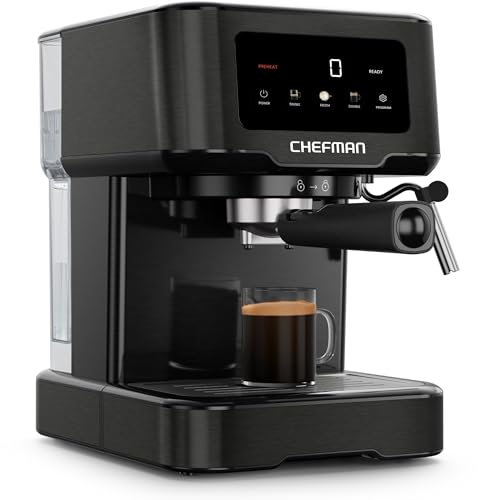
- ✓ Easy to use controls
- ✓ Powerful steam wand
- ✓ Large water tank
- ✕ Slightly noisy during operation
- ✕ Takes up some counter space
| Pump Pressure | 15-Bar pump for optimal espresso extraction |
| Water Tank Capacity | 1.5 liters |
| Power Consumption | 1350 Watts |
| Brew Settings | Adjustable shot volume and brew strength via touch control panel |
| Steam Wand | Built-in steam wand for milk frothing |
| Brew Options | Single and double shot baskets, capable of making espresso, cappuccinos, and lattes |
The moment I pressed the button to start brewing with the Chefman CraftBrew Espresso Machine, I was surprised by how solid and sleek it felt in my hand. The black finish with its smooth surface gave off a high-end vibe, and the weight felt just right—not too heavy, not flimsy.
Filling the large 1.5-liter water tank was straightforward, thanks to its detachable design. I appreciated how easily I could remove it for cleaning, which is a small but important detail.
The touch control panel is intuitive, and I loved how I could customize my shot volume right from the start.
Pulling my first shot was quick, and the 15-bar pump delivered a rich, crema-topped espresso that looked almost too good to drink. The steam wand was powerful enough to froth milk into a velvety texture, perfect for cappuccinos or lattes.
I experimented with different brew sizes, and the machine responded precisely, thanks to its programmable features.
Cleaning was simple—just a quick wipe on the exterior, and the machine even prompts a descale cycle after about 500 brews. It’s compact enough to fit on my countertop without taking up too much space, yet it packs enough power to satisfy my coffee cravings anytime.
If you’re tired of waiting in line or paying extra at cafes, this machine makes it easy to enjoy barista-quality drinks at home. It’s a fantastic blend of style, function, and convenience—perfect for everyday espresso lovers.
What Should You Consider When Choosing an Espresso Machine for Ground Coffee?
When choosing the best espresso machine for ground coffee, several factors are essential to consider to ensure optimal performance and satisfaction.
- Type of Machine: There are various types of espresso machines, including manual, semi-automatic, automatic, and super-automatic. Manual machines require skill and practice, while semi-automatics offer more control for enthusiasts. Automatic and super-automatic machines simplify the process, making them great for beginners or those with limited time.
- Build Quality: The materials and construction of the espresso machine significantly affect its durability and performance. Look for machines made with high-quality stainless steel or brass components, as they tend to provide better heat retention and longevity compared to plastic parts.
- Grinder Type: An integrated grinder is a valuable feature for many espresso machines, as fresh grounds are crucial for a good shot. Burr grinders are preferred over blade grinders because they provide a consistent grind size, which is essential for achieving optimal extraction.
- Pressure and Temperature Control: Consistent pressure and precise temperature control are vital for brewing quality espresso. Machines with a pressure gauge help ensure that the brew pressure is within the ideal range, while temperature stability ensures that the water is at the correct temperature for optimal extraction.
- Size and Aesthetics: The size of the espresso machine should match your kitchen space and counter availability. Additionally, the design and aesthetics may matter if the machine will be a focal point in your kitchen, so choose one that complements your decor.
- Ease of Use and Cleaning: Consider how user-friendly the machine is, especially if you plan to use it regularly. Look for machines with intuitive controls and easy-to-clean features, such as removable drip trays and water tanks, to simplify maintenance.
- Price and Warranty: Espresso machines come in a wide range of prices, so it’s essential to set a budget that reflects your needs and expectations. Additionally, a solid warranty can provide peace of mind and protection for your investment, ensuring you are covered for repairs or replacements if needed.
How Does Pump Pressure Affect Espresso Quality?
The pressure at which espresso is brewed plays a crucial role in determining the quality and flavor of the final shot.
- Optimal Pressure Range: The ideal pressure for brewing espresso typically falls between 9 and 10 bars. This range ensures that water is forced through the coffee grounds efficiently, extracting the oils and flavors without over-extracting the bitter compounds.
- Under-Extraction: If the pump pressure is too low, it may lead to under-extraction, resulting in a weak and sour taste. This occurs because the water does not spend enough time in contact with the coffee grounds to extract the full range of flavors.
- Over-Extraction: Conversely, excessive pump pressure can cause over-extraction, which produces a bitter and harsh flavor profile. This happens when water flows through the grounds too quickly, pulling out undesirable compounds that can ruin the espresso experience.
- Consistency in Pressure: A good espresso machine should maintain consistent pressure throughout the brewing process. Fluctuations in pressure can lead to inconsistent shots, affecting flavor and crema quality, which is critical for an enjoyable espresso.
- Impact on Crema: Proper pressure is essential for achieving a rich and stable crema, the golden layer of foam on top of an espresso shot. The right pressure helps emulsify the coffee oils and gases, contributing to a thick crema that enhances the visual appeal and mouthfeel of the espresso.
Why Is Temperature Control Crucial in Espresso Brewing?
According to the Specialty Coffee Association (SCA), the ideal brewing temperature for espresso is typically between 90°C to 96°C (194°F to 205°F). Deviations from this range can lead to under-extraction or over-extraction, resulting in a poorly balanced cup. Under-extraction occurs when the water is too cool, failing to dissolve the desirable flavor compounds, while over-extraction happens when the water is too hot, pulling out undesirable bitter flavors.
The underlying mechanism involves the solubility of various compounds in coffee, which varies with temperature. For example, sugars and acids dissolve better at certain temperatures, contributing to the sweetness and acidity of the espresso. Conversely, high temperatures can extract excessive tannins and other bitter compounds, leading to an unpleasant taste. Therefore, maintaining optimal temperature control in machines, such as the best espresso machine for ground coffee, ensures that the coffee’s flavors are maximally extracted while minimizing undesirable elements.
What Types of Espresso Machines Are Best for Ground Coffee?
The best espresso machines for ground coffee typically vary based on user preference, budget, and brewing style.
- Manual Espresso Machines: These machines require the user to physically apply pressure to extract espresso, allowing for complete control over the brewing process.
- Semiautomatic Espresso Machines: Offering a balance between convenience and control, these machines automate water flow while allowing users to manage the grind and tamping process.
- Fully Automatic Espresso Machines: These provide a user-friendly experience, with built-in grinders and programmable settings for brewing espresso with minimal effort.
- Single Serve Espresso Machines: Designed for quick and easy brewing, these machines use ground coffee pods or capsules, making them ideal for users who prioritize convenience.
- Lever Espresso Machines: Utilizing a lever mechanism for pressure application, these machines are favored by purists who appreciate the traditional method of making espresso.
Manual Espresso Machines: These machines are favored by enthusiasts who enjoy the artistry of espresso making. By manually controlling the pressure, users can experiment with different techniques, resulting in a unique flavor profile for each shot.
Semiautomatic Espresso Machines: These machines strike a perfect balance by providing some automated features while still allowing the user to control the grinding and tamping. This level of control is appealing to those who want to fine-tune their espresso without the full manual effort.
Fully Automatic Espresso Machines: These are perfect for users who want high-quality espresso with minimal hassle. With features like built-in grinders and one-touch brewing, they simplify the espresso-making process while still delivering great taste.
Single Serve Espresso Machines: Ideal for those who enjoy espresso but may not want to commit to a traditional setup, these machines offer convenience by using pre-measured coffee pods. They are perfect for quick brews and are often compact, making them suitable for small kitchens.
Lever Espresso Machines: These machines are a nod to the traditional craftsmanship of espresso making. Users pull a lever to create pressure, which offers a unique hands-on experience and can result in a richer, more nuanced flavor if used skillfully.
Should You Opt for Manual, Semi-Automatic, or Super-Automatic Machines?
Yes, you should carefully consider whether to opt for manual, semi-automatic, or super-automatic machines based on your preferences and skill level.
Manual machines offer a hands-on experience that allows you to control every aspect of the brewing process. This can be ideal for coffee enthusiasts who enjoy experimenting with variables like grind size, tamp pressure, and extraction time. However, they require a good amount of practice and skill to produce consistent results, making them less suitable for beginners or those who prefer convenience.
Semi-automatic machines provide a balance between control and convenience. They typically allow you to manage the water flow and pressure while automating aspects like heating and steam generation. This makes them a great choice for those who want to hone their barista skills without the steep learning curve associated with manual machines. In contrast, super-automatic machines do most of the work for you, including grinding, tamping, and brewing, which is perfect for users who prioritize speed and ease over the artistry of espresso making.
What Features Enhance the Performance of Espresso Machines?
Several key features significantly enhance the performance of espresso machines, making them more effective for brewing ground coffee.
- Pressure Control: A consistent pressure of 9 bars is essential for extracting the best flavors from coffee grounds. Machines with adjustable pressure settings allow users to tailor the extraction process to their specific taste preferences, which can lead to a richer and more nuanced espresso.
- Temperature Stability: Maintaining the ideal brewing temperature (around 90-96°C) is critical for optimal extraction. Espresso machines equipped with advanced heating systems, such as dual boilers or thermoblocks, ensure that water remains at the correct temperature throughout the brewing cycle, preventing under-extraction or over-extraction of flavors.
- Grind Size Adjustment: The ability to adjust the grind size is vital for achieving the right extraction. Espresso machines that allow for finer or coarser grind adjustments enable users to experiment with different coffee beans and achieve the desired strength and flavor profile in their espresso shots.
- Build Quality: The materials and construction of the machine influence its durability and heat retention. High-quality stainless steel or brass components not only enhance the overall aesthetic but also contribute to better thermal stability and longevity of the machine.
- Milk Frothing Capability: For those who enjoy lattes or cappuccinos, the frothing feature is essential. Espresso machines with professional-grade steam wands provide better control over the frothing process, allowing for the creation of rich microfoam that enhances the texture and flavor of milk-based drinks.
- Ease of Use: User-friendly interfaces and features such as programmable settings can greatly enhance the espresso-making experience. Machines with intuitive controls or touchscreens allow users to quickly adjust settings, ensuring a more efficient and enjoyable brewing process.
- Size and Design: The compactness and design of an espresso machine can affect how easily it fits into a kitchen space. Choosing a machine that fits well in the intended area without sacrificing functionality or aesthetics can lead to a more satisfying user experience.
How Do Built-in Grinders Compare to Standalone Grinders?
| Feature | Built-in Grinders | Standalone Grinders |
|---|---|---|
| Functionality | Conveniently integrated into machines, saving space and offering quick access. | Usually offers superior grind quality and consistency, suitable for various brewing methods. |
| Cost | Often included in the espresso machine price, making it a cost-effective choice. | Additional purchase required, leading to higher initial investment. |
| Maintenance | May require less maintenance but can be harder to clean due to integration. | Generally easier to clean and maintain, with replaceable parts available. |
| Grind Size Options | Limited grind size options, often preset for espresso. | Typically offers a wide range of grind sizes, suitable for various brewing methods. |
| Durability and Build Quality | May have lower durability due to integration with the machine. | Generally more durable with higher quality materials used for grinding components. |
| Noise Level | Can be quieter due to built-in design. | Often louder, especially with high-performance models. |
| Portability | Not portable as part of the espresso machine. | Portable options available for different settings. |
What Are the Common Mistakes People Make When Using Ground Coffee in Espresso Machines?
Common mistakes people make when using ground coffee in espresso machines include:
- Using the Wrong Grind Size: Many users do not realize that espresso requires a very fine grind compared to other brewing methods. A grind that is too coarse can lead to under-extraction, resulting in weak, watery espresso, while a grind that is too fine can cause over-extraction, making the coffee bitter.
- Not Tamping Properly: Tamping the coffee grounds evenly and with the right pressure is crucial for creating a uniform extraction. Inconsistent tamping can lead to channeling, where water flows unevenly through the coffee, resulting in an unbalanced flavor profile.
- Using Stale Coffee: Freshness is key when it comes to espresso. Ground coffee can lose its flavor quickly, so using stale coffee can significantly diminish the quality of your espresso shot, leading to a flat taste and lack of aroma.
- Ignoring Water Temperature: The temperature of the water used in brewing espresso should be between 190°F and 205°F. If the water is too hot, it can scorch the coffee and create bitterness; too cold, and it won’t extract the flavors properly, resulting in a sour taste.
- Overlooking Cleaning and Maintenance: Regular cleaning of the espresso machine is often neglected, which can lead to buildup of oils and coffee residue. This can affect the flavor of the espresso and also cause the machine to perform poorly over time.
- Not Adjusting for Different Beans: Different coffee beans have unique characteristics that may require adjustments in grind size, dose, and tamping pressure. Failing to adapt your technique for various beans can result in inconsistent espresso quality.
How Can You Maintain Your Espresso Machine for the Best Results?
To maintain your espresso machine for optimal performance and longevity, consider the following practices:
- Regular Cleaning: It’s crucial to clean your espresso machine daily to prevent coffee oils and residues from accumulating. Use a soft cloth and appropriate cleaning solutions to wipe down all surfaces, and ensure that the portafilter and baskets are free from coffee grounds after each use.
- Descaling: Descaling your machine regularly helps to remove mineral build-up from water, which can affect the taste of your coffee and the machine’s functionality. Depending on your water hardness, aim to descale every 1-3 months using a descaling solution recommended by the manufacturer.
- Checking Seals and Gaskets: Over time, seals and gaskets can wear out, leading to leaks or reduced pressure during extraction. Regularly inspect these components for signs of wear and replace them as necessary to maintain optimal brewing conditions.
- Using Quality Water: The quality of water you use can significantly impact the espresso’s flavor and the machine’s health. Always use filtered water to reduce impurities and mineral content that can lead to scaling and off-flavors in your coffee.
- Regular Maintenance Service: Schedule periodic professional maintenance to keep your espresso machine in top condition. A technician can perform a thorough cleaning, check for any mechanical issues, and ensure that all components are functioning correctly.
- Proper Storage: When not in use, ensure that your espresso machine is stored in a dry and cool area. Cover the machine to protect it from dust and potential damage, and avoid placing it in humid environments where moisture can cause problems.